Tobacco rules
A man enjoys a cigarette break on a street in Nanjing, capital of Jiangsu Province, January 23, 2011. Photo: CFP
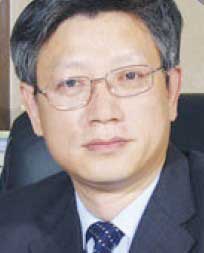
China's anti-smoking lobby is fuming over the recent appointment to the Chinese Academy of Engineering (CAE) of a scientist who works for the tobacco industry.
They say the appointment of Xie Jianping, 52, to the CAE is another example of how well connected and influential the government-owned cigarette industry is in China.
Xie is the deputy director of Zhengzhou Tobacco Research Center, which is funded by the State-owned China National Tobacco Corporation (CNTC).
The anti-smoking lobby contends that Xie's research is aimed at promoting the cigarette habit, not protecting the health of citizens.
The CAE is a national and independent organization composed of elected members who have made outstanding achievements in the fields of engineering and science.
Xie's research focused on adding traditional Chinese herbal medicines to cigarettes in an attempt to reduce the harmful effects of smoking, according to recent media reports.
"We've submitted a letter to the Academy asking it to reevaluate the pseudo-science of lowering tar in cigarettes, which Xie has been working on, and revoke Xie's appointment," said Xu Guihua, deputy director of the Chinese Association on Tobacco Control, an NGO that is pushing for greater controls on tobacco, effective bans on smoking in public places and a stronger effort to get people to quit smoking.
Xu says her group also wants CNTC to stop research into low-tar cigarettes and provide funding for truly independent research into the health effects of tobacco and how to overcome nicotine addiction.
Billions in tax revenue
In 2010, CNTC paid 498.85 billion yuan (around $75 billion) in taxes to the government, according to the State Tobacco Monopoly Administration, making it one of the largest sources of revenue for State and local governments.
More than 300 million Chinese adults smoke. More than half of all Chinese men smoke, making them by far the vast majority of smokers. In 2009, CNTC says, Chinese cigarette makers produced a whopping 2.3 trillion cigarettes, making China the world's largest maker of cigarettes, according to media reports.
World Health Organization statistics show that nearly 1.2 million people in China die from smoking-related diseases each year, about 20 percent of the world's total. The WHO estimates 740 million people in China are exposed to second-hand smoke.
Independent tests conducted in the 1990s and earlier by Western researchers showed low-tar or light cigarettes are not safer to smoke.
"It is impossible to reduce harm by adding Chinese herbs, which may also cause greater side effects," said Fang Zhouzi, a well-known scholar, writer and critic. He gained fame for bashing pseudo-science and has written withering critiques of traditional Chinese medicine.
Fang says Xie's research is unforgivable as its sole purpose is to promote cigarette smoking.
Xie's predecessor, Zhu Zunquan, 92, has been the tobacco industry's representative to the Chinese Academy of Engineering since 1997.
Zhu's claim to fame also stemmed from developing tobacco alternatives and low-tar cigarettes, which helped the industry prosper.
"China didn't take tobacco control seriously in the 1990s when Zhu was elected to the Academy of Engineering," said Fang, suggesting the CAE should never have appointed a replacement from the tobacco industry.
Fang said Xie was elected by the wrong department. "The voting members of the Environment and Textile Engineering Department are not experts in Xie's field. Members of the Department of Medicine should have voted for his inclusion as an Academy member," said Fang.
"Election of academy members has a lot to do with public relations," said Fang, suggesting that those with wealthy or influential backing are more easily elected.
Interview requests sent to the CAE were declined. The Global Times called Xie's phone numerous times but it was never answered.
"The Zhengzhou Tobacco Research Institute is affiliated with CNTC and while the former is supposed to be for scientific research, the latter is about making money. How could Xie's research results be independent and persuasive under such a system," Gan Quan, a senior project officer with the International Union Against Tuberculosis and Lung Disease, told Xinhua.
Gan notes that China became a signatory in 2005 to the WHO's Framework Convention on Tobacco Control which requires nations to ban deceptive and misleading marketing by labeling cigarettes as less harmful.
Health experts say China's powerful tobacco industry and its links to government are why the country has been slow to implement smoking bans that are commonplace in many Western countries.
Anti-smoking lobbyist Xu says Xie's lifetime election to the Academy of Engineering sends another wrong message.
"One of the country's highest honors has been bestowed on someone from the tobacco industry. This not only shows the industry's influence, it's also not good for tobacco control," said Xu, suggesting the industry is likely to use Xie's election to further its self interest.
Fang says the public knows tobacco companies are notorious for their wrongdoings both in the West and in China and the research they have sponsored has little credibility.
"The inherent conflict of interest in his (Xie's) research should be clearly stated," said Fang, calling for stricter regulation of the tobacco industry, which he says has also supported research into how cigarettes can be made more addictive while denying that smoking causes illness.
Lowering tar to reduce harm
A number of members of the CAE have defended their vote for Xie's inclusion as a member. They've been quoted in other media but are no longer taking interview requests or are unreachable.
CAE member Wei Fusheng told the Beijing News that he voted for Xie for two reasons. Wei said that Xie's research into tar reduction was a good thing, and the tobacco industry's tax revenue is too great to do without.
"Tobacco control should be done step by step, and lowering tar to reduce harm is a first step," the Beijing News quoted Wei as saying, who said he believes the long history of tobacco smoking in China makes it difficult to make radical changes.
Li Zechun, another member of the academy who voted for Xie's inclusion, was quoted by Science, Technology and Life Weekly as saying Xie's research into less harmful cigarettes is important because other countries have abandoned the work.
"Xie's research has to satisfy smokers' needs, and also reduce the harm that tobacco causes. He has tried his best to reduce the harm," said Li, who is a former director with National Meteorological Center.
Xu says anti-smoking groups like hers have few resources when it comes to battling with the colossus that is the tobacco industry. She says it's even difficult to obtain informative data about the industry.
"Over the last two years, cigarette companies haven't disclosed exactly how much revenue they provide the State and provincial governments. They continue to exploit their own self interest at the expense of people's health," said Xu.
Xu says statistics her group has gathered show that in 2005 the direct medical costs of treating smoking-related illnesses surpassed total tax revenues from the tobacco industry.
Dirty Ashtray Award
In 2008, China received a "Dirty Ashtray Award" from an international alliance of NGOs that support the WHO's Framework Convention on Tobacco Control. At the NGOs' conference in Durban, South Africa, China's representatives declined to force cigarette companies to print warning pictures on cigarette packs as required of cigarette makers in many Western countries.
In presenting the award the NGOs claimed that "China prefers elegant cigarette packaging to people's heath."
Xu believes printing warning pictures on cigarette packages will make people think of smoking less or considering quitting smoking altogether. "It might also change the Chinese custom of giving cigarettes as gifts," she said.
Election process questioned
The controversy over Xie's election has not only raised the ire of people and organizations trying to get some of the 300 million smokers to butt out completely. It's raised serious issues relating to the criteria used to elect new members to China's prestigious science academies.
"Xie's election reflects a system that needs improving," Wang Longde told the China Youth Daily. A former Deputy Health Minister, who is also a member of the CAE but belongs to another of the Academy's nine departments, Wang says the voting process requires greater transparency.
"In many cases we have professionals from one field voting for professionals in another," said Wang.