Forced late-term abortions must not be tolerated
| Editor's Note |
| ◆A mother in Ankang, Shaanxi Province, Feng Jianmei, who was seven months pregnant was reportedly forced to undergo an abortion at the instruction of local family planning officials. The matter is being widely circulated online and led to heated discussions. ◆Local Zhenping government said on its official website that the termination of pregnancy was “in accordance of law.” And Feng Jianmei, who forced into the abortion, was not qualified to have a second child. The couple had a daughter perviously in 2007, and they didn't submit an application before planing to have another child. ◆China clearly prohibits women who are over six months pregnant from undergoing abortions. If the Ankang case is true, the local officials obviously violated the relevant policy and should be punished. |
| Latest News |
Fury over 'forced abortion'
National and local family planning authorities are investigating a case involving a seven-month pregnant woman in Northwest China's Shaanxi Province who was allegedly forced by the local government to abort her second child.
A media officer with the National Population and Family Planning Commission (NPFPC) told the Global Times Wednesday that the body is probing the matter, which sparked controversy after a graphic image emerged online of the aborted baby lying next to the mother.
| Background |
 |
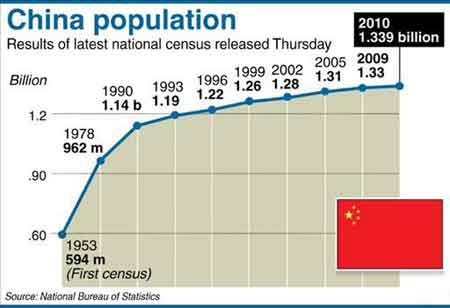
It has been over 30 years since China enforced its family planning measures, known as the "one-child policy." Introduced in 1980, the family planning policy was intended to prevent the country’s vast population from soaring out of control. The policy has prevented more than 400 million births in the last three decades, allegedly easing China’s limited resources.Despite the controversy surrounding it, the policy's proponents argue it has still been effective and has contributed to China's economic growth. While the policy has helped curb population growth, there have been growing calls for the law to be overhauled to address such issues as the rapidly aging population and gender imbalance. And the national policy is more flexible in China's ethnic minority areas. |
| Controversies |
 |
Zhao Xiao, professor at the University of Science and Technology Beijing | VS |
 |
Yao Yuan (Yao), a professor specializing in demographics and the aging society at Renmin University of China |
| If the government insists on continuing the one-child policy, the influence of China on the world will be smaller and smaller. The one-child policy must be urgently changed. The demographic dividend for China has been paid out and China should have adjusted its national policy in at least 10 years ago. | It is the family planning policy that in turn reduces the discrimination especially in rural areas against female children. The Chinese government, since it has long stuck to this policy, has to impress people with the idea that female and male offspring are equally fortunate. Actually "two-children" was never strictly banned. The family planning policy is flexible in order to accommodate people's needs. The disabled and ethnic minorities are all allowed to have a second child, as are couples who are both only children themselves. |
|||
 |
Yang Yansui, director of the Research Center of Employment and Social Security at Tsinghua University |  |
Ma Li, deputy head of the China Population and Development Research Institute |
|
| The government should not only control population through forced measures but set a framework for population development, such as determining which sector of society should be encouraged to have more children and when is the best time to have a child. | The policy could help the country deal with a shortage in resources and environmental pollution. | |||
 |
Li Jianmin, a professor at the Population Development Research Institute of Nankai University and vice chairman of the China Population Association | I don't think it's a good idea to loosen the family planning policy. Having too large a population means more pollution and cheap labor force ------Zhang Youxue, a lecturer at Shanghai International Studies University |
||
| The policy of permitting second children will gradually come into being as it is not just something wanted by Chinese citizens, but also something that current conditions demand | ||||
| Viewpoints |
 GT Observer
Forced late-term abortions must not be tolerated
Some hold that the family planning policy can only be implemented through tough measures. This kind of thinking is unacceptable today. Society has undergone tremendous changes in the last three decades. The desire for more children is decreasing. Cases of late-term pregnancy cannot be terminated through force. This is a requirement of the social moral standards of today.
Different ways of driving family planning forward Grass-roots enforcement of family planning policy is also evolving. It is often criticized in foreign media that China's family planning tramples human rights. But it should be noticed that things are already different. The improvement of the population structure and quality doesn't mean the simple enforcement of a strict family planning policy - it is a very complicated and systematic social project.
Weibo Voices@郎小君: Why can’t someone mull at will to others? If the aborted fetus was to be a member of their family, would these local family planning officials still instruct the mother to get an abortion? Why can’t they just spare the fetus that is soon to be born?
@云层之上永远阳光灿烂: Poor fetus! How could the mother make the decision to abort it? It must be as painful as separating one’s bone from their flesh.
@魏晓艳: It might do great harm to the physical condition of the mother, who was seven months pregnant and forced to have an abortion. It is very possible she might not be able to get pregnant any more. It is not just that simple to have an abortion since the fetus is already seven months old. It is not fair to the unborn child either.
@阿杰: This is too inhumane! Some local government officials ignore the livelihood of the public for the sake of their political achievements. The local family planning officials might resort to forcible ways in asking the mother to have an abortion.
@为伊宽带: The family planning policy should not be blamed if it is carried out legally. But some local government officials make use of the policy to extract money; therefore, they should receive severe punishment for their illegal actions.