China's manufacturing growth hits 7-month low in June
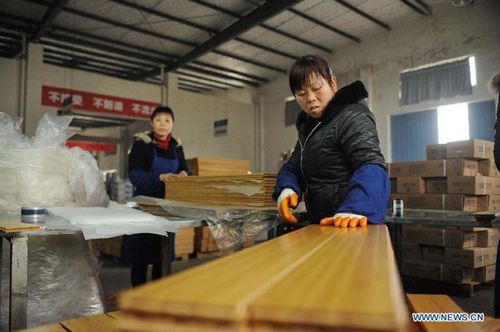
China's manufacturing activity eased further in June, as the Purchasing Managers' Index (PMI) slipped to its lowest of 50.2 percent since last November, according to official figures.
The June figure retreated 0.2 percentage points from 50.4 percent in May and marked its slowest pace in seven months, the China Federation of Logistics and Purchasing, which issues the data with the National Bureau of Statistics, said in a statement Sunday.
A PMI reading above 50 indicates expansion, while a reading below 50 means contraction.
HSBC's preliminary measure of PMI, which gives more weighting to small firms, fell to a seven-month low in June to 48.1, the eighth consecutive month of contraction.
"The PMI's moderation in June was driven partly by seasonal factors," said Cai Jin, president of the CFLP, adding that similar slowdowns have occurred in June in previous years.
"Compared with past years, the extent of the slowdown in June this year was minimal, which suggests that the economy is building up a foundation for stabilized growth," Cai said, warning "downward pressure still exists."
"The PMI is still above 50 percent, which is not bad," said Zhao Qingming, a senior researcher with China Construction Bank, the country's second-biggest lender by market value. "I think the economy is bottoming out and we will likely see growth accelerate in August."
"New orders and input prices are still falling, which show there are still many factors affecting production. A recovery in industrial output would take time," Zhang Liqun, a researcher with the Development Research Center of the State Council, or China's cabinet.
The sub-index for new orders continued to trend below the boom-or-bust line for two consecutive months by dipping 0.6 percentage points from May to 49.2 percent, signifying that demand in the manufacturing sector is declining, according to the PMI report.
The input price sub-index dropped sharply to 41.2 percent, down 3.6 percentage points from May, which some analysts said will help bring down inflation and give more room for policymakers to loosen tightening measures.
The output sub-index for June stood at 52 percent, down 0.9 percentage points from May, indicating that the production growth of manufacturing enterprises is still slowing.
The PMI data showed that the employment sub-index fell 0.8 percentage points from May to 49.7 percent in June, meaning that the current economic slowdown has affected the job market, as manufacturers have reduced hiring in the wake of slipping demand.
The sub-index for stocks of finished goods hit a seven-month high of 52.3 percent in June, creating pressure for manufacturers to reduce their inventories.
As suggested by the data, the size of an enterprise matters when economic slowdown occurs. The PMI for large enterprises was 50.6 percent in June, while the PMI for medium- and small-sized companies hit 50 and 47.2 percent, respectively.
"June PMI continued to fall, but with an obviously smaller margin, which indicates the fall in economic growth may stabilise," Zhang Liqun said.
In May, the PMI index fell 2.9 percentage points from April. Compared with the previous sharp decline, the manufacturing PMI in June saw only a 0.2-percentage-point drop.
As the government adopts more measures to maintain growth, investment growth is stabilizing in China, while consumption is expanding and exports are rebounding at a faster pace, Zhang said.
"All of these support my expectation for trending economic stability after the slowdown," Zhang said.
The central government pledged last month that it will prioritize stabilizing economic growth, warning that the economy faces "increasing downward pressure."
In the latest moves to spur investment and growth, the central bank cut the benchmark interest rate by 25 basis points last month following a reduction of 0.5 percentage points for the reserve requirement ratio for banks in May.