Waiting game
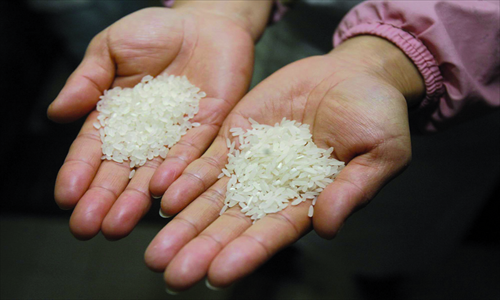
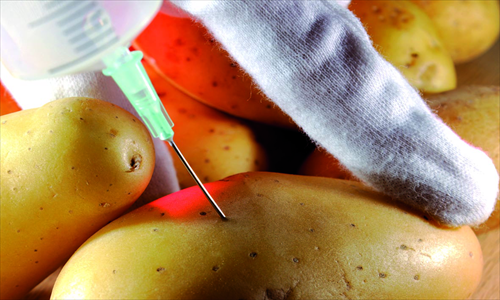
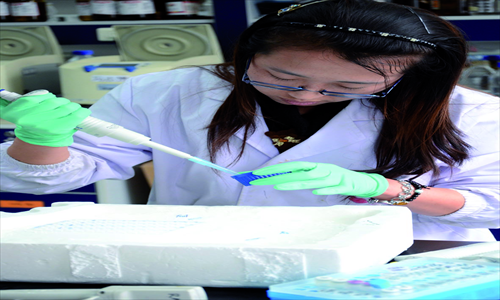
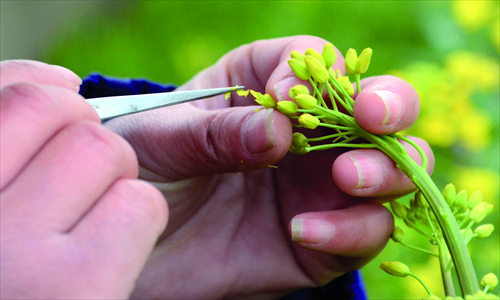
In April 2012 in the Inner Mongolia Agricultural University in the Inner Mongolia Autonomous Region, a group of scientists successfully produced three baby cows after inserting a genetically modified (GM) embryo into the womb of a surrogate female cow. Two of the cows died soon after their birth. The one that survived was named "Lucky."
The aim of the mission, which is in its elementary stages, is to create a cow that produces incredibly nutritious milk.
Zhou Huanmin, director of the science and technology department at the Inner Mongolia Agricultural University, who is part of this program, told the Global Times that they need to wait for about two years to see results. The cow needs to grow old enough to produce milk, which will hopefully contain much lower lactose than milk from a non-GM cows. This milk will be easier to digest.
"There are people around the world facing problems of digesting milk, since the lactose can irritate their digestive systems," Zhou said. "The reason why I launched this program is to get a kind of milk that these people can enjoy."
Zhou is confident that the milk will be a success. "Even if this milk can't be used for human consumption, it could be refined for industrial use," he noted.
Food fight
The program sounds promising, but anything that is genetically modified still arouses public concern. Some people embrace GM technology, believing that when the technology is used for planting vegetables and feeding animals, it can help increase production, lower costs and even be good for the health.
Yet others believe that GM products are against the law of nature and therefore may pose dangers to people's health.
Neither side has won this debate yet, which is particularly important in China given the size of its population.
Some cases suggest that GM foods are not good for the health. Fang Lifeng, a senior food and agriculture campaigner of Greenpeace, told the Global Times that despite not knowing for sure whether GM foods like milk, beans, corn and wheat are problem-free, there have been cases displaying the negative side effects of the technology.
As early as 2005, The Commonwealth Scientific and Industrial Research Organisation, Australia's national science agency, found that anaphylactic reactions occurred in some guinea pigs when they were fed GM beans for four weeks.
"Cases that show genetically modified food affecting the health of guinea pigs are not uncommon," Fang said. "Therefore they may also have a negative effect on the human body."
He also pointed out that GM issues involve every aspect of people's lives. They impact on food safety, environmental protection, economic trade and employment.
However, Fang highlighted that GM foods, like rice and corn, have been in the market for over a decade and there is still no sign to prove they negatively influence health or the local environment.
"It is more a concern coming from another voice that stipulates international regulation targeting GM food should always fall on the side of precaution, despite the fact that there is no scientific evidence to prove the danger," Fang noted.
Yao Qingxiao, assistant director of the Institute of Genetics and Developmental Biology at the Chinese Academy of Sciences, believes that GM food is good for humans, as evidenced by the consumption of soybeans. "The majority of soybeans on the domestic market are imported from the US," he said. "They are transgenic, but that does not stop us from consuming them."
Yao explained that without these foods, non-GM food is simply not enough for our consumption.
"So far, there is no clear scientific proof that having these may affect our health," he weighed in on the debate.
Into labels
While some people might not mind consuming GM food, most people like to know about it first. The lack of strict government regulation in the Chinese food industry offers people little reason to feel at ease.
In 2002, labeling GM food was instituted under the law.
"According to this regulation, GM foods should be labeled," Fang said.
"Yet this regulation is not heavily enforced under the law," Fang noted. He gave the example of papaya in the domestic market. Almost all of them are genetically modified but few are labeled.
In 2005, an illegal farm producing transgenic rice was exposed in Hubei Province. The rice was being sold in Hunan, Fujian and Guangdong provinces without being labeled. "The appearance of the rice indicates the limitations of the government supervision," Fang said.
"Although most of the imported GM foods are not for human consumption, it is always better to keep this technology out of the whole biological chain to cut risks," he noted.
For Yao, he thinks the label GM alone scares people, but the reality is that they do not need to be fearful. "People are just afraid of GM food, but there is nothing to be afraid of," he said.
Similarly, Zhou pointed out that the GM technology in China is at an international level.
"The reason why we invested money and time in it is for the benefit of mankind, not to cause problems. It takes time for people to see this."
The men might be right. However, in the face of uncertainty still clouding this technology, taking precautions is not a bad thing.
The new milk might have to wait.