HOME >>
Rules of engagement
Source:Globaltimes.cn Published: 2012-7-12 16:55:00
| Editors' Note |
A bizarre brawl broke out between Wu Danhong, a law professor and blogger under the name of Wu Fatian, and Zhou Yan, a journalist from Sichuan TV and frequent critic of the authorities, in Chaoyang Park, Beijing, on July 6. The brawl was caused by a 'duel' invitation between Wu and Zhou on Sina's Weibo, a Twitter-like service in China.
| Key Words |
|
 |
Public intellectuals The term "Public intellectuals" refer to influential figures in society that also have specialized knowledge in a particular field. When the term gained widespread usage in 2005, these figures were generally held in high regard, as they often spoke out on behalf of the greater public. However after the introduction of Weibo, public intellectual has become a negative term. On one hand, Weibo forces public intellectuals to be held accountable for their comments. On the other hand, with increasing number of public intellectuals, many have proven to possess undesirable qualities. When a select few make irresponsible, even vulgar comments on current affairs, this damages the image of public intellectuals as a whole in the eyes of the public. (Source: Yahoo.cn) |
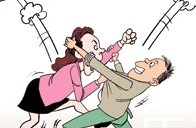 |
'Duel' invitation When people have different viewpoints on a public issue, they sent open invitations on Weibo for a duel with opposing viewpoints. It is now popular in the intellectuals on Weibo. |
| View Points |
 GT Comments:
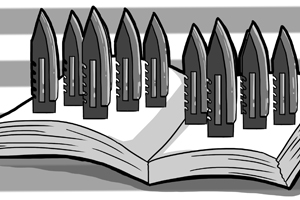 |
Graceless brawls degrade name of public intellectuals Public intellectuals, especially with an academic background, should have a critical spirit and the proper values to help the public and improve society. |
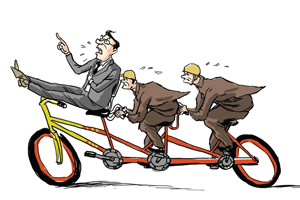
| Manichean values weaken purpose of public discourse Mutual respect requires more than tolerance, as it asks people of different ideas to show appreciation of others' thoughts. This can help put aside conflicts and enable the coexistence and exchange of divided ideologies. |
 |
Public intellectuals hide behind demagogues Intellectuals are a middle force to balance and connect extreme thoughts in society. Mature public intellectuals shoulder the responsibility to monitor and criticize the government, at the same time, they play a major role in preserving the stability of public values. |
| Public intellectuals are workers, not idle layabouts If some intellectuals vent anger but never raise constructive comments that can work to change social equality and injustice, the success of the "intellectual spirit" will mean the collapse of the entire social development. |
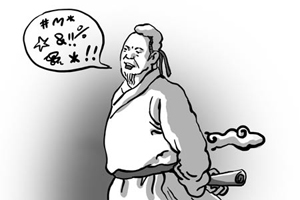 |
Dirty words drop public debate in the mud Verbal abuse reveals one's desperation. It marks the severity of the clashing ideologies in contemporary Chinese society. The spread of this intellectual anarchism is alarming. |
| 'Duel' invitations frustrate public debate order When a viewpoint cannot prevail through rational argument, a smear campaign often follows which disturbs the debate. A serious discussion could easily end up in a farce with both sides denigrating one another. |
 Weibo Voices:
@yaowuyun: The people involved in the incident are all intellectuals who have received good education. But their poor tempers and lack of emotional intelligence have really shocked me. It seems our education system has only taught them how to survive, but nothing about social morality.
@ranyunfei:Building up a democratic society isn't about setting up a set of high moral standards, but a set of appropriate rules that the public can recognize and agree with.
Thus, the whole logic of idolizing people who call for democracy and demanding they become morally flawless, then blaming them for failing to achieve those high standards and accusing democracy of being a failure is completely groundless. And if people switch views because of this, it only shows they lack faith.
@routangseng:Whatever society an individual is with, the obligation of a citizen should always be honored. This is especially the case for liberals.
However, even though some people who participated in the mass brawl in Chaoyang Park claimed that they are liberals, they unfairly overwhelmed one man and physically assaulted him.
And they just escaped when the police arrived, leaving a woman to shoulder all responsibility.
What kind of liberals are they? Where is their sense of responsibility? Where are their obligations and duties?
| Incidents Review |
 |
'Duel' invitation
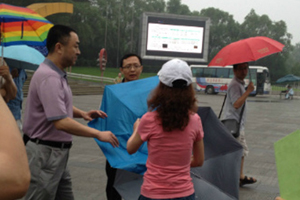
A bizarre brawl broke out between Wu Danhong, a law professor and blogger under the name of Wu Fatian, and Zhou Yan, a journalist from Sichuan TV and frequent critic of the authorities, in Chaoyang Park, Beijing, on July 6, 2012. The crowd, mostly supporters of Zhou, cheered as she kicked and threw eggs at Wu. Controversial artist Ai Weiwei was also present. Wu claims he only intended to give a public lecture and wasn't expecting a fight. |
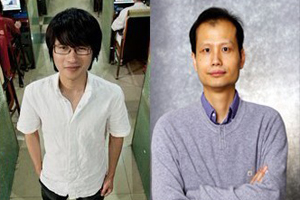 |
Writer in controversy: Han Han Best-selling author Han Han filed a lawsuit on Jan 29, 2012, against Fang Zhouzi, an anti-fraud campaigner who claims that the author did not write the novel that first made him famous.
Han said he kept all the handwritten manuscripts as the evidence, and he had the confidence to win the lawsuit When he receiveding the interview by Xinhua News Agency on Jan 30. |
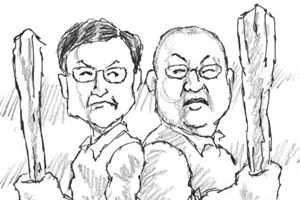 |
Two famous Weibo opinion leaders, who are also contending for spots on the local People's Congress in Beijing, decided to settle their conflicts of values not by rational debate, but a live duel. Wu Danhong, a professor at China University of Politics and Law, and Yao Bo, a freelance media personality, had a fierce argument on Weibo on the night of October 6, 2011. |
| Related Reports |


Posted in: Frontpage