Altruistic attorney
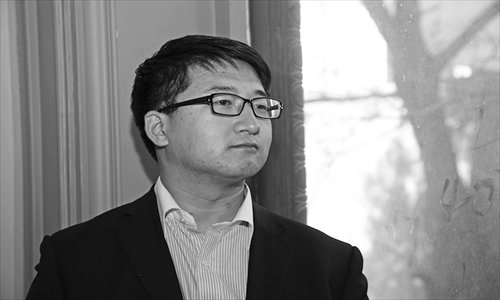
Lawyers, fairly or unfairly, have a reputation in society for being unscrupulous wranglers of the legal system unwilling to let professional ethics get in the way of winning a case and pocketing a payout. But none of this has ever appealed to Beijing-based human rights lawyer Zhang Kai, who insists his duty is to serve disadvantaged clients seeking justice. Zhang made international headlines last month when he represented Feng Jianmei, a 23-year-old woman forced to undergo an abortion in Ankang, Shaanxi Province.
Zhang, 33, has made it his mission to lend a voice to victims by offering them legal assistance, sometimes for free, with Feng's case the latest in a slew of high-profile suits the Inner Mongolia native has taken in a career that has courted as much credit as controversy.
Center of an abortion storm
Feng was forced by local authorities seven months into her pregnancy to abort her second child on June 2 after her family failed to pay a 40,000-yuan ($6,279) fine for violating the national family planning policy. The local government initially claimed the abortion was legal and consensual, but later national and provincial inspectors found it had been performed illegally and against Feng's will.
Three local officials were suspended from their posts, and four others were also punished. Dissatisfied with the result, Feng's family sought legal help and eventually secured 70,600 yuan in compensation from the local government.
Zhang's offer in mid-June to represent Feng and her husband Deng Jiyuan was initially turned down, with the couple opting to wait for a government resolution instead.
"The family said they didn't want a lawyer, but still used me to gain some bargaining power when negotiating with government," Zhang said. When local authorities broke their promises, however, Deng visited Beijing and requested Zhang's assistance.
"Most victims don't know their basic rights, leading to power to be abused by officials. When tragedies happen, victims beg the government for help. I hoped we would set a precedent in compensation for forced abortion victims by filing a lawsuit, but instead they agreed to settle the matter privately," said Zhang.
Courage against intimidation
Zhang said he sees a "change for the better" in the handling of legal disputes at the grass-roots level in China, even though there are always uncertainties when taking on authorities.
"I had fears, too, as I always get threatening calls when taking on criminal cases," said Zhang.
He told the Global Times he was detained and beaten by police while investigating a case in Chongqing in 2009 that involved the suspicious death of a detainee at a local re-education center.
Yet Zhang recalls his most intimidating experience was being chased and cornered by several cars in Beijing in December 2010, when he was representing the family of the victim in the notorious "Li Gang incident" - a hit-and-run carried out by the son of a senior police official that claimed the life of a 22-year-old university student in Baoding, Hebei Province.
"I still don't know who it was that chased me," Zhang said of his pursuit by several cars, adding that he's made a lot of people "unhappy" by taking on cases that threaten the interests or reputations of those in power.
Zhang, like many human rights lawyers in China, is a controversial figure who polarizes public opinions. His detractors argue he only seeks fame and success by handpicking sensitive cases, while his supporters insist he has heartfelt concern for his clients.
Zhang was heavily criticized for questioning Chongqing's mafia crackdown that preceded the city's high-profile trials of organized crime leaders in 2009.
He also came under fire for sympathizing with Yao Jiaxin, a university student in Xi'an, Shaanxi Province, executed for fatally stabbing a young mother in an attempt to cover up a hit-and-run in 2010.
"Being a human rights lawyer certainly doesn't pay well. But being involved in big cases earns me a reputation, as well as money," said Zhang.
Speaking with Zhang, who participated in a two-hour interview with the Global Times casually dressed in a T-shirt and shorts, it's difficult to understand how he remains optimistic instead of cynical despite enduring threats, violence and public criticism.
"I find peace in listening to classical music and reading the Bible, which gives me strength in moments of despair," explained Zhang, a devout Christian.
Christian courtroom crusader
Zhang, who often works pro bono, said he usually travels to meet victims and investigate their cases at his own expense. Some of his clients renege on promises to pay him after representing them, but this doesn't bother him.
"I feel like some clients use me, but I don't blame them," said Zhang. "I like doing my job and representing the disadvantaged because protecting people's basic rights should be a core value for any lawyer."
It's this mantra that led Zhang, a graduate from the China University of Political Science and Law, to turn his back on legal consultancy work for businesses in 2006 and pursue criminal and administrative cases.
He's also displayed his political aspirations. Zhang last year declared he would run at a National People's Congress deputy election in Beijing's Changping district, but withdrew before the ballot.
"Residents should demand a greater say, and I'm willing to stand up for them," he said, conceding that lawyers are limited in their ability to change the current situation and hold officials accountable.
Independent investigation panels formed by scholars and ordinary people have helped in this field, Zhang said.
"I'm happy to see more of them as they act like watchdogs that can provide the public with more details, while lawyers can only cite evidence," Zhang said.
Since representing Feng, Zhang has established an anti-forced abortion group in Chaoyang district that consists of 20 volunteers who help him handle related cases and produce anti-forced abortion videos.
"I've been exhausted lately and have received many requests for help from people nationwide who have suffered similar experiences," said Zhang, adding the central government seems to have become more open regarding media coverage of such scandals.
"Journalists and lawyers are born to be friends," he said, a grin creeping across his face. "I'll keep on doing what I'm doing. I'm a lucky guy, and my girlfriend is a journalist who's been supportive since the beginning."