Washington seeks to create new waves in S.China Sea
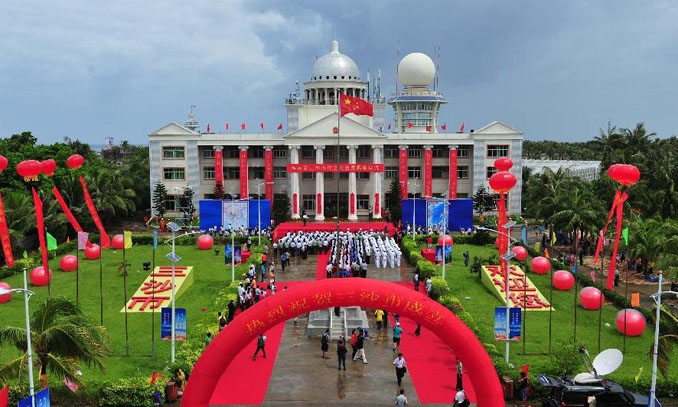
The US is the latest country to make a fuss over China's new city of Sansha after the Philippines and Vietnam.
On Tuesday, US State Department spokesperson Victoria Nuland voiced the US' "concern" over China's "unilateral moves," while John McCain, the US senator of Arizona, claimed China's moves were "unnecessarily provocative."
Though the White House has previously indicated that the US would not take sides in South China Sea disputes, in practice, the US is encouraging Vietnam and Philippines to continue their provocation and infringement of China's sovereignty.
The guideline of setting aside disputes and pursuing joint development promoted by China was supposed to provide a foundation for cooperation among the claimants. However, it was spoiled by the provocations of the Philippines and Vietnam.
Currently, 43 islands in the South China Sea have been seized by countries such as Vietnam and the Philippines. These countries have tried to strengthen their control over the islands through domestic legislation and exploring oil in the region.
It was reported in April that Vietnam and the Philippines planned to hold football and basketball matches for their navies on the disputed islands.
The US is also adopting a double standard over the disputes. The Philippines illegally set up Kalayaan town, which is part of the Nansha Islands, in 1988, while Vietnam established Truong Sa county, which is also part of the Nansha Islands, in 2001. The US voiced no concerns over them.
The US is not a claimant nation in the South China Sea disputes, nor is it a participating member of the United Nations Convention on the Law of the Sea, and therefore has no say in the disputes. The US seeks to expand its influence and stake in the region by creating more waves.
Since the US' high-profile intervention in the South China Sea disputes marked by US Secretary of State Hillary Clinton's speech at the 2010 ASEAN Foreign Ministers Meeting in Vietnam, the US intention on the issue has become obvious. From the US perspective, backing countries like the Philippines and Vietnam in provoking China could worsen China's neighboring environment and help enhance its military presence in the Asia-Pacific.
The establishment of Sansha is a laudable step by China in actively safeguarding its sovereignty. China by no means intends to exacerbate the situation in the South China Sea, but it should demonstrate that any provocation from relevant countries over maritime territorial disputes will be countered.
Establishing Sansha city is only a starting point. China should also consider strengthening its military, technological and economic presence there in the future.