Striking children brutalizes both kids and adults in end
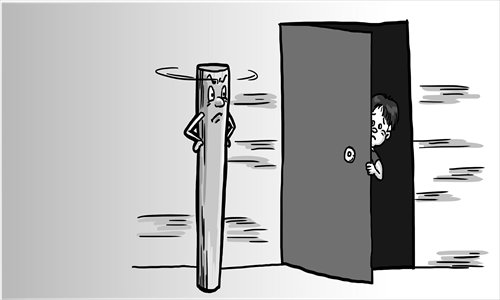
The horrifying case of Lele from Changle county, Shandong Province, a six-year-old girl whose teacher encouraged the other children to take turns hitting her, has shocked Chinese netizens. But the corporal punishment of children continues to be legally and socially sanctioned in China. Does spanking serve to cover up worse abuse? Should the law step in? Two commentators contributed their thoughts.
Several Chinese I know were beaten badly as children, some to the extent that they still carry marks today. Others have no physical scars, but have the fear of authority, an easy willingness to lie to avoid trouble, and recurrent insecurity that the long-term victims of physical abuse often suffer.
Many countries have long moved away from the idea that hitting children is acceptable. Globally, 32 countries, from Kenya to Israel, forbid the hitting of children by parents or teachers. Many others have banned corporal punishment in schools, and strongly frown upon its use at home.
Advocates of corporal punishment imagine a world in which parents are always neutral lawgivers, who deliver the blows more in sorrow than in anger. But in the real world, some parents are drunk, angry, or sadistic.
Social sanction for hitting children lets them relieve their own inadequacies on helpless kids. Are the supposed benefits of spanking a sufficient excuse to let such abuse continue? Scientific research has repeatedly shown that corporal punishment has negative long-term psychological and educational effects.
Child psychologist Elizabeth Gershoff's meta-analysis of 62 child psychology papers in 2002 showed that corporal punishment was strongly associated with long-term anti-social behavior, aggression, and other negative characteristics. The only positive result it produced was immediate compliance by the child.
And in education, comparative studies between schools, such as those of Victoria Talwar and Kang Lee, show that institutions that use corporal punishment ultimately produce children who lack internalized self-control, have poor decision-making skills, and are more likely to lie to adults.
In the US, the 22 states which still permit corporal punishment in schools, mostly in the South, have lower rates of university attendance and high school graduation.
And in an international study of 32 countries, psychologist Murray Straus found that children who were spanked developed lower IQs worldwide. Another Canadian meta-analysis found that out of more than 80 studies, not a single one showed positive associations for corporal punishment.
The vast bulk of research shows the harmful effects of corporal punishment on children.
Virtually every major psychological group, such as the American Psychological Association and the British Psychological Society, in North America and Western Europe has taken a firm stance against corporal punishment of children.
All that advocates of corporal punishment have on their side is the dead weight of tradition and so-called common sense, the same sad excuses always trotted out to defend any reactionary and oppressive cause, from slavery to excluding women from the vote.
It might take time to weed Chinese parents out of the habit of hitting children, and the country is probably not yet in a position to have the law step in. There are few social workers or other trained staff to deal with such issues.
But social attitudes and the media can make it clear that striking your children shames you, rather than helping them.
The author is a copy editor with the Global Times. jamespalmer@globaltimes.com.cn
Customary spanking doesn't cross boundary into abuse