Change in attitude to Straits bound to come eventually
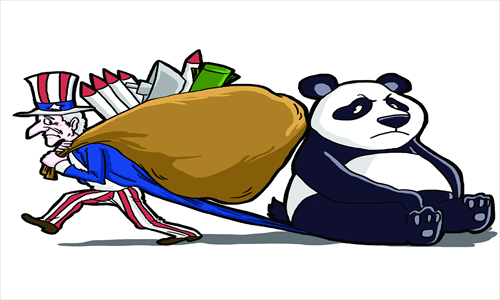
The US pledged to reduce arms sales to Taiwan in 1982 in the third and final joint communiqué. However, in the same year, the Reagan administration gave the "Six Assurances" to Taiwan that the US would not set a date for ending arms sales, which laid the hidden dangers of the current dispute.
Since taking office, the Obama administration has attached great strategic importance to the Asia Pacific region. The US desires to take a share of regional development, and it wants to maintain its leading role by responding to the security concerns of regional countries and enhancing security relations with traditional allies.
Taiwan is an ally of the US. Although the US terminated its Mutual Defense Treaty with Taiwan in 1979, it has never abandoned its security support of the island. Against the background of the "back to Asia" policy, the Obama administration will certainly not terminate arms sales to Taiwan.
In recent years, relations across the Taiwan Straits have entered a period of peaceful development. The US welcomes this. But it also worries about the rapid development of the military strength of Chinese mainland.
US experts on the Taiwan question have admitted that US arms sales to Taiwan will not fundamentally change its weak position. But they also believe that arms sales will make Taiwan more confident in initiating dialogue and developing relations with the Chinese mainland.
US officials always argue that it is Taiwan that makes the offer to buy arms first. Why not do business when the customer is at your gate, they imply.
The general framework of US policy toward Taiwan has not changed fundamentally these years. US arms sales to Taiwan will remain an obstacle in the development of Sino-US relations.
In the US, since 2009, there has been a growing chorus calling for the "abandonment" of Taiwan. One argument goes that as China rises, the US should avoid confrontation with China as much as possible. The US should be careful of touching China's core interests. Therefore, it is not necessary to infuriate China on the Taiwan question.
However, this argument was only accepted by some in US theoretical circles and former diplomats, not by the bulk of policymakers. The idea of "abandoning Taiwan" has also been criticized by many scholars. From an academic perspective, scholars believe that even if the US really "abandons" Taiwan, the Chinese mainland still will not completely trust the US strategically.
Therefore, the change would only encourage China to challenge the US further.
This hot debate will not influence Washington's policy toward Taiwan anyway. The US will neither fundamentally change its policy toward Taiwan nor terminate arms sales in the short term. But meanwhile, the debate reflects that the US is rethinking its Taiwan policy.
The trend of peaceful development across the Straits continues, and the people-to-people contacts between the two sides are growing rapidly.
Under these circumstances, the US must reconsider the influence of arms sales on cross-Strait relations, as well as the influence on Chinese mainland.
Also due to the development of the relations across the Straits, US influence will gradually decrease. The US strategic community will reconsider its policies and show more respect to China. The US policy toward Taiwan will fundamentally change sooner or later. Washington should take that into account.
The author is the deputy director of the Institute for Taiwan, Hong Kong & Macao Studies in Shanghai Institutes for International Studies. opinion@globaltimes.com.cn