Preserving folk culture
The tourism industry: helping ethnic minorities?
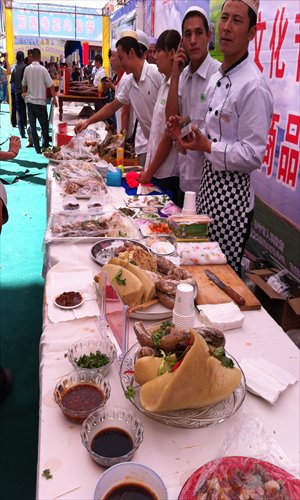
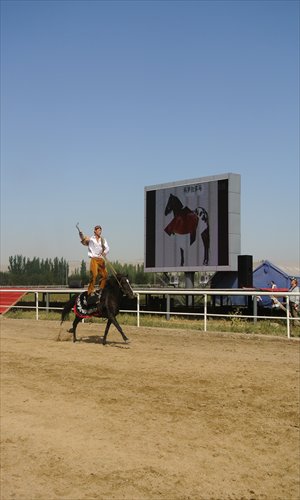
The five-day Yining folk culture festival came to an end on Sunday. Held in Yining, Xinjiang Uyghur Autonomous Region, it featured folk singing, dance performances, horseback riding competitions, food and travel exhibitions, and cultural and economic forums.
The festival aims to promote traditional folk cultures in Xinjiang and develop some of the cultural activities as tourist attractions.
Yining covers 755 square kilometers and has a population of 580,000. Located northwest of Xinjiang, it was once an important juncture in the Silk Road and was China's historical gateway to Central Asia, Russia and Europe. With its historical background and geographical advantages, the city boasts a mixed culture of different ethnic groups and influences from neighboring countries.
However, following the economic development and modernization of the city, many ethnic groups have abandoned old ways of living, leaving behind only skeletons from their traditions for tourist purposes.
Business model
The Yining folk culture festival held three dance and singing shows, presenting traditional art forms from the Hui, Uyghur and Hazak ethnic groups. The Hazak performance, held in the center of a park, attracted many local residents.
Kanjibieke Daken, deputy mayor of Yining and organizer of the Hazak performance, told the Global Times that the large number of people attending reflected the love for these traditional art forms.
He said that "Hazak Ayer tes," a folk singing art form has applied to be one of UNESCO's intangible cultural heritages.
Addressing the purpose of the festival, Cheng Xuewen, deputy mayor of Yining said it is not only a celebratory event, but also a way to develop programs and performances for new tourist centers in Yining. The food and travel competition, for instance, will find a platform to continue the exhibition in newly established tourist centers.
Li Ningping, the Secretary of the Yining municipal committee of the CPC, said during an economic forum at the festival that the Yining government aims to promote its travel industry as an integral part of its economic development. The folk culture festival is part of the local government's plan to preserve traditional ethnic folk cultures.
Besides art, dances and singing, other traditional customs of the Hazak, Hui and Uyghur ethnic groups are also turning into tourist attractions.
Urbanization drive
According to official data, there are 37 ethnic groups in Yining. The Uyghur group contains 49 percent of the population; Hui and Hazak holds about 7 and 5 percent, respectively.
Before the urbanization of the city, most minority groups were living as herdsmen and farmers. With the recent development of four big folk tourist districts, many farmers and herdsmen have left their Kazak and Mongolian yurts and old houses to move into newly built houses in tourist areas.
A report conducted by the local government estimated that the urbanization rate in Yining has reached 67 percent so far.
Abutuai Awailibieke is one of the residents in the Yingyeer village, a Kazak tourist district in Yining built a few years ago. He told the Global Times that he used to be a farmer but now runs an agritainment.
The decorations in his new house are in a traditional Kazak style. Moving into a new house, his small Kazak yurt is now a tourist attraction. Pointing at a trestle in the house, he said his family only builds it when there are tourists.
Abutuai said he is satisfied with his life, and he hopes more people can learn about Kazak culture by visiting his agritainment.
Ailibieke Juhongma, the secretary-general of the village said that they plan to move the entire village, a total of more than 2,000 people, to convert the area into a tourist attraction.
Kazanqi tourist district, the largest and oldest tourist district of the four, is modeled as a cultural and economic development project by the local government. Apart from the business center where tourists can buy local food and handicrafts, the homes and gardens of Uyghur residents are open to the public.
Families living in these houses are responsible for showing tourists old customs, such as how young girls groomed their eyebrows in the old days, though many no longer follow these customs.
Based on official statements, the Kazanqi model has provided an extra 800 job openings for the local community.
The hot topic continues of whether the commercialization of folk culture for the tourism industry is a way of preserving tradition or a strategy to capitalize on the olden days.