Mutual support can shelter Chinese firms in foreign lands
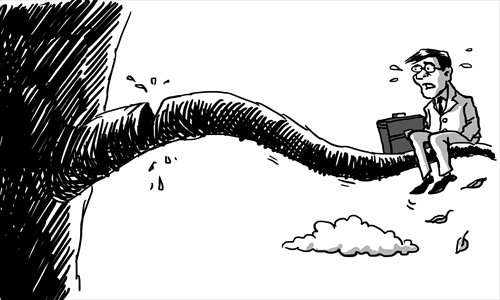
A growing community of crossborder traders and Chinese SOEs and private enterprises are focusing on developing new interests in the Central Asian republic of Kyrgyzstan.
Trading relations between the two countries have grown since Kyrgyzstan broke from the ruins of the Soviet Union.
Due to the planned economy of the Soviet Union, the allocation of resources was directed by a central apparatus, and different Soviet republics were focused on different industries, which both hampered their growth and made them interdependent.
As the Soviet Union focused on developing heavy military industry, the agricultural and manufacturing industries lagged behind.
As a result, the independence of Kyrgyzstan brought many business opportunities for Chinese, and those who took advantage of these opportunities became rich almost overnight. I began to trade with Kyrgyzstan in 1996 by selling machine tools. The price I got for a flour mill I sold to Kyrgyzstan was several times what I could get in China.
China's reform and openingup policy has been accompanied by an increasingly large number of businessmen going abroad every year. Compared with the competitiveness of the domestic market, the profit margin here is considerable.
However, news of Chinese businessmen being robbed or even killed is constant. In Kyrgyzstan, at least five are murdered every year in robberies or kidnappings.
In former Soviet countries where the rule of law does not prevail, it is not uncommon that Chinese are bullied. The social status of private Chinese businessmen ranks very low, while that of SOE members is just a little bit better. Many policemen don't act in accordance with the law and extortion is common.
The Chinese Chamber of Commerce that I'm working for was established in 2007 with the mission of protecting the rights of Chinese in this country.
We respond to requests made by our compatriots who encountered misfortune. But we may also be driven into difficult positions in the process.
Last year, some Chinese businessmen came for help as four robbers stole $750,000 from them. We reported the case to the Chinese embassy and local police. We persuaded these businessmen to offer a reward of $75,000 to the local police because without the reward, the local police would hardly do anything.
Two hundred policemen were then sent out and the money was retrieved within three days. However, the Chinese businessmen broke their promise and refused to give the money, making us in an embarrassing position and bringing further troubles for us.
Sometimes we face threats from local police and gangsters, asking us not to put our fingers into their pies. We have become used to that though.
The Chinese economic push in Kyrgyzstan is seen as exploitation of resources by many Kyrgyz people. Many barriers are also set for Chinese businessmen in order to stall their investments.
Since the independence of the country, Kyrgyzstan has been marred by political instability. Its first two postSoviet presidents were swept from power by public discontent. A policy favored by one government, such as issuing work permits to foreigners, would be abolished by the new one.
Every year, China provides huge assistance to Kyrgyzstan to help with the construction of its basic infrastructure and farming. However, statetostate cooperation does not translate to peopletopeople relations.
It is regrettable to see that our help is not appreciated by some local people and our Chinese compatriots are not respected or even bullied. Therefore, how to improve relations with ordinary people is something that our government needs to take into serious consideration when offering assistance.
Overseas Chinese businessmen contribute a lot to China's rapid economic growth. From those selling small commodities such as socks to those doing business through hightech machines, they export Chinese goods to foreign countries and send the money back home.
Frankly, the Chinese government's protection for overseas Chinese citizens is not enough. Due to the large number of Chinese abroad, local Chinese embassies or consulates cannot handle all the reported cases. But they should make us feel that we are under the protection of our country.
The selfawareness of overseas Chinese is also important to their survival. But such awareness has not yet developed despite the rise of China's global status.
Chinese abroad have not formed a united front yet. When a compatriot encounters any difficulty, others should undertake risks to help him rather than keeping away from it. Otherwise Chinese overseas will always be like a pile of sand.
The article was compiled by Global Times reporter Wang Wenwen based on an interview with Li Quanjun, head of the Chinese Chamber of Commerce in Kyrgyzstan. He has been in Kyrgyzstan for 16 years. wangwenwen@globaltimes.com. cn