Slow trains and absent planes leave Indians relaxed and unfussed
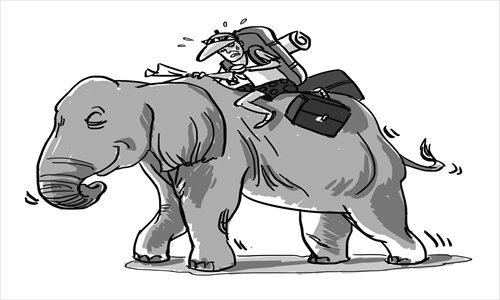
Every backpacker who traveled in India probably has a story to share about transportation. And I am no exception. It's a way for outsiders to see Indians' pace and order under the superficial bustle.
Through our one-week India journey in early October, my companions and I tried various ways of getting around; planes, trains, van, taxi, tutu (motor tricycles) and pedaled tricycles. All of them made us anxious, but also sometimes joyful.
Airplanes are supposed to be the most reliable means of transport. But this is not the case in India. We'd learned a lesson even before leaving when we got an email notice that the flight from Delhi to Dharamsala we'd booked was cancelled. There was no explanation beyond that.
Online speculations said this was linked to upcoming strikes in India. And later a senior India official revealed to us that Kingfisher, owner of the flight, was in financial plight.
The most reliable vehicle in India, I have to say, is the tutu. The first time I got on a tutu was outside the Agra Fort railway station. I was instantly welcomed with an impressive slogan chanted by the driver, "This is the Indian helicopter!"
That's quite true. This land helicopter proved much more omnipresent and reliable than real helicopters. No matter where you are, walking in a narrow alley or coming outside a five-star hotel, tutu drivers are always there.
Tutu drivers tailor schedules exactly based on your needs, and they are truly customer-centered. When you get off tutu to visit a ruin or have a meal, your driver just has a nap in the shade of the trees outside. Tutu are not fast but aren't slow either. A day long tutu ride is enough to see the city.
Five or six locals can edge in the cramped carriage, whereas two among them hang themselves on the seats beside the driver. Tourists can hire themselves several tutu to enjoy a comfortable ride. A tutu is a perfect way to see India. It symbolizes the Indian way of convenience and flexibility.
The sharp contrast between plane and tutu, the former a standard representative of modernity whereas the latter was born and blossomed in Indian soil, makes me think. India may not be a place for journey filled with tight, accurate schedules.
In my first two days in India, I was trapped by frustration with the unreliable local transportation. Two flights we booked were cancelled, taxis in streets could only be booked through phone calls 30 minutes in advance, no train was available to directly take us from Delhi to Dharamsala, and a van we booked online kept breaking down and the driver threatened to turn around if we don't pay extra cash.
I couldn't help wondering: What if locals have to rush for a urgent meeting but cannot find a reliable choice? Then I gradually found out that normally they do not have to rush as the Chinese do.
This relaxed atmosphere can be felt in any Indian transport hub. And it's not necessarily a bad thing. In airport waiting rooms, it seems no one notices the plane hasn't shown up though it's 15 minutes past the boarding time. Locals sitting and chatting happily couldn't imagine their Chinese counterparts might already see red with airport staff if the flight dared to be so late.
Once you get used to the relaxed mood, you feel much more comfortable on Indian vehicles. On trains there are no broadcasts alerting you to the next station, but you can always get an answer from the locals sitting beside you. On a tutu you may have trouble talking in English with the driver, but a passing motorbike rider shouts at your driver who then instantly understands your needs. If you get lost, you can easily borrow cellphone from passers-by, who haven't built psychological defenses against strangers.
India has its own way of coolness and comfort. But the problem is that it's always easier to adapt to a slower pace. After living happily in India for a week, I now need much more time to readjust to the rhythm of life in Beijing.
The author is an opinion editor with the Global Times. chenchenchen@globaltimes.com.cn