Scotland wants greater voice, not actual independence
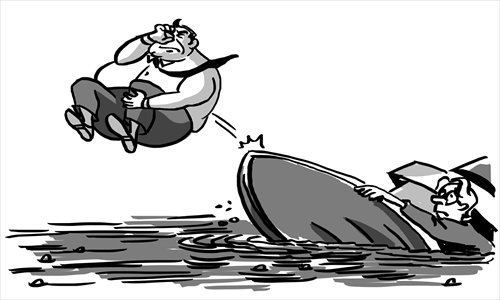
British Prime Minister David Cameron and Scottish First Minister Alex Salmond, the leader of the Scottish Nationalist Party (SNP), have just worked out a deal for a binding referendum on Scottish independence, to be held in 2014.
The British government and most of the British agree with the principle of self-determination; the people of an area have the right to choose what they want their nationality to be, rather than having it forced upon them.
This move upholds that principle, and there's strong support for the idea of the referendum itself. But approving of Scotland's right to choose doesn't translate into actual support for independence, either inside or outside of Scotland.
Scotland itself has never disappeared from the maps. The UK contains Scotland, Wales, England, and Northern Ireland, but doesn't supersede them. And Scotland had a long history as a fully independent nation before being brought into the UK in the Act of Union 1707 passed by both the English and the Scottish parliaments.
It still has a vibrant and uniquely Scottish culture, although its languages, Lallans (Scots) and Scottish Gaelic, are confined to a few tens of thousands of speakers. It has its own soccer team, albeit one whose fans seem more committed to the English team losing than the Scottish one winning.
It also has its own parliament again, reestablished in 1998 after devolution, its own domestic policies, including more generous welfare and education than England, and its own legal system.
But the problem, for the independence advocates, is that Scotland already has all of these things.
Most Scots are happy with the situation as it is, and see no reason to give up the benefits of being in the UK for a change in national status. They might get shirty when referred to as "English" rather than "British" by an unthinking foreigner, but the financial, military, and political benefits of the union still appeal.
Oppression and prejudice feed independence movements. But Scots have rarely faced any strong bias in the rest of the UK, and Scots don't face imprisonment, torture, or even loss of status from advocating independence.
Unlike the Irish, caricatured as monkeys by the English press and forced into starvation by British policies, Scots thrived under the British Empire and Scotland boomed economically.
The last serious national oppression was the Highland Clearances of the 18th and early 19th centuries, forced mass evictions of the rural poor.
Scots have always been well-represented in UK politics. The SNP, the chief pro-independence force, has never been repressed or expelled; its MPs still sit unhappily in Westminster. Several 20th century prime ministers, from Ramsay MacDonald to Gordon Brown, have been Scottish.
Actual backing for independence hovers at less than 40 percent in Scotland, and has fallen in recent years. One reason has been the coming to power of the SNP in the Scottish Parliament, under Salmond's leadership.
Grand promises made in opposition have proved slightly less tenable as politicians have started to grapple with the realities of government, and the SNP has been just as grubby and prone to scandal as any other party.
Another reason for the fall is the EU's troubles. Scotland has benefited greatly from EU money, and Scottish politicians envisioned themselves, after future independence, as a new Ireland, booming off the back of EU grant money and manipulated tax rates under the EU's comforting wings.
Salmond talked grandly of taking the country into the euro and others boasted of a new "Celtic Tiger." But with the continuing euro crisis and the collapse of the Irish economy, the shelter of the UK looks sturdier than that of the EU.
Financially, an independent Scotland would be massively dependent on North Sea oil. The future of these oilfields, within Scottish waters but developed and funded under the UK, would be the toughest part of any negotiations.
Without them, the Scottish economy wouldn't be able to fuel the generous welfare policies the SNP has committed itself to. But North Sea production is set to fall to a third of its peak by 2020, leaving Scotland's financial future even shakier.
Quite rightly, Scots will get the chance to choose their own future. But they will almost certainly choose the status quo.
The author is a copy editor with the Global Times. jamespalmer@globaltimes.com.cn