Doc's find netizen niche
With over 160,000 votes online, Border Girl, a documentary about a 14-year-old girl living in the Laokai city of Kokang at the border of China and Myanmar, won the "audience's choice" prize at the Phoenix online video website (v.ifeng.com), which held its Documentary Award ceremony over the weekend.
A year ago, Chen Fu, the director of the documentary, had just finished filming this project with his team. Struggling to raise enough cash for post-production, he posted a trailer of the documentary online to ask for help from netizens. With the support of a number of documentary lovers, he was finally able to complete the work.
Many people may have never heard about Kokang before. Now, at least 160,000 people not only know about Kokang in Myanmar, but also are emotionally connected with it because they learned that 90 percent of its residents are Chinese descendants suffering from a war.
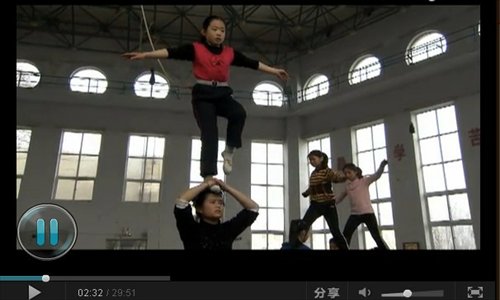
Another film, Bloom with Tears, is a 30-minute documentary that focuses on a group of children who come from poor families and work hard at an acrobatics school, hoping to change their lives. It received the "best micro documentary" on Friday.
The director, Jin Huaqing, said during the ceremony that he never considered putting his work online, but now it is under the spotlight because of the Internet.
Phoenix (v.ifeng.com) is not the first online video website to host its own award for documentaries. Tv.sohu.com, for example, also held a documentary celebration in 2010.
Now, all the major online video websites have a documentary channel and treat it as an increasingly important part of the long-term development.
Because of this exposure, more and more documentaries that may not be qualified to broadcast on traditional media forums now find a platform to let the world see them.
At the same time, the public can discuss them, interact with filmmakers, participate in financing and, of course, select their favorite.
Different audience base
Huang Pingmao, director of Sohu's Documentary Channel, told the Global Times that, based on his experience, audiences watching documentaries online have different tastes and preferences compared to television audiences, though both love documentaries.
"A popular documentary on TV may not receive the same popularity online. There are a few times that we paid a high price for the copyright of a documentary that we expected it would be popular but failed to attract an audience. On the other hand, some documentaries that target a niche market turned out to be extremely popular online," said Huang.
The Cold Winter is about the artists living in several art districts in Chaoyang district in Beijing defending their rights when their houses were subject to demolition from end of 2009 to early 2010.
Huang Haibo, a TV producer and host, said during the ceremony that the people and topic related to this documentary are too sensitive to be shown on TV. Even if it can be broadcast on TV, it might not attract the same amount of audience as it does online now. "It seems like a personal record of life but in fact reflects the whole society and the changes happening in the Chinese society," said Huang.
Documentaries produced by mainstream television channels and foreign productions from Discovery or BBC hold a dominant position in the Chinese market now.
Chen Xiaoqing, program operation director of Documentary Channel at China Central Television said that in the competitive TV environment, documentary producers aim to attract as much audience as possible. As a result, every aspect of a production needs to follow certain rules, leaving limited space for personal creativity. It is, after all, a "media documentary," not a "personal or art" documentary. With the development of online documentary channels, the later now has a chance to reach a wide audience.
Jiang Xianbin, CEO of CNEX, a non-profit organization that promotes Chinese language documentaries, said that because of this difference between audiences, there is a possibility for mutual content supply in the future. As the number of productions for the online audience increases, some will be suitable for the television audience and may be aired on TV.
More possibilities
Ruby Yang, the Oscar-winning documentary director who is famous for The Blood of Yingzhou District, shared her understanding of the opportunities offered by new media during the ceremony. Fund-raising online is a common way for producers whose projects touch sensitive or narrow topics in many countries now. Netizens would donate on the projects they are interested in and then they become the potential audience of the documentaries.
Online documentary channels are not only a platform but also offer experimental opportunities. Sohu is producing its own documentary program at the moment. "Pay for click," as Huang Pingmao has described it, is the way that they expect to cover the costs of production.
Gao Jin, the editor-in-chief of iqiyi.com, a major online video website in China, told the Global Times that online media creates a new relationship between the audience and a documentary. The Taipei Palace, a documentary about the treasures stored and exhibited in Taipei's National Palace Museum, was filmed using a high definition camera. It has been one of the most popular films on iqiyi's documentary channel so far. The short physical distance between a viewer and the computer screen is ideal for taking advantage of the high definition camera, which can show details on the vases and other pieces of the collection. Moreover, because of the interactive nature of the Internet, viewers can communicate with the documentary makers.
Online video websites used to fight over the copyright of popular reality shows and television series. With the alliance of a few major sites for collective purchase of television copyright early this year, the focus of competition has shifted to documentaries.
Gao said that documentaries are an effective way to represent the issues relevant to the natural environment, cultural phenomenon, and social problems that are not often shown in popular reality shows.