Leaving town
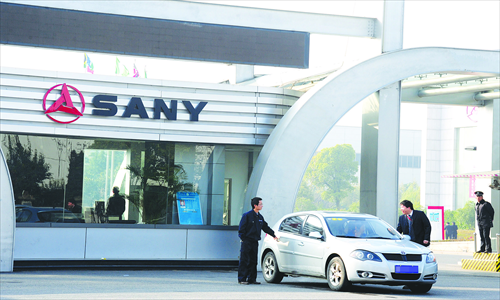
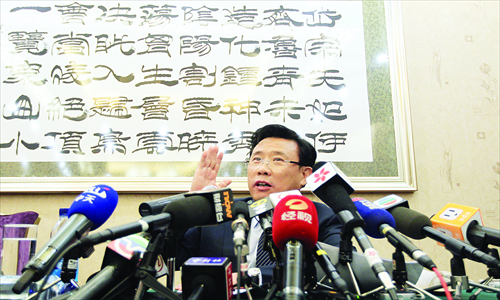
The announcement Wednesday by Sany Group that it will move its headquarters and 1,000 employees to Beijing has surprised a lot of people.
Sany, a leading construction equipment manufacturer, disclosed that one of the reasons it decided to move is that a rival firm has created "troubles" for its business.
A need to expand overseas prompted Sany's scheme to relocate its headquarters from Changsha, capital of Central China's Hunan Province, but the troublesome issues caused by a rival were also a factor, media reports said recently.
The rival in question is Zoomlion Heavy Industry Science & Technology Development Co, which is also a Changsha-based heavy machinery maker.
"Amid the vicious competition, it is difficult for Sany to pursue its long-term development, and it is also hard for Zoomlion to focus on its own operations," business magazine Global Entrepreneur quoted a statement from Sany as saying Thursday.
A major blow
Founded in 1989, Sany has grown into one of China's top equipment manufacturers, with annual sales of over 50 billion yuan ($8 billion).
Three years after Sany was founded, its major rival Zoomlion was also established. During the past two decades, the competition between the two companies has become more intense. However, in 2011, Sany suffered a major blow, and Zoomlion was reported to have played a role in the setback.
In April 2011, Sany announced its plan to get listed in Hong Kong, with the hope of raising HK$30 billion. But on April 19, shortly after the company announced its plan, a person who claimed to be a former employee of Sany claimed on the Internet that the company had handed out bribes amounting to nearly 6 million yuan.
The accusation immediately gained widespread attention, and on April 20 shares in Sany on the Shanghai Stock Exchange fell by 4.3 percent, wiping 6 billion yuan from its market capitalization.
The scandal placed a shadow over Sany's plan to list in Hong Kong. The underwriters of the planned listing, including Citibank and China CITIC Bank, launched an investigation into Sany's financial status soon after.
The Global Entrepreneur report said that over 1,000 employees of Sany across the country had to come to Changsha to answer questions from lawyers and accountants.
A police investigation later proved that Sany had not given out any bribes, but the company had missed the ideal timing to get listed.
"During the roadshow (for the planned listing), all the questions from reporters were related to the 'bribe scandal,' and few questions were related to the company's operations," Liu Hua, a manager in the company's accounting department, was quoted as saying by the Global Entrepreneur.
The company restarted its plan to list in Hong Kong in August 2011, but the volatile market conditions were not suitable for a listing any more, and Sany had to cancel the plan.
Zoomlion responded late Thursday night by issuing a statement on its website saying the news report "seriously violates the fact."
"Zoomlion has upheld honesty and the law as fundamental guidelines since its founding. The report is pure fabrication and slander," it said.
The firm said the article has seriously damaged its image, and reserves the right to pursue legal action against the libel.
Cut-throat competition
Sany is in direct competition with Zoomlion in almost all areas of the heavy machinery market.
In February this year, Sany acquired German concrete pump producer Putzmeister Holding GmbH, a firm that Zoomlion had also tried to buy.
Last year, Zoomlion adopted a "selling on credit" strategy to increase its sales, offering a four-year equipment lease and no down payment.
The strategy helped Zoomlion to seize a larger share of the market. Sany decided to follow suit from January to March this year, but it quickly canceled the policy due to insufficient cash flow.
Sany's vice president, Liang Linhe, wrote in his Sina Weibo in April that the radical sales strategy adopted by Zoomlion had hurt the overall industry, but Chen Xiaofei, vice president of Zoomlion, hit back a few days later, saying Sany should be honest when doing business.
The competition for buyers has also been fierce. According to the Global Entrepreneur report, Sany claimed that Zoomlion had arranged for its employees to seek out Sany's buyers during airport pickups in the hope of finding more clients for Zoomlion.
The Global Entrepreneur report mentioned a case in 2009, when C.P. Sanghvi, chairman of Indian crane maker Sanghvi Movers, visited Sany.
Sany staff members booked all the hotel rooms on the floor where Sanghvi was staying and carefully checked all the incoming calls, but still failed to prevent Zoomlion from contacting the visiting businessman. However, Zoomlion failed to get any orders from Sanghvi, who decided to buy 56 crawler cranes from Sany for 400 million yuan, the report said.
In mid-November, a post claiming that two Sany employees had been detained for alleged theft of trade secrets from Zoomlion was widely circulated on the Internet.
"The local government did not take steps to manage their relationship, so Sany had to spend a lot of time and energy handling corporate espionage," Construction Machinery Weekly, an industrial publication, said on its Sina Weibo on November 21, citing sources with knowledge of the matter.
Farewell, Changsha
Sany's administrative departments and three core units will be relocated from Changsha to Changping, a suburban district in northern Beijing.
More than 1,000 employees in the administration, including Sany's executive office and board of directors, will be relocated within two months, He Zhenlin, vice president of Sany Group, told the Global Times on November 20.
He said the main purpose of the plan was to help the company expand overseas.
"Sany has presence all over the country, and the next step for it will be globalization. So it is natural for the company to move the headquarters to Beijing," Wang Hexu, an industry analyst with Shanghai-based Huabao Securities Co, told National Business Daily on November 23.
"Beijing offers better scientific researchers, more international employees and wider connections to the central government than Changsha," He Manqing, a researcher with the Chinese Academy of International Trade and Economic Cooperation under the Ministry of Commerce, told the Global Times November 23.
"Competition between the two companies has helped to boost the development of the local heavy machinery sector, and the departure of Sany may hurt the industry in Changsha. And it might not necessarily be good news for Zoomlion," the Shanghai-based National Business Daily quoted Zhuo Zhijian, manager of a Shenzhen-based consultancy, as saying.
Global Times