Russia and Kazakhstan heading for cosmic divorce over Baikonur’s future
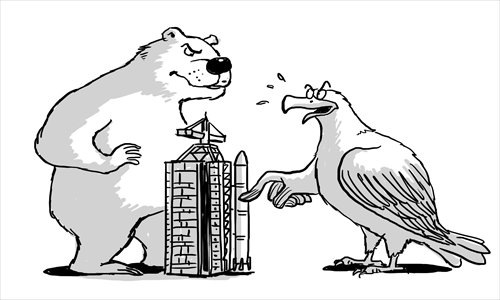
Neighbors and close political allies Russia and Kazakhstan have been engaged in an increasingly contentious row over the Baikonur Cosmodrome, the Soviet-era spaceport in the Kazakh steppe that Russia leases.
Kazakhstan made the dispute public on December 10, when Talgat Musabayev, chairman of the National Space Agency of Kazakhstan (Kazkosmos), speaking before the parliament in Astana, announced that President Nursultan Nazarbayev was seeking to renegotiate the lease agreement.
Musabayev implied that Kazakhstan was determined to expel the Russians, though he hedged on timelines, noting that Moscow was resistant.
The case shows how sovereignty and prestige still trumps pragmatic cooperation between these neighbors.
Kazakhstan ratified the current agreement on Baikonur in 2010, six years after Russia agreed to extend its lease until 2050 for a $115 million annual fee.
Suspicious that Moscow might later renege on the agreement, leaving Kazakhstan's own space industry ambitions adrift, Astana simultaneously sought Moscow's commitment on a joint launch facility at Baikonur for Angara next-generation rockets, dubbed Baiterek.
While operations continued at Baikonur in the interim, Moscow threatened to revoke its commitment to Baiterek over the lease ratification delay.
Meanwhile, Moscow separately announced its intention to build the Vostochny Cosmodrome, now under construction 100 kilometers from Russia's border with Northeast China's Heilongjiang Province.
Vostochny is projected to serve most of Russia's Baikonur traffic by 2020. The $13.5 billion project seems to have sapped the operational budget for the Russian space program, evidenced in recent years by the launch failures of the Phobos-Grunt Mars probe.
When Vostochny is finished, Russia will have absolved itself of the embarrassment of paying rent for Baikonur, territory it conquered in the 18th century, and will command the upper hand in leasing negotiations.
Kazakhstan has enjoyed the prestige of its association with the Russian program at Baikonur, using it as a base to establish KazCosmos, and as leverage to increase its prominence in Russian missions. Musabayev himself is a veteran of three flights on Russian rockets.
With the abrupt departure of the US from the manned space flight stage, Kazakhstan finds itself hosting the only facility servicing astronauts for the International Space Station.
Such prestige is particularly important to Nazarbayev, whose legacy projects are growing along with his advanced age.
Without a sustained commitment of Russian expertise, investment and vehicle launches to Baiterek, Kazakhstan may exit the space industry stage before even substantively entering it.
The two sides agreed to split the $224 million cost of the project in 2004, projections for which then absurdly ballooned to $1.36 billion.
Kazakhstan's initial complaint centered on the environmental damage caused by the troublesome Proton rocket. KazCosmos cut Russia's request for Proton launches from 17 to 12 in 2013, which its space agency complained would cost $500 million in forfeited contracts.
Perhaps not coincidentally, Baiterek is intended to launch Proton's replacement rocket.
Independent researchers have found strong evidence linking Baikonur launches to health and environmental damage in the past, though both governments have little trouble hushing the complaints of activists and citizens when it suits them. If the row is an implicit bargaining tactic, then Kazakhstan is simply pushing Russia to commit to a longer-term space cooperation.
Russia and Kazakhstan will likely, eventually, reach a compromise that satisfies neither party, to be annulled at a later date. Kazakhstan may be at its moment of maximum leverage now, though both sides should feel the balance shifting as Vostochny marches on. Thus, Astana may struggle to pin Moscow down as it heads for the exit.
The author is an independent analyst on Central Asian affairs. opinion@globaltimes.com.cn