Global goals
Editor's Note:
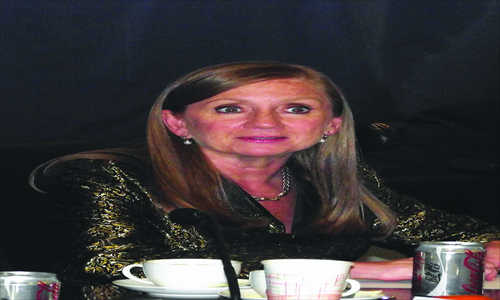
Costa Rican Minister of Foreign Trade Anabel Gonzalez (Gonzalez) was nominated in December to succeed the current WTO Director-General, Pascal Lamy, whose term expires on August 31, 2013. Global Times (GT) reporter Song Shengxia spoke to her Friday while she was in Beijing for meetings with Chinese leaders. She shared her views on a number of key issues, including concerns over trade protectionism and China's bid to join the WTO Government Procurement Agreement (GPA).
GT: China is facing increasing trade protectionism from countries like the US and EU countries, involving anti-dumping and countervailing duties and investigations. Why is China being targeted?
Gonzalez: China is the world's largest merchandising force. Large trade partners are more exposed to the sheer volume of potential trade conflicts. I believe the WTO, with its trade settlement mechanism, provides a forum to manage bilateral trade tensions. This forum has historically served in arbitrating trade frictions between other members. This should be the case with China as well. It is a transparent, orderly way of solving disputes.
GT: Emerging countries such as Brazil and Mexico are also increasing trade protectionism against Chinese imports. It seems that protectionism practices traditionally used by developed countries against their trade partners have spread to emerging countries as well. What's your comment on this trend?
Gonzalez: This again relates to the rapid and profound transformation of the geography of the trade that is taking place right now and China's impressive participation in world trade. The pressure for protectionism measures increases at times of economic disputes. In that regard, the importance of having a trade settlement mechanism in the WTO is that these trade frictions can be resolved in an orderly fashion.
GT: China is undergoing a leadership transition. What do you expect from China's new leadership?
Gonzalez: China is very important for the global economy and the global economy is also very important for China. So as such, I hope China's leadership will continue a strong and sustained involvement in the WTO and strengthen and revitalize the multilateral trade system. I hope this will include (resolving issues) through negotiation at the WTO.
GT: China has been trying to join the WTO GPA and has made several efforts since 2007. But China is still excluded from it. Why is it taking so long for China to be admitted to the WTO GPA?
Gonzalez: When a country wants to join the GPA, it has to go through a negotiating process with other members. It is important for the joining country and other members of the agreement to find a balance in that negotiation. In this process, I think, members are still searching for that balance. I hope it can be achieved because the GPA is a very important agreement.
GT: Some observers have said that trade frictions are happening right now because of the prolonged global economic downturn, which puts pressure on countries to resort to protectionism to aid their own economies, and China has fallen victim to the trend. Do you agree with this observation?
Gonzalez: The world is going through an important transformation from the social, economic and technological perspectives. This transformation brings a lot of pressure. In this context, China has become a very important trade partner. Being a very large trade partner, it is exposed to more conflicts than smaller trade partners.
The most important thing is that in the WTO, we have a dispute settlement mechanism. I want to add one very important element: What we are in a way missing in this system right now is the ability to negotiate in the context of the WTO. Because when members are able to negotiate in the WTO, they resort less to the dispute settlement mechanism.
It is important to have a balance between a negotiation function and a judicial function, so that you do not overuse your judicial function and try to settle some of the frictions through negotiation functions.
GT: What will be at the top of your agenda if you are elected WTO Director-General? What will you do about the Doha trade talks?
Gonzalez: If I were elected WTO Director-General, there are two things that would be my priorities. One is to invigorate the WTO negotiation mechanism.
In this regard, it would be very important to think about having concrete results at the next WTO ministerial conference that will take place in Bali (Indonesia) at the end of this year. I hope we will be able to achieve an agreement on trade facilitation.
I think this would be important in terms of reducing costs and obstacles to trade and also as a renewed signal of confidence in member states' ability to reach an agreement. I believe with a successful result in Bali, we can then move to the Doha negotiating agenda and try to bring everyone back to Doha.
At the same time, I think it is very important to bring discussion of new topics that are relevant to the global economy and to the WTO - things such as the global value chain, or food security, or relations between trade and investment.
The second priority would be to promote more inclusive trade growth. We know developing countries are increasingly participating in trade. China is a great example. My own country, Costa Rica, is also a very prominent example. There are many other countries that are not able to participate in trade growth because they have a number of supply-side constraints that make it difficult for them to participate in trade.
GT: The EU and the US are expected to launch free trade area talks soon. What's your expectation for them?
Gonzalez: WTO members have used preferential trade agreements and free trade agreements as a way to promote trade and investment. On average, every WTO member is a party to about 13 preferential trade agreements. In the case of the US and EU agreement and other free trade agreements, it is very important to have a strong, permanent mechanism to monitor trade agreements and regional agreements in the WTO, and make it mandatory for all these initiatives to be included in the WTO framework.