DMK pullout does not mean snap Indian general elections are nigh
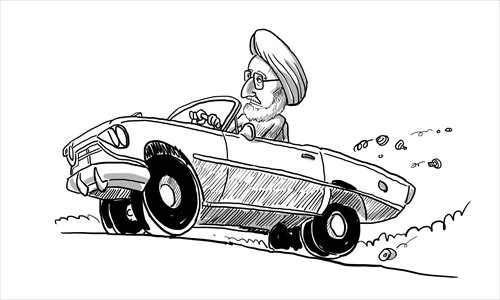
Indian politics is in a tailspin. Another ally of the Congress-led coalition government of Prime Minister Manmohan Singh has just deserted the United Progressive Alliance (UPA) ship.
This time it is the southern party, the Dravida Munnetra Kazhagam (DMK), with 18 MPs in the 540-seat House of the People. All five DMK ministers resigned and President Pranab Mukherjee promptly accepted their resignations on March 21.
Some political observers believe that the DMK's exit from the ruling coalition has sent poll pulses rasing and may hasten general elections, due only in May 2014. However, I do not agree with this assessment.
It is erroneous to believe that the UPA government has become a lame duck after the DMK's pullout. It had already become one on September 19, 2012, when the All India Trinamool Congress walked out of the coalition.
The DMK's exit has accentuated the UPA's vulnerability and has increased the government's dependence on two regional satraps, Samajwadi Party (SP) leader Mulayam Singh Yadav and Bahujan Samaj Party (BSP) leader Kumari Mayawati. They both come from the largest Hindi-speaking state of the union, Uttar Pradesh, which has 80 MPs.
Despite the Manmohan Singh government being on the edge, it is not in the oxygen tent yet. There are several reasons for optimism in the Congress camp. First and foremost is the perennial reason, a fragmented opposition.
Congress is known for the art of survival. The Congress-led coalition government of former prime minister P.V. Narasimha Rao survived its full tenure of five years (1991-96) despite the fact that it was a minority government all along.
The DMK pullout does not necessarily pull the plug on the UPA government though it is definitely a setback. The magic figure for the government to enjoy the confidence of the House is 271. Minus the DMK, the UPA government has 277 MPs supporting it, though it includes 22 MPs from the SP and 21 MPs from the BSP.
In the event of a vote of no confidence, the role of Yadav and Mayawati, who have been extending outside support to the government, will be crucial. Congress knows how to manage it - by hook or by crook. A prime example of the Congress government's well-known practice of using the premier investigating agency, the Central Bureau of Investigation (CBI), was seen a few days back when CBI raided the premises of M.K. Alagiri, the erstwhile cabinet minister and son of DMK Chief M. Karunanidhi, in Chennai. Critics lost no time in dubbing the CBI as the "Congress Bureau of Investigation."
Though Singh and Finance Minister P. Chidambaram made noises about the CBI's supposed "unilateral" move and distanced themselves from the CBI raids, the DMK was handed a crude message. The crafty SP's Yadav too was sent a proxy message by the soon aborted CBI raids.
Moreover, the DMK's exit from the UPA government does not mean that the regional party would vote against Congress in the event of a show of strength in parliament. The Bharatiya Janata Party (BJP)-led opposition knows this. That is why no opposition party moved for a motion of no confidence against the government as the DMK drama was playing out.
The most obvious reason for the failure of the opposition to hasten the political death of the government is that no major political parties are prepared for early elections. Virtually every political party has its own pressing issues and needs more preparation time.
Congress needs to ensure the passage of the finance bill - a constitutional necessity wherein the opposition has to cooperate or else its own MPs won't get paid. But the more crucial political task before Congress is to pilot a string of public-friendly bills in parliament.
Singh's cabinet has just cleared the National Food Security Bill that gives legal entitlement to overall 67 percent of the population for subsidized grains under the Targeted Public Distribution System. The entire food subsidy burden of the government, if the bill expectedly becomes law in a few months' time, will be a staggering $22 billion.
Congress believes that the food security bill will be a game changer. Congress can go to the electorate claiming that it has delivered on the mother of all electoral promises it made in 2009.
However, it is difficult to imagine how people will ignore the corruption-ridden tenure of the UPA. Besides, Congress may have to deal with the Narendra Modi factor, the BJP's trump card in the polls.
The author is a New Delhi-based political commentator.bhootnath004@yahoo.com