Twittering for attention
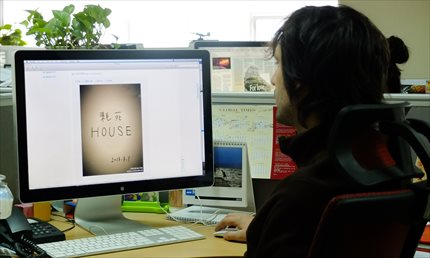
It has become a habit for Yuan Yue to spend an hour or so daily on Weibo, checking up on updates by friends and posts from her favorite accounts. Studying journalism at a foreign studies university in Beijing, Yuan follows a bunch of accounts run by foreign news organizations, which are gaining momentum on Weibo by putting up their stories and interacting with Chinese audiences.
Web of intrigue
One of Yuan's favorite foreign media accounts, the Chinese website of Japanese newspaper Asahi Shimbun, became very popular after they started posting a daily entry in June last year called "oyasumi", meaning "good night" in English. The posts traditionally used a few Chinese characters as a humorous or sarcastic hint at a news story. Many Chinese Web users began taking part in this nightly riddle.
"It turns out these two things are what the Chinese are most unhappy about," read one good night post on March 2, with a picture featuring two Chinese characters - ru fang, meaning women's breasts when put together but milk and houses when read separately. The post implied restrictions placed on Chinese mainland customers purchasing milk powder in Hong Kong, while also riffing on a State Council announcement that homeowners would face a tax bill of up to 20 percent on profits from house sales.
The post was forwarded more than 27,800 times, with many commenting that the two characters stroke the right chord with the anxious Chinese public.
"I like this creative way of story-telling, as well as their funny and friendly tone," Yuan told the Global Times. The good night posts cover a wide range of topics - food safety, pollution, government scandals, anti-Japanese protests, and whatever triggers widespread Weibo discussion. The account has attracted more than 340,000 followers so far.
Starting their microblog in February 2011, Asahi Shimbun first used the Weibo platform to popularize their biweekly online Chinese magazine Fresh Japan.
The newspaper established an official Chinese website in April 2012, with its editorial team based in Tokyo, and organized a team of five, including two Chinese employees, to manage a Weibo account. Besides posting their own stories, they re-post and comment on reports from Chinese media, and approach Web users in a more intimate way by making jokes or even mocking their own Japanese origins.
"Our goal is to deliver information that readers can relate to, since it is meaningless if a good report doesn't draw any readers," Tsuyoshi Nojima, editor-in-chief with Asahi Shimbun's Chinese website who also leads the Weibo team, told the Global Times. The website tries to gain popularity and being less aloof is a good way to win hearts, he explained.
In a country where smoldering anti-Japanese sentiment spills over now and then from the Web to the streets, it is not easy for a Japanese newspaper to promote its Weibo while trying to "let the Chinese people know more about Japan and their own country."
The Weibo site did not avoid sensitive issues such as the Sino-Japanese conflicts over the Diaoyu Islands, though it always mentions both the Chinese name and the Japanese appellation of the "Senkaku Islands."
Nojima said the Weibo account follows a policy of "spreading information that is true and objective, and not instigating confrontation."
It is interesting that Asahi Shimbun has been well received on the Chinese microblog sphere, though extreme opinions or even cursing did appear in the Weibo comments.
Web of variety
"I'm learning from Asahi Shimbun, and I try to bring out the fun, active and objective personality of our organization when posting on Weibo," said Wu Heng, who manages the Weibo account for the US-based International Business Times (IBT).
Wu told the Global Times he has been writing a special section for their Weibo by using pictures, data, and short comments to illustrate and analyze China's most discussed events. He has done several such entries covering topics such as the milk powder purchase restrictions, and Shen Jilan, a controversial National People's Congress deputy who was elected 12 years in a row while having never voted against any tabled government proposal.
Established in July 2010, IBT's Weibo account has been posting stories on a variety of topics, including business, technology, culture, and politics. But slightly different from other business and financial newspapers, IBT has taken more interest in reporting on social and political news in China. Its Chinese website has opened several Weibo accounts in Sina, Sohu, and 163.com, and IBT also has profiles on social networking sites renren.com and douban.com.
"Currently all the accounts run the same content, but I'm planning on being different by posting things tailored for different target audiences," said Wu.
He explained that he might post more soft news about culture or fashion on their Tencent microblog, given that Tencent has a younger audience. While on Sina Weibo, he maintains feeds about political and social affairs as this platform is popular among academics and professionals.
While a reader-friendly and relaxed microblogging style is widely welcomed, some other accounts belonging to foreign media organizations have chosen to remain serious yet engaging and relevant to the interests of their audience. Accounts of heavyweights such as the Financial Times (FT) and the Wall Street Journal (WSJ) enjoy wide popularity as they boast up to millions of followers although they mostly post their own stories.
After establishing a Chinese website in 2002, WSJ started its official Sina Weibo in September 2009. Besides posting their own reports and stories written by Chinese columnists, it conducts polls among Web users and has attracted more than 1.4 million followers.
A Weibo operator for a leading global business magazine, who asked to remain anonymous, told the Global Times that most posts on their official Weibo, which has 370,000 followers, are linked to stories on their Chinese websites.
He also writes original posts, mostly on news updates, including stocks, political elections, or major natural disasters. The most popular posts include news about business startups, technology trends, microeconomy, and political news such as the Bo Xilai case and the US presidential election.
He said he sometimes re-posts Chinese reports on political and social coverage, but does not usually take the time to post original comments.
Many foreign media organizations are operating their Weibo accounts based on their Chinese websites, and tweet in Chinese. Some news agencies, such as the Associated Press, tweet in English only but many go bilingual such as the Agence France Presse (AFP) which has two Weibo accounts - one mainly in English, and re-tweets posts from its Twitter account, while another account for its Beijing Bureau posts in Chinese and which sometimes uses Weibo to find interview sources.
"The approaches foreign media take on Weibo fit their overall strategy on the Chinese market," said Zhang Zhi'an, a professor in new media analysis with Sun Yat-sen University.
For those who have long established Chinese websites and are accessible on the Chinese mainland, such as the Financial Times, a Weibo account helps boost their popularity and advertisements, said Zhang. Some organizations whose websites are blocked use Weibo as a way to reach more Chinese people, he said.
As for Asahi Shimbun, although it does not operate its website in China itself, a lively, fun image helps build its popularity which also facilitates their foreign correspondents' work when carrying out interviews, he added.
Web of censorship
Running a Weibo account for a foreign media organization takes time and also extra care as many have experienced censorship.
The Weibo operator from the business magazine said some posts on their account were blocked, especially when related to media censorship and China's top leadership. Usually when a post gets deleted or blocked, he will stop posting the same content or similar posts to avoid trouble, he told the Global Times.
Wu with IBT told the Global Times that these topics actually win more attention.
"I published many posts about the Southern Weekly editorial case and many were deleted," he said, referring to the newspapers recent protest with local authorities over alleged excessive government involvement in the newsroom.
"I'm pretty used to the censorship now since you have to play by the rules if you want to stay around," Wu said, adding that he will try to publish a seemingly "sensitive" issue as early as possible before censorship strikes.
Meanwhile, Nojima said "we basically respect the judgment of China's major micro-blogging operators."
The restrictions on Weibo do not pose a real challenge to foreign media, as they will continue touching upon sensitive issues while becoming smart about how to post, said Bill Bishop, an American media commentator and co-founder of Marketwatch.com.
"The key to successful microblogging is to engage and communicate with followers," Bishop said, explaining that some personal Weibo accounts of correspondents or editors, such as Yuan Li, editor-in-chief of Wall Street Journal's Chinese website, have been very active on Weibo, which helped boost the number of followers for their organization.