Pulling out all the stops

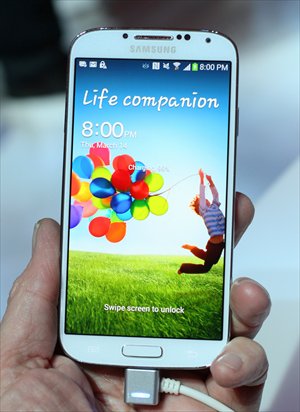
Preorders for Samsung's new flagship handset, the Galaxy S4, have been piling up in the Chinese mainland market since Wednesday, adding to the South Korean phone maker's ammunition against its closest rival in the high-end segment of the world's biggest market for smartphones.
A month after the New York launch of the highly anticipated gadget, many Chinese consumers considering a fancy smartphone other than Apple's iPhone 5 are pleasantly surprised at the new phone joining Samsung's flagship Galaxy family.
All three of the country's telcos - China Mobile, China Unicom and China Telecom - opened up for preorders on Wednesday, shortly after the company unfolded preorders of the non-contract version of the phone for mainland consumers on April 11.
Customer service staffers of all three telcos revealed no conclusive information about the phone's exact prices or release dates when contacted by the Global Times on Wednesday.
But a customer service employee with the Anhui branch of China Telecom's 10000 hotline confirmed on Wednesday that presales of China Telecom's customized version began across the province on Wednesday with an offer of a 24-month contract for 5,288 yuan ($856). An additional coupon for 500 yuan in phone fees plus a portable smartphone battery case is being offered to the first 100 buyers, who are expected to receive the phone by the end of the month.
Thinner than its predecessor, the S3, but coming with a bigger 5-inch Super AMOLED display with a resolution of 1,920 by 1,080 pixels, and a pixel density of 441, the Galaxy S4 with two quad-core processors and a 13-megapixel camera seems all the more appealing, especially with its unconventional eye-controlled features.
The phone is capable of sensing users' eye movements so as to automatically launch applications of the phone. For instance, if a user glances away from the phone, the stream of a video being played will automatically pause, and when the person's eyes refocus on the display the stream will restart.
Samsung is likely to gain a firmer foothold in China's market with the new phone, Wang Jun, an industry analyst with Beijing-based market research firm Analysys International, told the Global Times on Wednesday.
Noisy China battlefield
"Although it might be hard to predict accurate sales figures for the phone, Samsung is very likely to receive a new round of applause among users," Wang remarked, who stressed Apple's iPhone 5 underwhelmed consumer expectations and has shown to be lacking cachet among Chinese users as a result.
In comparison, Samsung's new phone has essentially met market expectations.
"Samsung has fulfilled the promise of their marketing that they are the tech innovators. It remains to be seen whether it's overload for customers, whether they can really take advantage of all these features," industry analyst Charles Golvin at the research firm Forrester said after the phone's launch in Apple's home turf on March 14, according to Reuters.
The new flagship phone coming to the Chinese market is indicative of an ever-intensifying rivalry between the two top handset makers.
In the fourth quarter of 2012, Apple closed the gap with Samsung in terms of handset shipments across the globe, while continuing its dominance in the market in terms of business revenue, according to the latest figures released in March by the market research firm International Data Corporation.
But this global triumph has taken a few hits in the Chinese market, where handset manufacturers from both home and abroad continue their bets on the market.
Also on Wednesday, preorders for the new HTC One were opened up for mainland consumers, although the figures paled in comparison to its South Korean competitor.
Veteran smartphone maker BlackBerry, formerly Research In Motion, also recently highlighted the importance of the Chinese market, although its ability to make a comeback to the smartphone arena remains in doubt with its new make-or-break operating system.
In a Q&A published by The Wall Street Journal on its website on April 12, the Canadian phone maker's Chief Marketing Officer Frank Boulben said, "We are investing more in China ... We cannot say when exactly we will launch BlackBerry 10 devices in China, but when we do, we will have a substantial marketing campaign. We expect it to be bigger than any other marketing campaigns we've had in China in the past."
A source who has knowledge of the launches also confirmed to the Global Times on Wednesday that the Blackberry 10 lineup is expected to be offered to customers in China before the yearend.
Expressing doubt over rivals' ability to challenge the current positions of Samsung and Apple in the high-end market segment, Analysys International's Wang noted, however, that an array of domestic Chinese phone makers, especially those offering self-customized operating systems, are likely to pose a continuing and formidable threat to these international brands' market share in terms of shipments.
A loaded counterattack?
Local brand-name phone makers including Lenovo, Huawei and ZTE have already proved their marketing flair in their home market, with figures from research agencies pointing out their muscle in terms of shipments.
Over the last year, Samsung secured a share of 17.7 percent of the Chinese market, while Lenovo took the second spot with 13.2 percent and Apple notched the third with 11 percent, according to Strategy Analytics. Chinese brands Huawei and Coolpad followed them with 9.9 percent and 9.7 percent, respectively.
Shortly after the buzz created by Smartisan, a Chinese operating system based on Android from a startup by Luo Yonghao, who had previously only sold IT hardware but vowed to take on the likes of Apple, Chinese handset maker Xiaomi Technology announced earlier this month an upgrade of its customized platform as well as new phones powered by the platform.
And with Alibaba Group's announcement of its co-op with five less-known Chinese cellphone manufacturers on Monday, when a raft of six smartphones running on Alibaba's self-developed mobile operating system were released, the homegrown Chinese companies have become more aggressive in taking on their big global competition.
Apple appears to have come under pressure in particular from Chinese phone makers, despite the fact that the California-based tech innovator has so far dominated the most valuable part of the smartphone arena.
Piper Jaffray's Gene Munster on Tuesday cut his price target for Apple, from $767 to $688, as he expected that a rumored cheaper iPhone tailored for markets such as China will cannibalize existing iPhone sales by up to 30 percent. "For every three cheaper phones sold, one full-priced phone is cannibalized," he said.