H.M. Naqvi
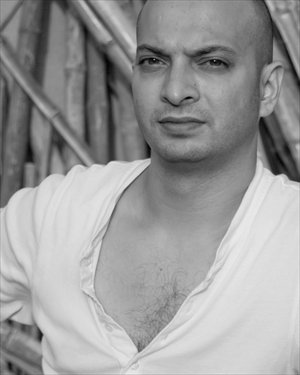
It's been over a decade since acclaimed Pakistani novelist H.M. Naqvi's brother received an unexpected visit from FBI agents at his US home, although time has done little to ease his bitterness. A year before the fateful visit, the US had launched its War on Terror in the wake of the 9/11 attacks. Speaking at Beijing's recent Capital Literary Festival, Naqvi's agitation was still fresh about his brother's harassment.
"He was visited by the FBI not once but twice. It was a case of mistaken identity," stressed Naqvi.
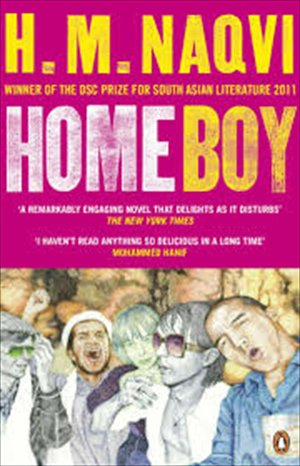
The incident, which Naqvi learned about via a phone call while perched in a New York bar, irritated the 39-year-old author so much that he instantly scribbled his thoughts on a napkin using a pen borrowed from a bartender. Little did Naqvi know, it was the beginning of a four-year project that would eventually become his debut award-winning novel Home Boy.
Published in 2009, the novel follows the negative stereotypes that plague the lives of three young Muslim men of Pakistani origin post-9/11. The trio - a New York University graduate, a PhD dropout with a green card and a hulking DJ from New Jersey - not only encounter hostility from their Caucasian friends, but also face interrogation by the FBI, who suspect they are operatives for an Arabic terrorist group.
A decade after 9/11 and just a week after the Boston Marathon bombings that claimed three lives, stereotypes linking Muslims to terrorism in the US are as fresh as ever.
"Home Boy is a dark comedy. The book contains social and political vicissitudes," Naqvi, winner of 2011 DSC Prize for South Asian Literature, said of his novel.
Finance to fiction
Born in London in 1974, Naqvi had a globe-trotting upbringing that involved stints in Islamabad, Washington DC, Brussels and Algiers. He made a failed attempt to become a writer after graduating from Georgetown University with degrees in English literature and economics in 1996.
Struggling to make a breakthrough as a scribe, he worked in the financial sector for almost a decade before he quit his well-paid job with the World Bank to take another shot at writing in 2003.
Despite being broke, he managed to complete Home Boy in 2007, securing a publishing deal two years later. The book became a sensation shortly after its release, paving the way for tours internationally amid the apt backdrop of the War on Terror.
The stereotype of Muslims being linked to terrorism or Islamic extremism prevails largely because of ignorance, Naqvi said.
"'Al Qaeda' is an Arabic term for an Arab terrorist organization run by Arabs. They dispatched 15 Saudis and four others to attack America on September 11, 2001," the author explained.
"Pakistanis are not Arabs. We are South Asian and the lingua franca of Pakistan is Urdu. Unfortunately, many people don't have a handle on such fundamentals."
Listening to Naqvi, it's easy to detect his pride in his home country and desire for more people to have a better understanding of it worldwide.
"Few people would, for instance, know that Pakistan has become the fifth most populous country in the world. Pakistan is synonymous with many things, from the mighty Indus River to literature," he said.
Fortunately for Naqvi, he didn't experience the same type of hostility that his novel's characters do in the wake of 9/11 in New York.
But he imagines things would have been totally different if he lived in a small town in Middle America.
The US still holds a special part in the author's heart, with some of his fondest memories being of his stay on the East Coast.
"I got my first job in DC. I fell in love there and, although destitute, I completed half of Home Boy in Boston," he explained.
Since the 2011 death of Osama bin Laden in Pakistan and subsequent claims Islamabad had sheltered the Al Qaeda leader, Naqvi notes perceptions among his compatriots about the US are still largely shaped by Washington's foreign policy.
"When the Americans helped us during the earthquake [in North Pakistan in 2005], perceptions were positive. When American troops gunned down ours on the border last year, perceptions were negative," he noted. "Unfortunately, American foreign policy in the region has been a disaster over the past few years."
Returning to his roots
After completing the manuscript for Home Boy in 2007, Naqvi decided to move back to his hometown of Karachi, Pakistan's second-largest city. Now, he's penning his second novel set in the bustling city.
Aside from Karachi's low cost of living and animated literary scene, Naqvi was drawn to reconnect with its sense of community.
In the US, immigrants remain segregated in their respected neighborhoods, he noted. "You have Irish-Americans, Jewish-Americans and Chinese-Americans. The sense of loneliness scared me," he said.
Though he becomes restless from time to time residing in Karachi, he's confident his home country will inspire his future writings.
"There is a story under every stone, and I like to think a good writer, a serious writer, can thrive almost anywhere," he said.
The Karachi Literature Festival, first held in 2010, has become the country's premier literary event, bringing together domestic and international writers.
Additionally, a number of Pakistani writers have found acclaim on the international stage, including writer and journalist Mohammed Hanif, author of A Case of Exploding Mangoes (2008), and Mohsin Hamid, author of The Reluctant Fundamentalist (2007).
However, Naqvi concedes it might take more time for the country and its people to be portrayed fairly in literature to outsiders.
"I attended the launch of a young adult novel in February. Now, I'm looking forward to getting my hands on medical thriller Breath of Death (2013).
In both cases, I doubt either writer is concerned about the portrayal of Pakistanis. I would think both want to write good books," he said.