Write to span cultures
British literary magazine Granta recently announced its fourth list of the 20 best young British novelists, following its tradition of putting forward one list every decade since 1983.
"From satirists to humorists to sweeping epic-spinners, these writers have a command of language and their form which is simply astonishing. They show that the novel has a bold, brilliant future in Britain. I could not be prouder of the list," Granta editor John Freeman said.
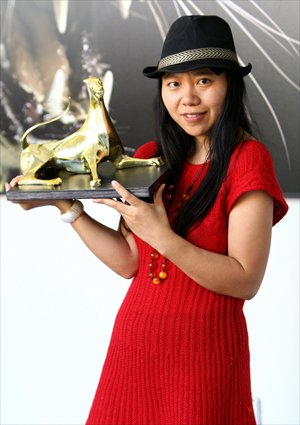
Two noticeable features of the list are that it is women-dominated and multicultural, including writers with different ethnic backgrounds. Among others, Xiaolu Guo has attracted much attention for being not only a woman but the first novelist from China to make it.
"She is a diligent writer and has her unique point of penetration," Peng Lun, chief editor of the Chinese version of Granta, told the Global Times. "The list is encouraging for young writers like her."
Elevating the standard
Granta, a literary magazine with a history of over 120 years, has a record of spotting emerging writers. The Granta list focuses on emerging talent that are expected to be big names in the future, putting relatively unknown novelists into the spotlight based on its prestige built through previous lists.
Granta's first list has been regarded as very influential. Many writers such as Salman Rushdie, Martin Amis and William Boyd have become household names. The 1993 and 2003 list continued the trend, though with sliding influence and controversy.
As reported, the 20 top novelists this time are chosen from 150 hopeful young authors over a year. "The ones that we picked out are in there because they are so unique. We were trying to choose people who were at least capable of writing the best work of their generation," Gaby Wood, one of the seven judges, told The Telegraph.
Dominated by female writers, the 2013 list also looks international by including authors with different ethnic backgrounds. Besides Guo from China, it also boasts young writers with their roots in Nigeria, Ghana, Pakistan, and other countries.
As the first Chinese writer to make the list, Guo said her listing has symbolic meaning. "It shows an open country can include multiple cultures," Guo told the Dongfang Daily in an interview.
"It is a sort of surprise for me," Guo told the Global Times, "but again, when someone has published several novels already and has lived as a writer most of my life, perhaps it is not a huge surprise."
Chinese narrator
Born in a small town in Wenling, Zhejiang Province, Guo went to the UK in 2002 on a scholarship after her college education at the Beijing Film Academy. Having written and lived for years in the UK since then, now she is one of the most-watched Chinese writers in the West.
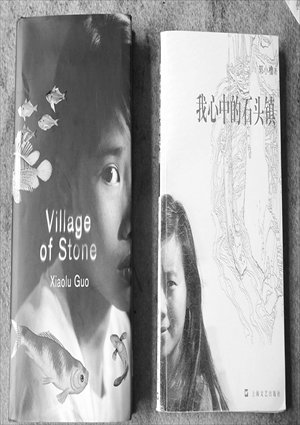
Guo was first known to British readers with her first novel Village of Stone, which was translated into English in 2004. The novel traces a girl's memory of her lonely childhood in a small town after living for years in Beijing. It was nominated for the Independent Foreign Fiction Prize in 2005.
British writer Doris Lessing reportedly said that the book has the charm of a fairy tale or legend, though it depicts misery.
A prolific writer, Guo wrote many long and short novels in Chinese in only a few years, including Who is My Mother's Boyfriend? and Fenfang's 37.2 Degrees, before she tried to write in English.
In 2007, she became known by more English readers with her first English novel A Concise Chinese-English Dictionary for Lovers. In the novel, Guo tells 80 stories a Chinese woman's experiences in the UK by explaining 80 relevant English entries, such as "foreigner," "privacy," and "humor." It demonstrates the joy and pain of cultural clashes with love stories as the main material.
"It shows a clever style of writing," Peng said.
In reference to her first attempt in English, Guo once said that the language ability in the book is "naïve and direct."
According to her, it was an experimental novel and she thought little about the readership. But it proved a big success. It was shortlisted for several major English literary awards and translated into over 20 languages, winning Guo attention from mainstream English literary circles.
The Independent is reported to have praised the entertaining and innovative nature of the "broken" English, saying the book can lead Western readers to think in a different way.
Now the author of four novels in English, Guo is one of few Chinese writers in the UK that persist in writing in English, saying that different languages lead to different narratives.
Wearing many hats
Guo's novels are mostly based on fragments of real experiences and what she saw both in China and abroad. One important theme of her work is China and the cultural clashes in the global background.
In her English novels, such as Lovers in the Age of Indifference and 20 Fragments of a Ravenous Youth, she talks about rural and urban China, the rapid changes that accompanied globalization and the loss of traditional values, revealing a contemporary China to Western readers amid surreal dramatization.
Rooted in China but writing far from the country for some time now, Guo regards cultural distance as very important. "When one has a distance to a land, one can remain much more sober and stay independent … One gains more perspective and gets enriched while staying distant from both cultures," she told the Global Times.
From telling Chinese stories to touching on global issues, Guo has come a long way in expanding her literary kingdom. "We now live in a rather globalized society and everyone is more or less an immigrant to a new culture. So we as writers all need to learn how to tell a story effectively, one that makes a difference while facing a global community," she said.
In addition to words, Guo has also been expressing her ideas through images. She is equally known in Europe as a filmmaker. Her first movie How is Your Fish Today? was screened in several countries outside of China and won several international prizes.
She is also the director of She, a Chinese, which depicts how a Chinese woman gets degenerated and lost in a foreign land. It won best picture honors at the 62th Locarno Film Festival for its realistic color and reflection of Chinese society in rapid development in 2009.
While rising in both the worlds of literature and film, Guo is clear about the barriers that artists from outside the Western world must break down. "It is still a Western narrative that dominates storytelling in this century, and it will carry on so for another century at least, whether one or two or even 10 Chinese writers win major international prizes," she told the Global Times.