Live film translator for top officials talks art, life
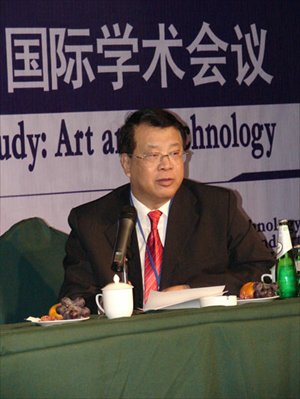
It was a cold evening in November 1985 when Bao Yuheng was startled by sharp knocking on his apartment door. He opened it to find his boss from the China Film Archive waiting for him in a military vehicle.
"Get in the car! We have a mission!" his boss announced. He obeyed. After four hours of driving in the darkness, Bao was brought to Beidaihe, a popular seaside resort near Beijing which is also used by senior figures of the Communist Party of China for gatherings.
It turned out the "mission" for 38-year-old Bao, then chief researcher of the Film Art Research Center of China, was to offer on-the-spot interpretations of 1982 Hollywood blockbuster action flick First Blood for senior Party leaders. He had never seen that movie before. He sat alone in a room with a microphone and translated the dialogue live into Chinese for his audience.
"I was told not to ask who was in the audience and to keep my talking limited to the translation," Bao told the Global Times. "I was really nervous and afraid I would say something wrong."
After the private screening, he learned that his audience was Hu Yaobang, a Party leader who was known for loving Hollywood films. It was said that Hu was very happy with the translation. Bao was rewarded with a bowl of hot wonton soup.
Back in the 1980s, Hollywood films were not easy to get. Many of them were "seized" by customs officers on their way through Hong Kong for a few days so that some high-ranking officials had the chance to watch them. The problem was, there were no Chinese subtitles. That was where Bao came in as the interpreter for cadre screenings.
Cinephilia
Born in 1947 in Beijing, Bao has a degree in English from Beijing Normal University. Later he acquired a master's degree in film art. It is this educational background that prepared him for his unlikely role as translator at the private screenings for senior leaders' Hollywood movie nights.
Bao also interpreted for former Chinese president Deng Xiaoping, who he said enjoyed watching American mafia classic The Godfather and All the President's Men, an award-winning political thriller based on a book written by two journalists who investigated the Watergate scandal.
Bao recalled that after one screening at the Diaoyutai State Guesthouse in Beijing, Deng came over to him, patted him on the back and said, "Well done!" He said he was touched by the kindness of the leader.
When it comes to generals of the People's Liberation Army, their favorite Hollywood classics are Platoon, a 1986 American war film that gives a brutally realistic look at a young soldier's tour of duty in Vietnam, and Patton, a 1970 American biographical war film about US General George Patton during World War II, Bao recalled.
"When the generals got excited while watching the film, they would shout things like 'Oh! This is what war is really like!'" Bao said.
Bao was paid 15 yuan for each interpretation, about one-fourth of his monthly salary.
Starting in 1994, China has been importing a limited number of Hollywood films each year. The annual quota allowed by the government has been increased from 10 in the 1990s to 20 today, and the overall import quotas have grown even more with an additional 14 films that are animated or made in 3D or IMAX.
Former leader Jiang Zemin is said to be a fan of Titanic. During a political meeting with delegates from Guangdong Province, he suggested that they see the film as it "had, incisively and vividly, depicted the relations between money and love, poor and rich, and how different groups of people dealt with a crisis," china.org.cn reported.
Reaching across the ocean
It was the 1949 American play Death of a Salesman, written by Arthur Miller, that opened the door of the world for Bao.
In 1983, the well-known Chinese actor and director Ying Ruocheng brought Miller to China to stage Death of a Salesman. During that time, Bao was Miller's interpreter. He accompanied him when he watched the play and for sightseeing in Beijing. The play was a great success. At the end of the visit, Miller encouraged Bao to study in the US.
The idea of studying in the US had never occurred to Bao before as he was pretty satisfied with his job. Still, Miller encouraged him to give it a try.
In 1986, he moved to the US and later obtained a PhD at Ohio University's School of Comparative Arts. Then he taught visual art at a US university. Since 1999, he has had 12 books Chinese art published in both Chinese and English. He returned to China in 2004 and worked as a professor of media technology and arts at Harbin Institute of Technology.
After studying the arts for years, Bao said it is difficult to be an artist in both the US and China these days. He gave an example of a women's art show he attended in the US where a performance artist took off her clothes on the showroom floor and asked people to pour paint on her body. After the paint dried, she used tape to peel it off of her skin. The performance was meant to demonstrate to men that the value of a woman is not based in her body. As Bao shared this story, it was clear he thought the artist had gone too far.
"Nowadays, film is becoming more and more commercial and popular, while visual art is becoming more isolated with only a few people able to understand its intentions," he said.
Throughout his career, Bao has always kept one eye on academia. As a professor, he encouraged his students to take the leap and study abroad for a while, and he has written several articles on creativity in higher education in the US. Since retiring last year, Bao has been working with Sino-US cultural exchange projects in China, arguing for schools to court more students from overseas and helping the door of exchange to swing both ways.
"I tell the American students that China has 10 times more opportunity than the US. With the economy in the US going down, it is time to come to China now," he said.