An Englishman and his Beijing garden
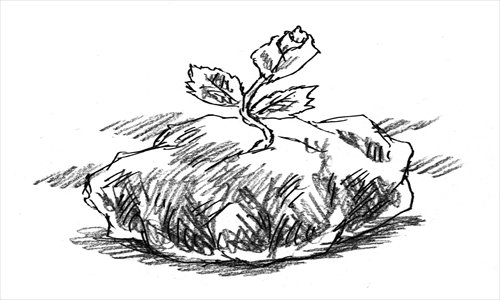
An American friend always says, in mock exasperation, "Oh you English and your gardens" whenever I e-mail him about toiling away on my Beijing plot of land.
Supposedly, it's part of the national character: No English man and woman is happy away from direct daily contact with nature.
It may be true. After years of living in the concrete jungles in various parts of Asia, in 2005, I was thrilled to move into a ground-floor apartment in western Beijing with its own garden.
Not big enough, of course; yet, in this overcrowded capital an unexpected and delightful bonus. Now the temperature is rising, I'll spend most of my spare daytime hours alternating between getting my hands dirty and reading (dozing) in the sun.
The rose bushes are budding nicely; the mint and Chinese cooking herbs are coming along well; the purple magnolia tree has bloomed for the first time this year and the flower seeds from Singapore I planted a few weeks ago are showing the first tiny green shoots.
Yet, it was a hard fight for several years to get to this stage and constant vigilance is required.
The first discovery was that the builders had left behind a lot of debris hidden under a thin soil covering. That first summer, heavy rains left a lake that was extremely slow to drain.
Thus, I began digging down, down, down to uncover numerous bricks, discarded cement and blocks of concrete, filthy rags, broken glass and plastic.
Each year, I'd focus on a section of the garden for such cleaning and then natural fertilization to improve soil quality (each fall, dead leaves and other garden waste was buried to help this enrichment process).
Finally, cultivation could begin. There have been many setbacks. I've lost count of the number of trees, bushes, herbs and flowers that seemed to flourish for a short while before dying.
They include two expensive Chinese crab apple trees, a pomegranate tree that produced fruit for a couple of years and then turned black; a grape vine that also produced fruit for a season or two before giving up the ghost.
However, through it all, virtually every rose bush planted quite early on has continued to produce a fine display of colors year after year - and we all know how much the English love their roses!
Soon, however, a new battle will begin, as it does each year to cope with an insect invasion.
Greenfly will be the first to appear, leaving a horrid, greasy sheen on the leaves they colonize. Conventional insecticides are too strong (killing the leaves as well as the insects) so their removal is a slow manual process.
And then will come a particular tenacious caterpillar (brown striped with horns) that thrives on rose bushes. Left alone, they'll strip a bush bare so daily leaf-by-leaf examination is vital.
Then, there's the constant need for watering. Yes, it's not easy being a gardener in Beijing.