Haul them in
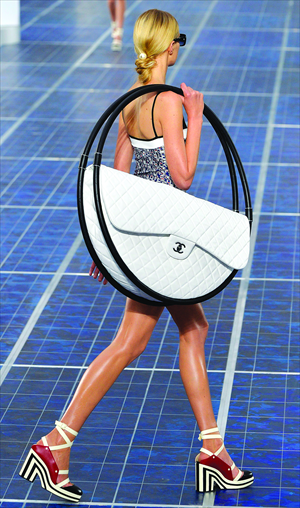
With flagging sales in their mainland stores and increasingly price savvy consumers, luxury companies are taking a leaf out of casinos' play books by offering junkets to wealthy Chinese clients eager to splurge in their Hong Kong stores.
For companies like PPR and LVMH, who have spent the past few years building stores across China, the shift toward overseas spending is forcing them to adapt their strategy in China to the tune of: if you can't beat them join them.
Luxury companies' results for the first quarter of 2013 certainly suggest that sales to Chinese consumers outside the mainland continue to grow faster than sales to Chinese consumers within the mainland, said Vincent Liu, managing director of Boston Consulting Group in Hong Kong.
He said about a third of luxury sales - from handbags and shoes to cosmetics - to Chinese people take place in the mainland, versus a third in Hong Kong or Macao and a third in the rest of the world.
Luxury goods in the mainland can be anywhere between 30-40 percent more expensive than in Hong Kong due to luxury and import taxes as well as pricing strategies.
"Their real stores are in Hong Kong or Paris. Their Chinese stores are just store fronts," said Renee Hartmann, co-founder of consultancy China Luxury Advisors.
New approach
Upmarket brands are increasingly holding private events in Beijing or Shanghai for an exclusive clientele - events where they pay deposits on items in the mainland and then are flown on an all-inclusive trip to Hong Kong to complete the purchase.
This not only helps manage relationships with wealthy clients, it also functions as an expensive marketing scheme. Industry experts compare this to tactics used by gambling firms to lure high-rollers to casinos by flying them in using private jets and putting them up in five-star hotels.
"For their real VIP customers, they do whatever they think is necessary," said Torsten Stocker, head of Monitor Deloitte's China consumer section. "You see the same with high-end gambling where people get flown to the casinos in Macao or Singapore."
China's new leader Xi Jinping earlier this year announced a crackdown on corruption. This has had a negative impact on the practice of "gifting" - where executives or officials are given luxury items in return for favors.
This shift is forcing luxury brands to re-evaluate the role of their mainland stores and overseas stores.
"They are thinking less about 'Where do I open my next few stores, and how can I speed up my expansion,' and more about 'What role do the stores in China play, what roles do the stores overseas play and how many stores in China do I really need?' That's a different way of thinking from maybe two to three years ago," Stocker said.
LVMH, the world's No.1 luxury goods group, said in April demand in China in the past 9-10 months had been flattish due to a weakening in economic growth and a government crackdown on gifts for favors.
Price increases in Europe have made shopping in Paris and Milan less attractive for tourists from Asia, but it still remains a top destination for Chinese luxury spenders.
LVMH said earlier this year it had put the brakes on Louis Vuitton's global expansion.
The impact from the anti-corruption measures has also hit watchmakers and jewelers. They too are taking to the "junket" format as a way to facilitate the overseas spending.
Richemont's Piaget, a Swiss luxury watch brand, stages two all-inclusive trips each year for 50 VIP customers. This year it plans to increase the number, Chief Executive Philippe Leopold-Metzger told Reuters.
"This is the best way to talk about the brand and its heritage and its legitimacy," said Leopold-Metzger, adding the number of visits would be "open".
"Of course they buy. We don't force them but they want to," he said of VIPs' spending on the trips.
An eye for a deal
Many wealthy Chinese customers have an eye for finding a good deal overseas. Once the bargain is identified, they jump on a flight to the destination, with the unique item code in hand, and then purchase it at a lower price than in China.
This trend was seen starkly during January to February, a period encompassing China's Spring Festival, one of the two main "golden-week" travel periods in China.
During that period, domestic luxury consumption fell 53 percent with leather goods and watches registering the biggest falls of 63 and 95 percent respectively, according to a survey by World Luxury Association.
In contrast, overseas luxury spending by Chinese tourists rose 18 percent to $8.5 billion, half of which was spent in Europe, it said.
Christine Lu, the Los Angeles-based chief executive of luxury experience company Affinity China, said the brands still need to maintain their stores in China to retain the "mindshare" of the customers when they travel.
"When they travel overseas maybe two or three times a year, they are influenced by what they see in China. There are probably many luxury companies who aren't making any money from those ridiculously high rents in Shanghai or Beijing but it's a sunk marketing cost," Lu said.
Xiao Yu, a 21-year old student who visits Europe twice a year to shop for luxury goods for herself and for resale to others, says she spends around $15,000 each time, visiting Chanel, Burberry and Louis Vuitton stores.
The tax is just too high in China, and no one buys their bags in the mainland, Yu told Reuters. Even Hong Kong is more expensive compared to France and Europe, and they are always out of stock for popular items, she said.
Yu, who sells her items by advertising on China's microblog platform Weibo, is not considered a VIP client by these brands, but still she travels overseas to sate her desire for luxury.
"We might buy these brands in the mainland if the price was lower, but that's impossible because of the tax. So maybe if they had sales that would tempt us," Yu said.