Banking innovator retires

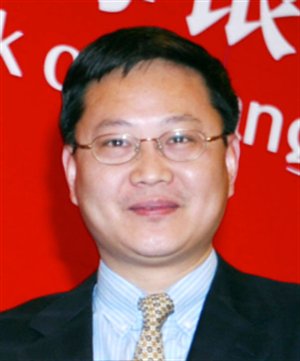
Ma Weihua, a 14-year veteran of China Merchants Bank (CMB) and its most influential figure, will retire and be succeeded by the head of China Construction Bank's retail banking, the bank announced on Wednesday, triggering market concerns about whether China's best service bank will maintain its success under the new chief.
Ma is reaching the retirement age of 65 and will retire from the major posts he holds, to be replaced by Tian Huiyu, current director of retail banking and head of the Beijing branch of China Construction Bank, who has now taken over for Ma as the party secretary of the bank, according to a CMB statement sent to the Global Times on Wednesday.
Ma Weihua has been CEO, president and executive director at CMB since March 1999. He is regarded as an innovative banker, a reformer, and an icon of the bank. From an early business focus on debit cards and credit cards to the current mobile financing push, under Ma's leadership, Shenzhen-based CMB has developed from a small regional bank with 100 billion yuan ($16 billion) worth of assets to the sixth largest commercial bank by assets, topped only by the big five State-owned banks.
CMB is chiefly known for having convenient credit card and retail banking services. It was ranked best bank in China by Euromoney in 2008, best retail bank by The Financial Times in 2010, and China's best joint stock retail bank by The Asian Banker for the seven consecutive years through 2011.
Many people expressed concerns on Weibo following the news Wednesday about whether CMB will change under the new leader to a duller State-owned style.
Some also commented that Ma has been pushing less vigorously for innovation in recent years as he was busy attending various meetings and seminars, and blamed this change for the sliding performance of the bank.
"The personnel change will not have a major impact in the short term, and the course of the bank will not change, though some adjustment will be made under the new leadership," Sun Peng, a banking analyst at BOCI China, told the Global Times on Wednesday.
Tian, Ma's successor, is highly experienced in retail banking, which is CMB's core competency, so he is likely to push forward Ma's existing strategies, Sun said.
But the future of CMB still remains unclear, as the bank's retail banking advantage is lessening due to intensified competition, Sun said. He noted that in terms of the micro- and small-business lending that is CMB's new focus, the bank is less aggressive than competitors such as China Minsheng Banking Corp and Fuzhou-based Industrial Bank due to low risk preference.
Private banking, another of CMB's strengths, may not contribute to its profit for one or two years, he noted.
Due to interest rate liberalization and disintermediation - where money flows out of banks in favor of higher-return investments - banks are facing big challenges in winning deposits to fuel their lending business.
CMB achieved a net profit of 45.3 billion yuan in 2012, according to its annual report, but the profit growth slowed and fell behind China Minsheng Banking and Industrial Bank.
The bank's share price closed at 12.5 yuan in Shanghai on Wednesday, up a slight 0.08 percent from the previous trading day, and rose 0.6 percent in Hong Kong by market close.