Into the wild and back again
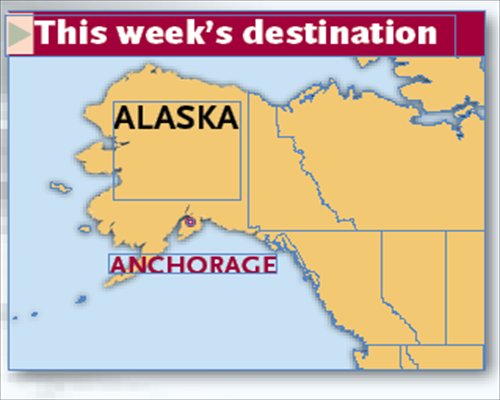
Anchorage, Alaska, is one of the world's great cities, with celebrated opera, ballet and symphonic tours, a bustling international airport, natural gas-powered bus services, a far-reaching train system, cosmopolitan bookshops, fine dining and local fare restaurants, and the city's breweries are second to none. On our first day in town, my wife and I had swung arm-in-arm, hot with purpose, into the Anchorage Cultural Center. At the end of a cavernous lobby, a lone gentleman manned the information booth. My wife and I approached the counter in an almost reverent silence. After hearing out our requests for entertainment, the man turned aside our aspirations with a humane and patient grace, informing us, "There's a showing of a film about the aurora tonight." He indicated a faded poster depicting the famed Northern Lights. "Most nights, it's on," he added.
"When can we see the real aurora borealis?" my wife asked eagerly.
"Winter," he replied. It was May. "It's hard to get Alaskans to stay indoors," he said in a tone of practiced if sincere apology. We glumly thanked him and left. Back in the downy drifts of summer snows, we considered that, sure, Alaska offers more than wilderness and wildlife, but frankly, who cares?
Untamed wilderness
Alaska is a land of abundant natural riches, true to its promise of wide open spaces, virgin landscapes, ample salmon, king crab, and big game. Pristine wilderness continues to attract people in droves. Alaska's pioneer spirit is alive and well. Denali National Park boasts the highest mountain peaks in North America, towering over Anchorage at a distance of many miles. One's hubris melts away in the shadows of these great ranges. The forests in the surrounding region are never silent. Wild winter winds gust lustily through thickets of trees, birds trill their melodies, insects buzz their steady cadences, soft rustlings in shrubberies and sudden snappings of tree branches haunt the distance, as nearby frogs croak in a bubbling river flowing alongside a weathered trail. Anchorage's landscape includes miles of walkways within the city limits perfect for calm wildlife viewing.
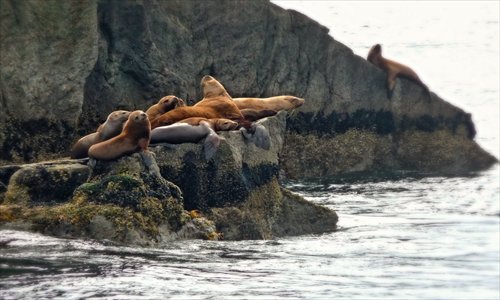
Open-water journeys, by seaplane or boat, are a great way to experience the teeming life of the Bering Sea. Many boat captains operate out of Seward, Kodiak, Homer, Anchorage, or just about any dock, conducting tours of local wildlife: sea lions, harbor seals, sea otters, eider, dolphins, and humpback whales.
For an unforgettable tour, catch a boat leaving Resurrection Bay. The Alaska SeaLife Center in Resurrection Bay, Seward, is both a top-tier cold-water research facility and a public aquarium. Aquarium displays are lively, educational, entertaining, and appropriate for any age group. Many exhibits are interactive and hands-on.
The facility specializes in marine mammals and sea birds like puffins, seals, and sea otters. Following the Valdez oil spill, with urging from Alaskan and US Federal Courts, Exxon generously donates to several marine science facilities and conservation efforts. On our Seward Wildlife Cruise, over the course of six hours, our ship came within close range of dolphins, sea lions, seals, sea otters, fishes, and wild birds such as puffins and gulls. Puffins are common seabirds of Alaska's rocky coast. They spend virtually their entire lives on the water. Their dense bodies and solid bones make them well adapted to diving for fish, but ill-suited to flight. While serene upon the water, their grace in the air earned their nickname "flying potato sacks." Witnessing glacier activity was a highlight of our voyage. Via sonar, our ship also tracked whales in their mating season. The natural fjords were a wonder to behold.
Caged wild animals on public display are anathema to Alaska's live-and-let-live pioneer philosophy, but the Alaska Zoo's history is special. It was a reluctant zoo, built to house a baby Asian elephant named Annabelle. Born in India in 1964, Annabelle's life began normally for one of her species. A commercial contest changed her destiny. The Chiffon Tissue company awarded one lucky tissue patron the choice between a $3,000 cash prize, and a baby elephant. Though Chiffon had no serious plan to obtain an infant pachyderm, the winner was an eccentric grocer form Anchorage, Alaska, who wasn't going to be talked out of his exotic trophy. He owned a sizable horse ranch, with heated stables, plenty of space and feed stocks, and was capable of responsibly caring for an elephant. The way he saw it, Chiffon Tissue owed him one baby elephant. Annabelle set off for her new life in the distant North.
Her presence attracted many fans, and with the subsequent international attention, the Alaska Zoo grew around her, with a collection of rescued orphaned animals: tigers, yaks, camels, and bears. In her sunset years, Annabelle herself took up the art of painting. Many have noted that her abstract style shows a strong, polished sense of composition, and her paintings are preserved and highly prized, years after her natural demise.
Fishing and hunting
Fishing remains Alaska's premier activity. Permits are required. "Two-day" or "midnight" fishing trips offer a way around regulations dictating a maximum daily catch limit. If your boat leaves at 10 pm Monday and returns around 6 am Tuesday, for instance, you may enjoy the bounties of a two-day catch-all within the rules, and your catch limit doubles. You can experience Alaska's magical summer nights. In Alaskan summers, there is no "true night," as the sun circles the sky, hovering in four-hour twilight, never setting. The entire stretch of nighttime lacks a complete darkness, but the glow is gentle as a waking dream.
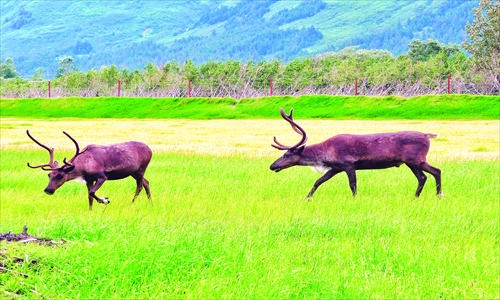
Hunting big game is still a popular activity. Dahl sheep, caribou, moose, elk, mountain goats, reindeer, caribou, moose, wolves and bears, including polar, grizzly, black, and enormous blue Kodiak varieties, abound. My sister and her husband, who make their home in Anchorage, introduced us to a local big game hunter one evening.
"People here like to talk about fishing, and their dogs." My wife and I were seated across from this quiet man known for his succession of young wives, impressive art collection, and a private taxidermy collection famed throughout the neighborhood. Perhaps himself bored by the subject of talk he so aptly described, he invited us to retire from his living room, where his third wife was entertaining the other dinner guests, to follow him to his den.
Several well-preserved animal heads lined the stairwell descending to the finished basement, those of caribou, deer, sheep, elk, and mink. Pelts and skulls completed his collection. I was face-to-face with a lively-looking wolverine, claws and all, when my host whispered in my ear, "She's my prize."
It was no small surprise finding an amateur natural history museum in the cellar of a tasteful bungalow. Drinks in hand, my wife and I settled into a leather sofa as our host regaled us with spicy tales of his adventures over land and sea, of ice fishing, bird and bear tracking, and hunting trips lasting for weeks in subzero temperatures. It was all we could do to listen with rapt attention as we perused his well-stocked wilderness study library, replete with field guides and numerous he-man biographies. "You know, I'm not just a hunter," he told us casually, as he refilled his glass of scotch. "I'm really a psychiatrist."
Indeed, he was. And who better to talk the local war veterans down from their spells of seasonal depression than a man who has repeatedly looked Death in the face, only to wheeze a great brandied laugh?
Native bars
Alaskans drink, and it's not just a winter sport either. Pilots drink at pilot bars, sailors at sailor pubs, office workers at sports bars, and Natives attend local watering holes. Many a midday, I frequented a Native bar on account of the bartender being a good friend of mine, a big woman in comfortable shoes. The beer was cheap, but Agnes gave me a discount anyway. The bar was dark, dingy and smoky, with old Budweiser posters slowly peeling off the walls. The clientele was native Alaskan or South Islander, with occasional minorities (European spawn like me). The diversity of Alaska surprised me; the appeal of good-paying work and kinship of native Alaskans make it popular for migration yet.
While at Aggie's bar, I observed how many a South Island drinker has the unusual habit of double-fisting the beers. Noticing my alarm, Aggie said, "Don't worry. We have fights in here all the time. Hardly ever serious. Usually clears everyone out just fine." She then showed me the pepper spray she kept ready at hand. Serving me another bottle, she told me a story of "a funny fight" at the bar a few nights back.
As Aggie told it, the night began quietly enough. A handful of jovial old men joked and smoked at the bar with their drinking pals. When a minor commotion started to draw a crowd to the back of the bar, Aggie reached for the pepper spray. It was then that one of the calm old men at the bar, with no connection to the disturbance at the other end of the room, downed his beer in one swig, chucked the empty bottle over his shoulder, and without so much as a word, decked his closest pal right off his barstool. The bar fight that broke out was ordinary enough, and Aggie went back to polishing glasses.
"I didn't have to spray anybody that night," she said, concluding her tale with a grin. For many Alaskans, the desired experience from a night out at a bar is a good bar fight. Privately, I wondered what constituted a "serious" fight in an Alaskan bar. Broken bones? Small fires? Grizzly bears smashing holes in the floor? From the looks of the place, all this and more had happened under the tavern's roof in the great span of its rustic history. Grateful for the discounted beer, I decided I'd best keep to myself, and leave Agnes a heavy tip. You never can tell when a beefy Alaskan woman armed with a can of pepper spray might do a wandering man a good turn.
Rules of Thumb
Planning your trip: Denali, also known as Mount McKinley, the tallest peak in North America, is well worth an excursion. For more information, the park's website, www.nps.gov/dena, is informative and helpful. A knowledgeable, experienced guide from a respectable tour operator is essential for hunting excursions. Check with the Alaska Department of Fish and Game for up-to-date news (www.adfg.alaska.gov). To plan your visit to Seward, go to www.alaskasealife.org.
Safety first: Before hiking in wilderness areas, notify someone of where you intend to hike and when you intend to return. Never explore new territory without basic research and preparation as well as equipment, and appropriate clothing. Good guides will explain exactly what you will need and provide any gear you may lack. Hike in groups whenever possible, especially when exploring new terrain. Remember that while animals appear friendly, never provoke or interact with them. Never run from a bear or any predator, but familiarize yourself with proper survival techniques before entering the habitats of wildlife.
Bundle up: Always dress for the weather. Hypothermia is more dangerous than wild animals. Light rain in temperatures between 10 and 20 C is a very real mortal threat. Stay dry. Good rain gear is vital.