Honoring Mom not a one-day affair
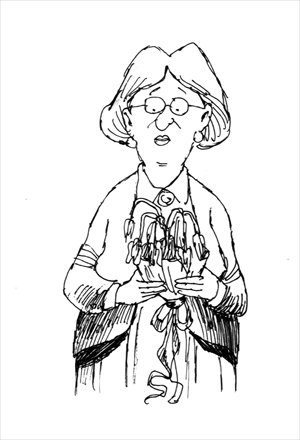
It's 'Mother's Day', when we honor the person who brought us into this world. Or is it?
Certainly, it is in China and another 82 countries and regions that set aside the second Sunday in May for the celebration.
However, things aren't that simple. I recall, years ago while living in Japan, I arranged for delivery of some flowers to my mother in the UK, only to get a letter from her saying kindly, 'Thanks for the flowers, but Mother's Day was two months ago!'
Indeed it was, for Britain follows the Christian church calendar and Mother's Day (or Mothering Sunday) is a moveable feast that can occur any time in March.
Most Middle East countries opt for March 21, but Wikipedia records 32 different dates spread right across the year, some only applicable to a single country.
Fortunately, the Internet includes me in the majority, so that I've only had my mailbox clogged with reminders in the past week or so - from international florists, greetings cards companies and chocolate manufacturers - not to forget mom.
In view of China's long Confucian tradition of filial piety and respect for the elderly, it's not surprising the idea of Mother's Day is gaining ground, although it's a recent phenomenon.
It was only in 1997 that the present date was set as a chance to focus national attention on poor mothers in remote rural areas; now it is gaining ground in urban areas, with carnations the flower of choice.
As in China, Western cultural celebrations of motherhood have a long historical tradition - for example, the Roman festival of Hilaria and the Greek cult of Cybele, as well as the Catholic reverence of the Virgin Mary.
However, Mother's Day in its present form is a fairly recent invention. In fact, it was started by an American woman named Anna Jarvis of West Virginia who organized a memorial event for her mother in 1908 and then began agitating for creation of a national holiday.
I have no problem with the idea of honoring mothers - they deserve it. Yet, I am a bit unhappy with the way this type of commemoration has been hijacked by commercial interests to boost their profits. The same problem has arisen with other longstanding Western festivals such as Christmas and Easter, which have lost much of their original religious coloring.
After Mother's Day, we have graduated to Father's Day and even Grandparents' Day, encouraged to spend money on cards, gifts or a special dinner.
Surely, we should be honoring our parents and grandparents every single day of the year; without them we wouldn't exist.
It's a sad reflection on modern society if we have to rely on the nagging of profit-minded commercial enterprises to remember mom. I do that anyway - even though she's no longer alive.