Rustic charm
Lin Yutang, a famous Chinese author in the early 20th century once said, "The good life is to live in the English countryside, the room containing American glass, please a Chinese cook, marry a Japanese wife, and take a French lover."
Though it's kind of joke, he points out the fact that the lifestyle in the English countryside has inspired artists, writers and tourists all over the world throughout the years.
Rural and cultural
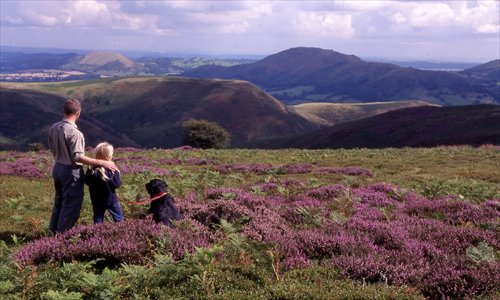
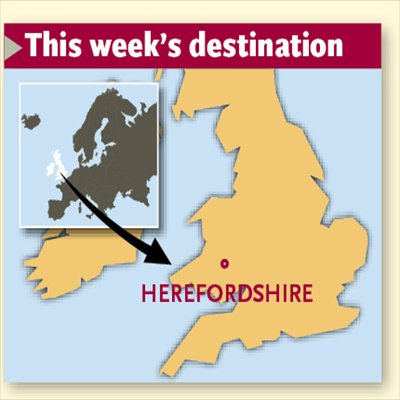
Within a three-hour drive from London, you will reach the most rural of English counties - Herefordshire on the English Welsh border. It is England as you have always imagined: acres of beautiful countryside with hills, woodland and attractive meadows, just perfect for country breaks.
It is a peaceful retreat to escape the stress of modern city life but still within easy reach of recreational activities. You can indulge in the unspoiled countryside with a bunch of healthy activities such as golf, fishing, canoeing, white water rafting, cycling, horse riding, pony-trekking, walking, and rock-climbing.
Set in an area of outstanding natural beauty, the region is also steeped in history with the Cathedral town of Hereford.
The town is renowned for its Hereford Cathedral, which has been used as a place of worship since Saxon times. It contains some of the finest examples of art and architecture from Norman times to the present day.
When the British nobility and wealthy landed gentry took grand tours to the European mainland to visit Roman legacies, such as Pompeii in the 17th century, the middle class came to Herford Cathedral to view the Roman part of the church. In some way, it was the origin of modern tourism in England.
Nowadays, Hereford Cathedral still retains its attractiveness with a rich heritage and history. Mappa Mundi, the famous medieval map of the world, is one of the highlights. On a single sheet of vellum, calf skin, measuring 1.58 by 1.33 meters, there were more than a thousand drawings and inscriptions showing cities and towns, Biblical events, plants, animals, birds, strange creatures and monstrous races.
It's very interesting to see how 13th century scholars interpreted the world in spiritual as well as geographical terms. China, at that time, was depicted as some alien kingdom with Great Walls, and some other unrecognizable architecture.
Hereford Cathedral is also the home to the finest surviving 1217 Magna Carta (the Great Charter of Liberties), which is one of the most famous documents in history. It will be displayed alongside Mappa Mundi between July 4 and October 1, 2013.
The original piece agreed between King John and his barons at Runnymede in 1215 is considered the foundation of English common law. And much of its global importance lies in the interpretation of the clauses from which grew the rights of personal freedom. These rights are most significantly contained in the American Bill of Rights, part of the US constitution.
However, the Magna Carta that has come down for generations is largely the 1217 version, because the 1215 version was repealed in less than two months' time. Hereford Cathedral has one of the only four surviving 1217 charters, while the other three are kept at Bodleian Library at the University of Oxford.
The Chained Library, which dates back to 1611, is also fascinating. Rows of chained books and manuscripts are secured by thick metal rods on tall wooden shelves, because they were so valuable in the days before the modern printing press was invented. The staff there have some interesting facts to tell about the library.
A taste of medieval life
Around 25 miles north of Hereford, lays the medieval market town Ludlow. Situated on the River Teme in the outstanding countryside of the Welsh Marches, Ludlow's medieval street pattern survives almost intact.
A walk through Ludlow's main streets and quiet lanes is to walk through over 900 years of architectural history. Broad Street, which leads from the Buttercross down through the Broadgate, has been described as the most beautiful street in Britain.
There are almost 500 listed buildings in the town, including five "grade I" listed buildings, The Buttercross, St Laurence's Church, Ludlow Castle, The Readers House and The Feathers Hotel.
The partly ruined Ludlow Castle, which was an important strategic stronghold for control of the Welsh Borders, proudly stands atop a cliff overlooking the River Teme.
Firstly a Norman Fortress and extended over the centuries to become a fortified Royal Palace, the Castle witnessed Ludlow evolving from a planned Norman town to a prosperous market town, then a fashionable center for the County seat, and now a well-preserved historic town.
Wandering through the Castle grounds and seeing the ancient houses of kings, queens, princes, judges and the nobility give you a glimpse into the lifestyle of medieval society.
Walking out of the Castle, you will be amazed to find out that the regular market in Castle Square has supported traders for over 600 years.
Ludlow has a very special place in locals' hearts. Walking along the streets lined with medieval and Georgian buildings, you can enjoy the steady pace of current life here. A relaxing weekend here is all about simple pleasures such as shopping at the independent antique and craft stores, enjoying some quality local food and drink, or exploring the lovely Shropshire Hills area with its outstanding natural beauty.
Victorian farm
Your countryside experience won't be complete if you miss the lifestyle in the rural areas. Why not spend some time in Acton Scott's historic working farm, which is tucked away in Shropshire Hills.
With its idyllic and breathtaking setting, Acton Scott has long provided the opportunity to become familiar with the country life of yesteryear. Its historic working farm is a wonderful attraction with daily activities and special events.
The traditional 19th century farm life there is like an unfolding handscroll painting: the permanent pasture and arable farmland, ancient deciduous woodland, a horn beam walk, paths and bridges, streams, and horses working on the land.
Acton Scott's historic buildings consist of many fine examples of the rural vernacular with a number of farmsteads and barns, in addition to stone and timber framed cottages and farmhouses, which date from the 16th century onwards and include fine Georgian and Victorian examples.
Some have been restored to retain their unique character and period details, offer every modern day comfort and exemplify 21st century country living, while others have remained largely untouched with their humble simplicity clearly evident.
The farm allows visitors to mingle with their favorite animals and also view daily demonstrations. You'll see heavy horses working the land with vintage farm machines and everyday you can see milkmaids milking by hand and on Saturdays and Sundays the dairymaid makes butter in the dairy.
The first industrialized village
Before you catch a train back to London via Birmingham, there is one more destination that you must stop for - the Black Country Living Museum.
It is an open-air museum situated on a stretch of the regions vast canal network, which formed a major part of the industrial revolution. The aim of the museum is to portray the life, times and hardship of the area, as it used to be.
Entering the doors of the village is entering a world of the past. Covering 26 acres of former industrial land, Black Country Living Museum is uniquely placed to tell the story of the creation of the world's first industrial landscape.
All the buildings were located from the surrounding districts, dismantled brick by brick, transported then re-assembled, to form the image of a working village.
The best part of the whole experience is going into the shops, workshops, houses, and school to have a chat with people there. You will find people dressed in the early 20th century costumes are knowledgeable about every detail of the work they were doing and the way of life at the time.
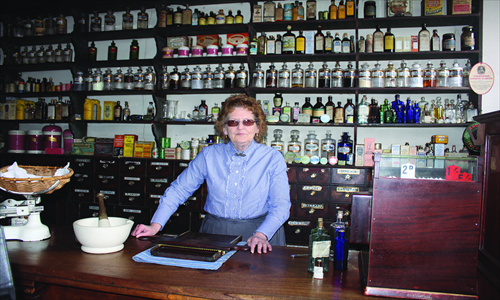
The pharmacist in an authentic chemist shop showed us the process of making pills with miracle cures, a blacksmith created a chain in the old fashioned way right in front of us, and the school teacher in the traditional schoolroom gave some of us "kids" quite a lesson!
Other traditional crafts such as nail making, baking and candy making are all demonstrated. Visitors can interact with the past through costumed guides and demonstrators, street theaters, and taking a ride on a trolley bus, the last one in service.
The living museum tells the industrial and social history in such a vivid way. No wonder it attracts more than 307,000 visitors annually.
Rules of Thumb
1. Wear comfortable shoes and bring an umbrella.
2. Plan your trip by visiting the website of Herefordshire and Shropshire, as they provide all the information you need to travel around town and beyond, including walks and cycle routs, train services and much more.
3. Check the calendar of events before you set out as there are different festivals and programs going on throughout of the year, such as Herefordshire Walking Festival, Ludlow Food Festival,etc.
4. Ask the locals for tips of enjoying the whole experience if you are interested in exploring more.