When some charity is no help at all
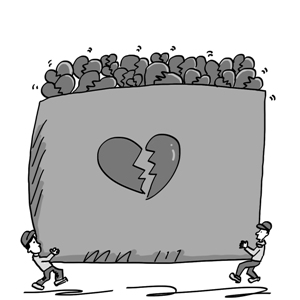
The earthquake in Ya'an, Sichuan Province, prompted an outpouring of sympathy and aid, with many companies stepping forward to offer supplies and cash donations, in some cases as high as seven-digits.
While gaining favorable coverage undoubtedly played a part in the decision of some companies to donate, we should give them the benefit of the doubt rather than assume that PR was their primary motivation. At least, in the cases where their donations were actually of use to aid workers.
Because yes, some companies do seek to use tragedy as a marketing ploy, while their donations are so useless they can actually harm relief efforts, and fail to help those whose misery they are taking advantage of.
An example of such behavior that got media attention was that of Shanghai Saiwei Trade Company, which donated two batches of cookies to disaster relief charity One Foundation. It was then discovered that the cookies were about to pass their expiration date - one batch in three months, the other in six weeks.
On receiving the first batch, the charity informed the boss of the company that foods close to their expiration date weren't useful, as they were likely to expire before they could reach those who needed them. However, despite this warning, the company went ahead and delivered the second batch.
Meanwhile, the boss of Saiwei posed for publicity photos with the cookies, saying he hoped the donation would inspire other business leaders to donate.
While what the boss did is not illegal, it was certainly not helpful, as it gave the charity an extra logistical headache that distracted it from helping people in dire need.
If he had been donating much-needed medical supplies, or even cookies that had a reasonably long shelf life, then his hubris and arrogant publicity-seeking could be overlooked.
A conservative estimate puts the total amount of expired foodstuff donated to the Ya'an relief efforts at around 12.5 tons. It's not only disgraceful, but also a waste of precious time and energy of those participating in the transportation and distribution of relief supplies.
Similar cases have been seen before. In 2011, food and drugs donated to a welfare home in Sichuan were found to have expired. There are likely many more such cases, unexposed by charitable organizations in the fear it may discourage donors.
To avoid such cases, authorities need to take the lead and be more specific about what donations are needed, while charitable organizations should learn from One Foundation and be more forthright about exposing donations that are less than helpful.
While it should be common sense not to donate torn clothes and soon-to-expire foods, unscrupulous organizations seeking good PR will continue to do so, until they realize that they will be exposed and their plans will backfire.