Watch & learn
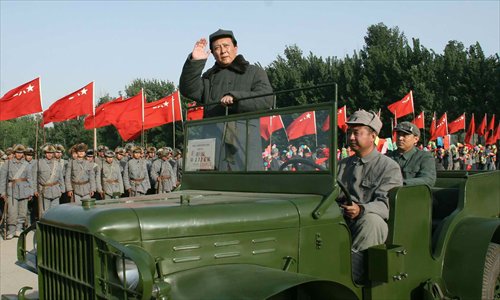
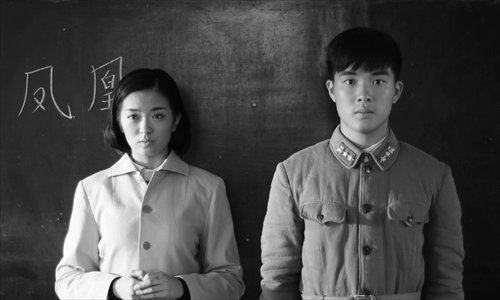
Last week, a film adapted from the real story of Shen Xing, a young man who sacrificed his life to save a drowning man in May 2012 was shown at a cinema in Xi'an, Shaanxi Province. The event was reported as "patriotic-themed films finally in cinema" by several media outlets.
Just two months ago, a news story about the film Youthful Days also generated a buzz online. Portraying Lei Feng (1940-1962), a moral hero who spent his brief life helping people, the film earned almost zero box-office revenue on its first day in Nanjing, Jiangsu Province.
In today's diversified market, going to the cinema to see a movie about the Communist Party of China (CPC) members or relevant topics may sound old fashioned, but still, such films can occasionally stir up discussions.
A historical mission
In 1987, Teng Jinxian, the then director of film management bureau at State Administration of Radio, Film and Television said in a meeting that film development should "highlight patriotic themes and maintain diversity," leading to the creation of the "patriotic theme" concept.
A general understanding of the so-called patriotic-themed films is that they often tell stories of CPC's historical role in the establishment and development of People's Republic of China. The ideologies focus on collectivism and the plots are usually about historical events or former Chinese leaders.
Wang Haizhou, a professor at Beijing Film Academy told the Global Times that patriotic-themed films were created mainly as a response to questions or issues of a specific time period.
According to Wang, since the opening up of China to the outside world in 1978, there have been communications between Taiwan and the Chinese mainland. Questions referring to the relationship between the Kuomintang authority and CPC need to be answered.
Later, films like The Birth of New China (1989) and The Creation of a World (1991) were produced.
Then, it became a matter of routine. "Every year there were such films produced and the leaders from the Political Bureau of the Central Committee of the CPC would attend the premiere. It was quite a big thing," said Wang.
Coming into the 1990s, questions from society had changed. Patriotic-themed films were more about how members of the party were serving the people, which led to films like Kong Fansen and Jiao Yulu, both biographical stories.
Since the didactic use of such propaganda films has evolved beyond those early stages and cinemas now contain more commercial films, the popularity of patriotic-themed films is fading away.
Limited space in market
The Great Decisive War (1991) series including The Liaoshen Military Campaign, The Huaihai Military Campaign and The Pingjin Military Campaign were "blockbusters" in their time. These films feature the three decisive battles between CPC and Kuomintang, which proved to be a key turning point in the civil war.
Director Li Jun (1922-2013) from August First Film Studio (the studio has military background and specializes in military related film and television projects) once said to the press that the investment of The Great Decisive War series had come from the military commission.
Wang said that the government and military support was a key factor in these films achieving such a high standard of quality.
Although in the late 1990s patriotic-themed films still had a place in cinemas, the number of people going to theaters for such movies was reduced due to the development of commercial film industry.
In 1994, the film market opened a door for Hollywood, leaving less space for domestic films. On the other hand, as films with patriotic themes can easily pass the censorship process and also receive subsidies from the government, a few production houses were willing to position their commercial films with red themes.
Red Cherry and A Time to Remember, which stars Leslie Cheung in the leading role, are successful examples of mixing patriotic themes into commercial movies.
In recent years, a real red themed film is barely seen in the cinemas now. A few exceptions include the famous The Founding of A Republic and Beginning of the Great Revival, both made for national festivals.
Wang does not see these two films as a model that can be copied in the future. The fact that most of the attraction to these two films stems from their fabulous casts, with almost all the currently famous stars in China appearing, means this example cannot be applied to other commercial films.
Presentable ideology
When Skyfall was shown in Chinese cinemas, netizens joked about how "the Western patriotic-themed films are better than the Chinese ones."
The popular Hollywood blockbusters that come out every year with heroes or flag-wavers do sometimes remind us of the patriotic themes in Chinese films.
Stories about spies or wars are both hot topics in commercial movies. Adding patriotic themes into those movies offers fresh aspects to the audiences.
Films like City of Life and Death as well as The Message, which have proven successful at the box office, were produced and marketed purely as commercial films while containing key elements of old-styled patriotic-themed films.
Youthful Days was also positioned as an encouraging commercial film for young people. Its director Liu Yijun wrote on his blog that the main misunderstanding is that today's public rejects the image of Lei Feng.
The Silent War by Siu Fai Mak and Felix Chong, both famous for spy movies like Overheard, also disappointed their audience with an old-fashioned ending talking about how many party members have died anonymously for our lives today.
Audiences are tired of listening to of the same old "lectures" on history and moral standards. The standards for patriotic films are higher now.
"No matter what ideology the patriotic-themed films are promoting, the most important thing is to attract the audience to the cinema … and be 'watchable' so they will finish watching," said Wang.