Journey to Red Planet – pioneering expedition or elaborate hoax?
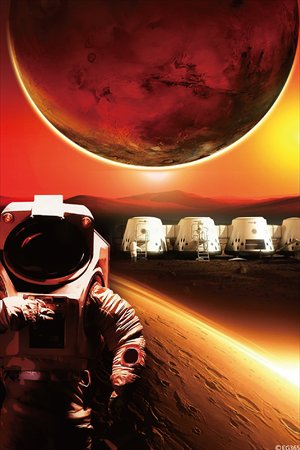
Yang Shimeng, a 25-year-old space enthusiast in Tianjin, is frustrated by worries that his dream of landing on Mars may never be realized.
In April, his attention was drawn to a Dutch program called Mars One Project that aimed to send a crew to the Red Planet by 2023. Even more thrillingly, the project said it would recruit ordinary people from around the world as astronauts.
Fired by his dream of becoming an astronaut, Yang quickly logged on to its official website (mars-one.com), registered, filled in the application forms, and paid the $11 registration fee.
He officially became a candidate for the journey to Mars, bringing him one step closer to his lifelong dream.
"I never felt so close to my dream of exploring space," Yang told the Global Times.
However, Yang's hopes were dealt a heavy blow by a recent report by Chinese media that claimed the project might be nothing more than an elaborate hoax.
A Guangzhou Daily report accused the company of using the registration fee to raise money, as it is registered at a residential address where they rent the office with other companies.
The report said over 10,000 Chinese applicants who had paid registration fees may have been swindled.
The accusation sent shock waves throughout China, especially among space enthusiasts. Most people said they would be hurt if it did emerge that it was indeed a fraud.
"It's not about money. It's just our dream of going to Mars might have evaporated," said a netizen who goes by the name of Giosu.
Bas Lansdrop, founder of the project, rejected the accusations on Tuesday. He told the Global Times he registered the company under the address of his home, because the office's real location cannot be used for registration purposes.
He also pointed out that the project was continuing to go forward at a steady pace.
"We have placed its first aerospace supplier under contract to start work on Environmental Control and Life Support System (ECLSS) and Mars Surface Exploration Spacesuit System," Bas told the Global Times, adding that there are 10 core members working on the project.
Under the microscope
The response from the people behind the project has gone some way to easing people's doubts, though worries about its feasibility remain.
"There has not been enough information or publicity of how its technology has been developed to meet the needs of a hard-lift rocket launch, landing and living on Mars," a space enthusiast in Beijing who gave his surname as Wang, told the Global Times.
It is not the first time the Mars One Project has been doubted by the public. Critics said the project was more like a showbiz production rather than a scientific exploration.
According to its website, the company will hold a reality TV show for the entire process of selecting, training, landing and living experience of the astronauts to raise the $6 billion needed for the project.
The company has also been trying different methods to raise the money, including selling merchandise such as T-shirts, coffee mugs, and posters on their official website.
It is also accepting donations worldwide, which came to more than $100,000 as of press time, according to statistics from its official website.
Early in January this year, Bas told Xinhua that the project might be delayed, as they had been facing difficulties in both the technology and financing.
The company said they would use Falcon Heavy, a product from Space X to launch the rocket. However, space experts said the rocket was capable of launching spaceships to near-Earth orbit, but cannot reach Mars, which is about 40 to 400 million kilometers away from the earth, depending on where the planet is on its orbit around the Sun.
At the same time, there are a lot of poisonous materials and high-radiation substances that exist on the surface of Mars, which makes it impossible for humans to live on the planet.
"In the long run, it is feasible to take a trip to Mars. But currently, there are a lot of problems we have to overcome," said Pang Zhihao, an aerospace expert from the China Academy of Space Technology.
"First, you should solve the problem of the heavy-lift launch vehicle. Existing hard-lift rockets cannot reach Mars. Second, you should provide a breathable environment to allow people to live on Mars," Pang said.
The former Soviet Union failed to send astronauts to the moon due to its failure to launch a heavy-lift rocket, Pang added.
In response to doubts about technology, Bas said the Mars One Project will not provide the technology itself. Instead, its suppliers including Space X, Paragon and other companies would secure the necessary technology.
Phone calls to the suppliers remained unanswered as of press time.
To build a colony on Mars, the company said it would carry out a test launch in 2016, dispatch scientists to carry out research on Mars in 2018, send robots to build infrastructure in 2021, and send four people to the planet in 2023.
Similar programs aiming to realize mankind's ambition of building colonies on the Red Planet, both grass-roots and governmental, have also been questioned by the public.
In late 2012, Elon Musk, founder and CEO of the private spaceflight company Space X, announced a huge resettlement plan involving the emigration of 80,000 people to Mars, saying it would cost about $500,000 a trip.
The privately-run Mars Foundation is working to send a pair of non-NASA astronauts, preferably a married couple, to make a trip to Mars in January 2018. The project has to make sure to provide life-support systems and other technology for the 501-day mission.
NASA is currently developing a heavy-lift rocket to send astronauts to Mars in the 2030s.
Dream chasers
The intensive reports and heated discussion about the project have also given Chinese applicants the opportunity to step into the limelight.
The hopeful candidates range in age from 18 to 40 years old and are from different backgrounds, but they have one goal in common: going to Mars to chase their dreams of space exploration.
"It is impossible for ordinary Chinese people to participate in any space exploration project. Now I can use this opportunity to achieve my dream of traveling in space, which is good," Yang said.
Yang said the program has already begun to change his life.
"I've never been interviewed by any journalists, but now, I receive four to five phone calls a day," Yang said.
Yang launched an online chat group called "Mars One Fans" for applicants to exchange opinions on the project. The number of members has risen sharply in recent days due to the intensive reporting about the group.
Yang was thrilled to think he could build a colony with others if he ends up being selected as an astronaut for the project.
According to the Mars One Project, even though the rover will take responsibility for much of the heavy construction work, astronauts are required to undertake a wide range of research, such as studying how their own bodies respond and change when living on the Red Planet, and being involved in some of the construction of man's first colony on Mars.
Yang takes the mission seriously. "I talked with my parents seriously before I applied for the mission," Yang said.
The mission assumes that the astronauts will not be able to return to Earth due to technological restrictions and the fact that after adapting to Mars' conditions, humans will find it nearly impossible to return to Earth's much stronger gravity.
"I told them I couldn't come back if I was selected as an astronaut. They were worried but eventually agreed," Yang said, adding that he would keep contact with his parents by sending back video footage of him on Mars.
"We needn't worry about my parents, because the company will take care of them for me."
The company said they would provide a stable income for the families of the astronauts.
By way of preparation, Yang began practicing English and exercising everyday. "You must build a strong body to welcome the coming Mars adventure," Yang said.
"I have always believed that I was born with some mission. There is something I must do, and I think going to Mars is a brave idea, and this might be the chance," former soldier Ma Qiang, a 40-year-old applicant from Dujiangyan, Sichuan Province, told the Global Times.
Ma said some people had signed up in order to escape from real life.
When asked how he would feel if the project were to fail to come to fruition, Ma said, "We cannot be 100 percent sure that the project can succeed. At least, foreign companies and individuals dare to launch such a project. We Chinese cannot even dare to think about it."