Scandal-free veggies
Rat meat being passed off as lamb. Thousands of dead pigs floating down the Huangpu River. Recent food scandals concerning the sub par quality of meat are enough to make even the most carnivorous think twice before chomping down.
Being vegetarian has never seemed more appetizing - or popular. As more expats look for alternatives, restaurants, holistic coaches and organic farms are rising to meet this new demand. One vegan expat, Laura Fanelli, has even been able to turn her passion for vegan cooking into a full-time job.
Fanelli, 36, has been in Beijing since 2007 and has turned her vegan lifestyle - which began with hosting dinners for groups of friends - into a career helping restaurants create vegan menus using organic, local produce. In her latest project earlier this month, she worked with Capital M on a vegan and organic menu for Food Revolution Week, an international event focused on cooking and conversing about food.
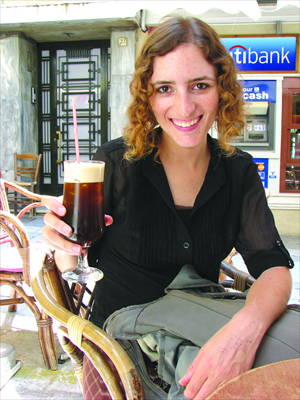
"Being vegan is definitely easy in Beijing," said Fanelli over a drink at Café Zarah in Gulou, which itself has a vast selection of vegetarian - though not always vegan - sandwiches. A newcomer to either Beijing or a vegetarian diet may not initially agree with Fanelli's assertion. But Beijing cuisine is warming up to veggie-friendly options now more than ever.
Carnivorous capital
Consuming meat in a myriad of forms, such as the venerable roasted duck, or chicken feet, pig trotters, cow intestine - really, the list goes on, often top the must-dos on the eager tourist's Beijing itinerary.
Meat is more than a novelty here, though. A diet high in meat here signifies wealth. In not-so-distant Chinese history, meat stood as a luxury and its rising prominence in Chinese cuisine has paralleled China's development. When the population hadn't yet hit 1 billion in 1980, the average Chinese ate 20 kilograms of meat a year, according to a 2008 report in the Guardian. That number spiked to 54 kilograms per person in 2007. In fact, China as a whole consumes the equivalent of 240 million cows each year.
As a result, Chinese agriculture struggles to keep up with demand.
Fanelli says the meat industry was why she decided to go vegetarian when she was 14.
"Incredible devastation happens because of the meat industry," she said. "I was ignorant about that until I started looking into becoming a vegetarian. Even if I wasn't a compassionate person, I couldn't justify it for compassionate reasons."
A lifestyle change
There are many reasons why people become vegetarians. Besides food scandals, Beijingers are also going veg for health reasons. A 2013 Oxford University study showed that a vegetarian diet reduced the risk of death or hospitalization for heart disease, as well as body mass index (BMI) figures.
Such concerns have resulted in cities like Beijing and Shanghai seeing growth in businesses that promote healthy living.
Kimberly Ashton, an Australian and food educator dubbed the "chief sprouting officer" at Sprout, a healthy-living hub in Shanghai, said many of her friends who own vegetarian restaurants have seen a recent spike in business, particularly after news about the floating pigs and rats.
"Many (customers who come in) are asking the question, 'What can we eat?' The answer is often more fruits and vegetables," said Ashton.
And for new expat vegans and vegetarians to the city, this question of "What can we eat?" becomes more daunting than ever with language and cultural differences. Asking for no meat in a Beijing restaurant may still land you a dish sprinkled with ground up meat bits. Asking for no seafood could still produce a dish with tiny shrimps imbedded in the sauce.
But once the linguistics have been ironed out (see "Tips on staying vegan in Beijing"), Fanelli extols the variety of veggie-friendly offerings in China.
"You get all kinds of mushrooms and greens [in Beijing] that you don't get in the US," she said. "The Chinese spectrum, the idea of what you can eat, is so broad. People aren't afraid of weird food. So you get all these beans, wheat gluten and greens."
Ashton added, "Once it becomes a habit, it becomes less taxing on the brain."
Veggie-only establishments also make the transition smoother. Popular vegetarian restaurant Samadhi in Chaoyang district offers an uncompromising menu completely devoid of meat, and even meat imitations. Executive Chef Zhao Bin, however, admited, "Yes, I eat meat!" Hopefully he won't roast for it.
Should he, or any other Beijinger, want to transition away from a carnivorous diet, nutritionists recommend keeping a close watch on getting enough of vitamin B and iron.
The next step
Being a vegan or vegetarian often opens doors to more healthy life choices.
Ashton said that many people have been coming in because they want to eat and feel healthier. Detoxing and holistic health continue to gain new followers.
"We do a lot of farm tours because there is still a trust issue when it comes to becoming organic in China. People want to know and visit farms," Ashton said.
In Beijing, many farms are not certified organic, but they are pesticide and hormone free. Supporting organic markets is a direct way of supporting local organic farming communities.
Fanelli hopes to continue bridging the gap between restaurants and organic farmers. As more people ask for it, it's slowly become a reality.
Tips on staying vegan in Beijing
Former restaurateur pioneering the farm to fork concept in the heart of the China's capital, Laura Fanelli has been involved in the organic movement in Beijing since 2009. Though Fanelli has the strong benefit of being fluent in Chinese, she has general tips for both the novice and practiced alike.
- Learn the phrase "Wo bu yao rou mo." This translates to, "I do not want pieces of meat." Often, many Chinese dishes will have sprinklings of meat as flavor. Specify that you don't want this.
- Ask for no seafood specifically. Tell your server that you don't want seafood either by saying, "Wo bu chi hai xian."
- Stick with dishes you know aren't likely to have meat. Di san xian is usually a safe dish to order, with sautéed potato, green pepper and eggplant.
- Try Yunnan cuisine, which is usually great for vegans and vegetarians alike. Check out Dali Courtyard in Gulou for an upscale evening or the classy but cheaper Middle 8th in Sanlitun.
- Have the restaurant agree ahead of time that you won't pay for the food if there is meat in it. Then they will have made you a promise and will be less likely to break it.
- Cook yourself and invite friends over.
- Be flexible and reasonable. If sending a dish back isn't an option, just eat the vegetables. They were probably cut on the same board the raw pork was anyway. "Nothing is a guarantee," Fanelli said.