Lessons from Seoul's tidy soft-power model
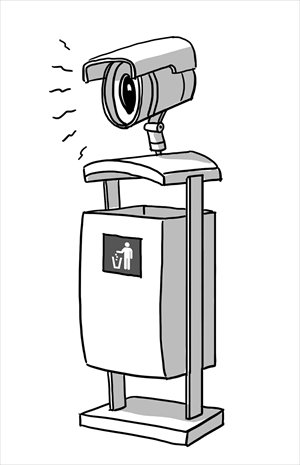
Illustration: Liu Rui/GT
There are more than a few complaints made by Chinese tourists who visit South Korea: There is nothing to buy but cosmetics, no diversity in cuisine at restaurants and no unique sightseeing spots away from the all-too-familiar historical and scenic sites. Nonetheless, Chinese tourists who recently return from South Korea never fail to gush about one common observation: "Oh, the country is so clean!"
Being "clean" is, of course, partly linked to economic prosperity. For instance, backpackers to mountainous areas in developing countries never expect traditional markets to be as tidy as those in South Korea.
It is still interesting to browse piles of random books and postcards, bizarre clothes and colored pots, even if you need to skip a few puddles or dust off a pair of earrings before taking a closer look. You can enjoy the natural appeal, but definitely cannot call it "clean."
But a strong local economy does not guarantee tidiness. Beijing is an excellent example, despite seeming a cosmopolitan metropolis from every angle.
Ms Zhu, a middle-aged Chinese woman whom I met during my recent trip to the South Korean island of Jejudo, sarcastically told me how her daughter has to hop in streets every time she returns to Beijing because there are so many globs of phlegm on the sidewalk.
It's therefore little wonder that South Korea's clean appeal is especially intriguing through Chinese eyes.
Although prepared psychologically, I was still impressed by such exquisiteness during my latest trip to this country.
At one traditional market, all fresh produce, including seaweed, shellfish, algae, fruits and pickles, was displayed in immaculate order without any unpleasant smells. All bottles and cans at grocery stands were displayed panoramically.
Most astonishingly, there were even stone bridges, mini fountains and rivulets teeming with goldfish down long passage ways at the market.
Initially, I suspected such tidiness was part of an elaborate façade aimed at attracting tourists.
After all, most tourists follow standard routes rather than looking into every small corner, so I especially paid attention to inconspicuous details. It turned out to be a surprise.
For instance, if it is normal to see clean, sightseeing mini-trains in a folk village park, then it is not always normal to see the driver's personal belongings arranged in shipshape fashion within the narrow space of their compartment.
After my brief walk at the unbelievably clean traditional market in Jejudo, I asked my tour guide how regularly government inspectors come to monitor the environment and how much funding the local government allocates to ensure proper hygiene. She was a bit surprised to hear my questions. "Monitors?" she asked.
"Yes," I replied. "Inspectors who prevent people from littering or leaving rotten leaves in the middle of alleys."
"No one does that," she said. "If any vendor threw trash in the middle of the alley, all the other vendors would force them to clean it up. They would ask, 'What's wrong with you? No customers will come to our market if it's so dirty!'"
Her indirect answer made me think. Such moral self-discipline is undoubtedly an index of social development. South Korea, one of Asia's pioneers, has entered the "developed" ranks.
Googling its environmental protection reforms, one finds countless research papers that outline Seoul's efforts to coordinate economic growth, public demand and environmental protection.
Chinese scholars of comparative studies also give various suggestions on systems and government practices that can be learned from South Korea.
Nonetheless, this social consensus of self-discipline, among all other government input and hardware building, might be the most difficult part to emulate. And the lack of such consensus will in turn increase governance cost.
For a country as colossal and populous as China, it is more difficult to roll out reforms and launch government-funded ecological programs given the serious lack of social self-discipline.
Soft power is not a grand concept that needs to be exercised through extravagant advertisements or image-boosting projects; it can be well-demonstrated by a simple morning stroll at a traditional market.
The author is an opinion editor with the Global Times. chenchenchen@globaltimes.com.cn