Drawing tea from dust
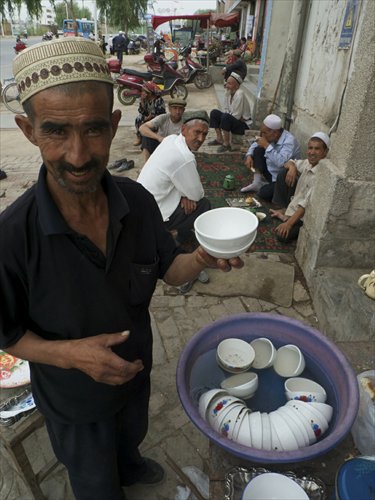
The only waiter in his teahouse, who makes just 200 yuan ($32) a month, serves customers. Photo: Kurbanjan Samat
Old-style teahouses of Kashi are disappearing. Kashi, also known as Kashgar, a city with more than 2,000 years of recorded history, lies right on the ancient Silk Road that crossed the Euro-Asia continent.
The city has long facilitated communications and trade in silk, porcelain and various materials between ancient civilizations.
Its geographic location, a green land in the middle of vast deserts, made Kashi a stopover for traders to replenish supplies. The city thrived on this trade and tea houses emerged to accommodate the travelers. They became information centers where out-of-towners told their stories and shared information.
Today the ancient functions of the teahouses have ceased to exist and like the groups of camels that were once ridden between these remote cities, they have faded away.
Uyghur photographer Kurbanjan Samat has captured images of several teahouses in Kashi since 2007, and also witnessed their disappearance.
Those teahouses were mostly located in the center of town, which generally followed the ancient lifestyle of the Uyghur people. However, many of the old houses have been deemed unsafe to live in as the region is prone to earthquakes. As a result, some teahouses have been ordered to shut down by the local government.
Besides, they don't really make much money.
But the enthusiasm of the photographer prevailed, and one of the teahouses he once visited has been refurnished and is taking on guests.
The owner of the teahouse said he was happy to realize his wish to decorate and reopen the facility, however, it will be difficult to rebuild this kind of business up from the desert dust.
Global Times
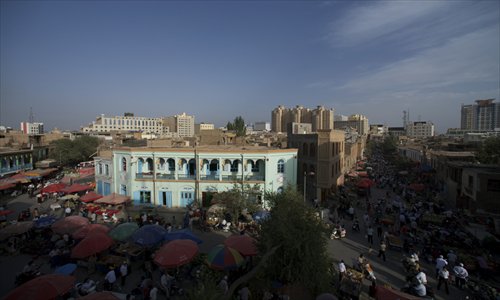
A newly refurbished two-storey teahouse, in the center of the old town, became the last old-style teahouse in Kashi in 2013. Photo: Kurbanjan Samat
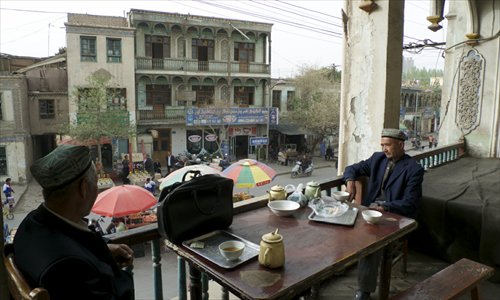
Customers enjoy tea in the two-storey teahouse in 2011 before its face-lift. Photo: Kurbanjan Samat
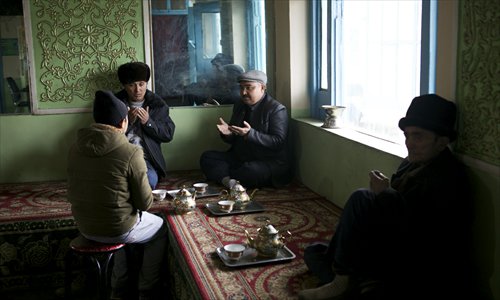
Customers pray before they end their discussion and leave. Photo: Kurbanjan Samat
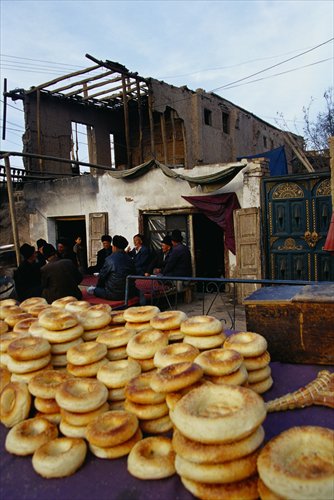
A 2007 picture of snacks ready for sale with tea as people kill time in a teahouse in Kashi. Photo: Kurbanjan Samat
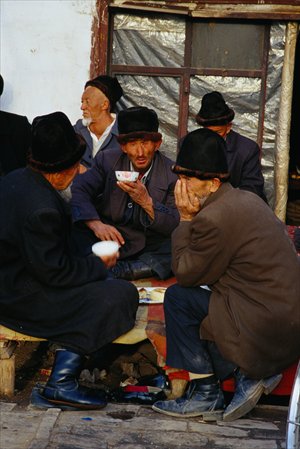
Customers drink while chatting in an old-style teahouse in Kashi, also known as Kashgar in Xinjiang Uyghur Autonomous Region in 2007. Photo: Kurbanjan Samat
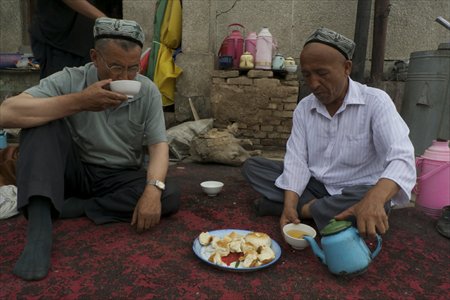
Two customers enjoy afternoon tea and snacks at a traditional teahouse in 2010. Staple snacks at a Kashi teahouse include Girde bread (also called Nang). There were only five traditional teahouses left in downtown Kashi in 2010. Photo: Kurbanjan Samat
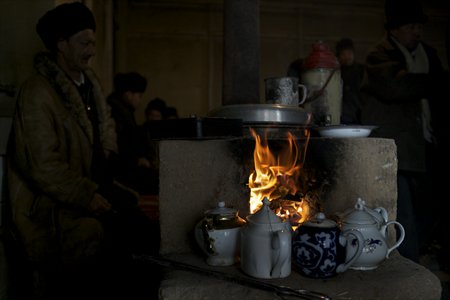
Low income and rising operation costs have contributed to the closing of many teahouses. According to Emam Tursun, a 41-year-old owner of a traditional teahouse, profits burn away during the winter months as coal and firewood consumption triples. Tursun explains that his is the last of 12 teahouses that once operated in the area, where a pot of tea costs no more than 1 yuan in 2010. Photo: Kurbanjan Samat
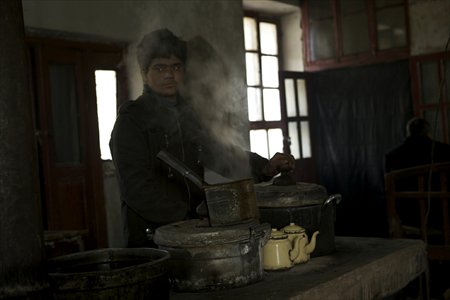
A waiter makes tea at a traditional teahouse in 2011, where he reportedly earned 800 yuan ($129) a month. The monthly salary at smaller teahouses could reach as low as 200 yuan. Photo: Kurbanjan Samat
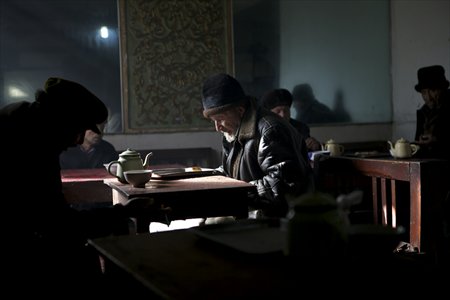
Glints of sunshine illuminate customers as they enjoy a quiet afternoon in an old Kashi teahouse in 2011. For many natives of the city, afternoon tea is an essential part of the day. Photo: Kurbanjan Samat
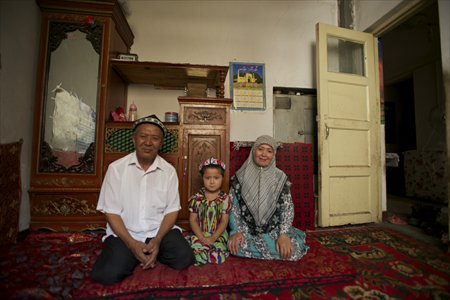
62-year-old teahouse owner Abliz Kurban poses a photo with his wife and daughter in 2013. First opened in the 1980s, his two-story teahouse was renovated during the Islamic holiday Ramadan. Photo: Kurbanjan Samat
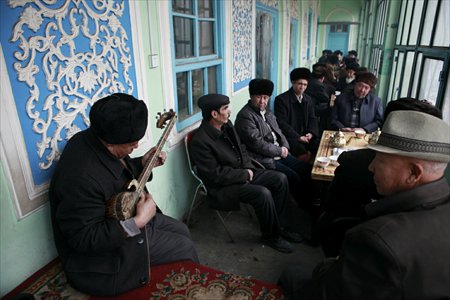
A musician performs for patrons at Qurban's teahouse in 2014. Qurban explained he has seen better business since the renovation, where performances on the rawap, a traditional stringed instrument, once again fill the air. Photo: Kurbanjan Samat
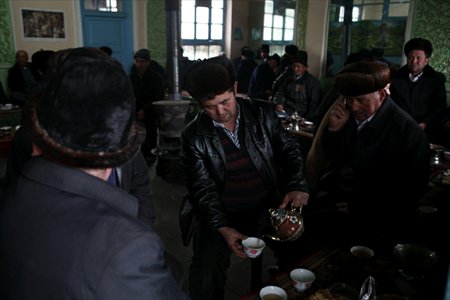
A young man pours a cup of tea in an old-style teahouse in Kashi, 2014. According to custome, the youngest serves tea to elders. Photo: Kurbanjan Samat
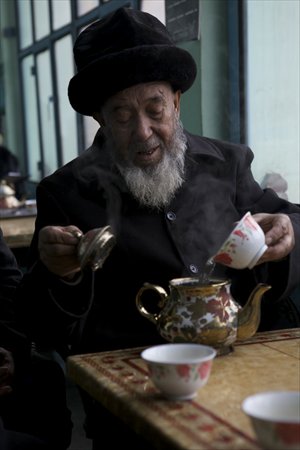
A man fills a pot at a teahouse in 2014. Traditionally, tea is repeatedly poured back and forth from teapot to cup in order to help release its flavor. Photo: Kurbanjan Samat