HOME >> CHINA, METRO SHANGHAI
Memories still flickering
Source:Global Times Published: 2014-12-2 18:53:01
Shanghai’s old cinemas are packed with history and style
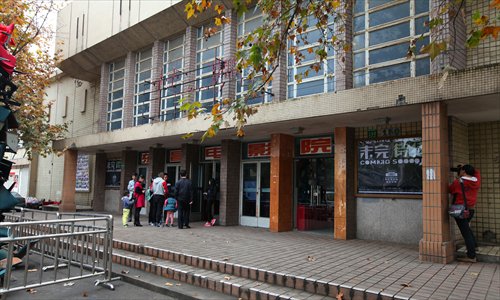
The exterior of Dongchang Cinema is a contrast to the antique interior. Photo: IC
Pudong's first movie house, the Dongchang Cinema, which opened in 1954, is set to be demolished next year, to make way for an arts center. Almost as soon as this was announced in city media local residents began posting memories and reminiscences about the good old days of watching movies in Shanghai.
"While I was in primary and middle school, all the schools organized trips to the Dongchang Cinema to watch movies," wrote Internet user "Faith 78." Another fan wrote about having many great memories of the cinema - "it even appears in my dreams now and then."
In 1954, the then Huangpu district's cultural authorities decided to build the cinema in the Weifang community, and found investors to cover some of the 400,000 yuan ($65,000) cost of construction. In those days, the area was one of the busiest places in Pudong, which was then administered by the Huangpu district. There were regularly long queues in front of the cinema ready to pay 0.25 yuan to see a foreign or Chinese-made film.

The entrance to the Dongchang Cinema auditorium, a traditional old cinema doorway Photo: IC
Glory days
During the Cultural Revolution (1966-76), only revolutionary operas were played at the Dongchang Cinema and the cinema was temporarily called the Qianjin Cinema. It returned to its glory days in the 1980s. In the 1990s, the Dongchang Cinema was screening seven to eight movies every day, opening its doors for the first session at 4 am and closing at 2 am the following morning. At its peak the cinema was making more than 1 million yuan annually.
However, with the development of Pudong in the 1990s, new shopping centers sprang up and they included multiplex cinemas. The Qianjin Cinema was gradually left behind and could only target residents who lived nearby. In 2004, the cinema closed down altogether.
The old Dongchang Cinema is one of many of the city's original cinemas that have been shuttered. Old Shanghai was once a movie paradise - small and large movie houses across the city screened the latest movies from Hollywood as soon as they had opened in New York. In 1934, with its 53 cinemas, Shanghai was reportedly ranked No.8 in the world top 10 cities for cinemas.
But society changed and the old cinemas with just one auditorium and screen grew less popular compared to the multiplexes which offered filmgoers a range of options beside places to eat and find other entertainments. Over the past few years many stately old cinema palaces have been demolished while others have just been abandoned or renovated for different uses.
The revamping of the Dongchang Cinema has been carefully planned, said a former deputy manager of a city cinema. "Many of the old cinemas were simply rented out to become shopping malls and entertainment centers," he told the Youth Daily. One of the favorite movie houses of the writer Eileen Chang was the Uptown Theatre which became the Ping'an Cinema, on the corner of Nanjing Road West and Shaanxi Road North. It's now a popular international clothing store. The Shengli Cinema, once a popular cinema in Hongkou district, has become a businessmen's club.
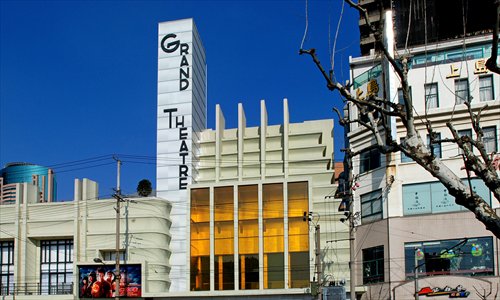
The Grand Theatre is one of Shanghai's art deco treasures after being renovated in 2008. Photo: IC
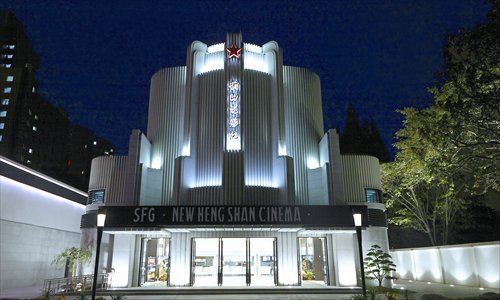
The spectacular exterior of the new-look Hengshan Cinema Photo: CFP
Remarkable history
Some of the old cinemas have survived. In People's Square the Grand Theatre still stands, a monument to a remarkable history. The original Grand Theatre was first built in 1928 but, because it screened a US film that featured derogatory references to the Chinese, it inspired anger throughout the city and it was sold to Lu Geng, one of the founders of the United Movies Co who had the building demolished and asked the famous Hungarian architect Laszlo Hudec to design a replacement movie house for the site.
In 1933, Hudec's stunning new building opened screening a Hollywood hit, Hell Below starring Robert Montgomery, Walter Huston, Robert Young, Madge Evans, and Jimmy Durante. With its dazzling design that accommodated the peculiar shape of the site, air conditioning and modern facilities the cinema was soon being hailed as the best cinema in Asia. Most the movies screened at the Grand Theatre in the 1930s were American or European films and to watch a film there cost five times the amount an average family could live on for a month. Ushers in uniforms and top hats welcomed audiences in the foyer and programs were given to everyone attending a screening. On every seat there were headphones - it was the first cinema to offer simultaneous translations for foreign films.
In 1958, the Grand Theatre boasted the city's first wide screen. It was a premier entertainment venue for the city right through to the 1990s. In 1993 at the premiere screening of Farewell My Concubine crowds of fans ran out of control, breaking windows in the foyer and ripping the coat of one of the stars, Leslie Cheung.
To keep it thriving in the 21st century the building was renovated in 2008, restoring its art deco veneer and adding auditoriums. Today there is an elegant long hall in the Grand Theatre where visitors can view photographs and exhibits that portray the history of this amazing old building.
The new Hengshan Cinema is another successful cinema renovation. The Hengshan Cinema was the first cinema built in Shanghai after the establishment of the People's Republic of China. Located on Hengshan Road facng Xujiahui Park, the original cinema was first approved by the then mayor Chen Yi and built in 1951 with investments from the government, banks, factories and private citizens. It was known as the Garden Theatre because of its French design and courtyard decor. In the early days people could rent a cinema privately to entertain friends and family. In 2009 renovations began and the new-look Hengshan Cinema reopened in October 2010. The new Hengshan Cinema has three screens and is one of the prime entertainment venues in Xujiahui.
Another elegant old picture house is the Cathay Theatre which opened in downtown Huaihai Road Middle in 1930. The art deco cinema began screening films in 1932 and initially could accommodate 1,081. Eileen Chang came here often and she mentions the cinema in some of her writings. In 2012 the Cathay Theatre began offering movie experiences for the blind, a system later adopted by other cinemas in the city.
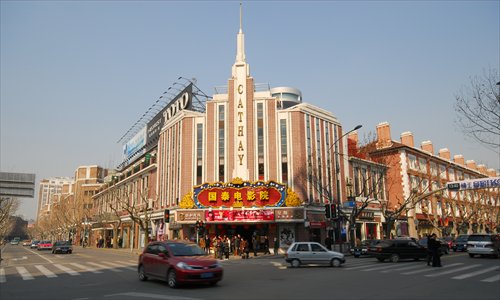
The Cathay Theatre in downtown Huaihai Road Middle is still screening movies. Photo: CFP
From Hollywood
The Shanghai Concert Hall on the intersection of Yan'an Road and Xizang Road South in Huangpu distric was originally the Nanking Theatre and first opened in 1930. Like other upmarket venues it mostly screened movies from Hollywood. In 1959, it was renamed the Shanghai Concert Hall. In order to make way for the Yan'an Elevated Road, the hall was moved 66 meters in its entirety in 2002 and 2003, and reopened in 2004. Today it presents concerts of classical music, Chinese folk music and jazz.
Other old theaters still screening movies today include the Xinguang Film Art Center on Ningbo Road. It is found among some shikumen houses (traditional Shanghai-style lane houses) on Ningbo Road and these days mostly offers movies and plays based on Agatha Christie novels. It was featured in a scene of the movie Lust, Caution.
Fans of old cinemas can also look at the Huangpu Cinema on Beijing Road East, the Zhejiang Cinema on Zhejiang Road Middle, and the Guoji Cinema on Haining Road.
Global Times
Posted in: Society, Metro Shanghai, City Panorama