Villagers make leaf plates in India
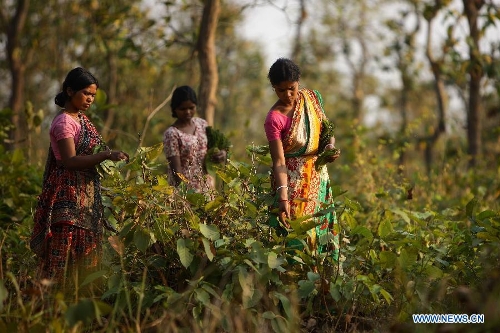
Villagers collect leaves from the sal tree at a village of Birbhum district in West Bengal, India, March 4, 2015. In north and east India, leaves from Sal (botanical name Shorea Robusta) tree are made into plates, which are popular during traditional meals, festivals and in temples. As sal trees are widely grown in the Birbhum district of West Bengal in India, local villagers earn their bread by selling their handmade leaf plates. (Xinhua/Zheng Huansong)
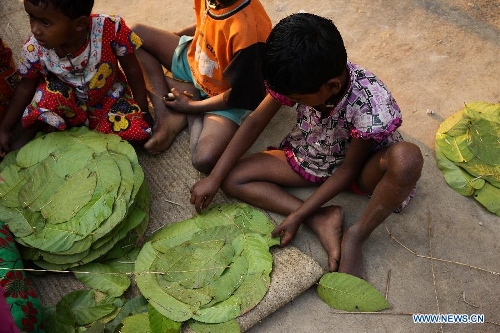
Children make leaf plates at a village of Birbhum district in West Bengal, India, March 4, 2015. In north and east India, leaves from Sal (botanical name Shorea Robusta) tree are made into plates, which are popular during traditional meals, festivals and in temples. As sal trees are widely grown in the Birbhum district of West Bengal in India, local villagers earn their bread by selling their handmade leaf plates. (Xinhua/Zheng Huansong)
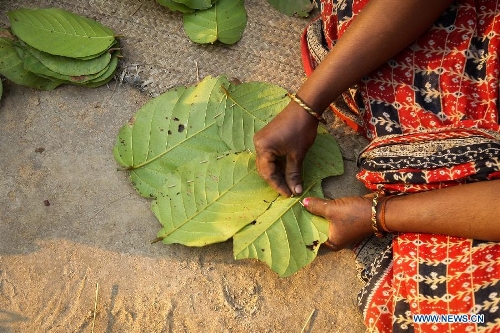
A villager makes a leaf plate at a village of Birbhum district in West Bengal, India, March 4, 2015. In north and east India, leaves from Sal (botanical name Shorea Robusta) tree are made into plates, which are popular during traditional meals, festivals and in temples. As sal trees are widely grown in the Birbhum district of West Bengal in India, local villagers earn their bread by selling their handmade leaf plates. (Xinhua/Zheng Huansong)
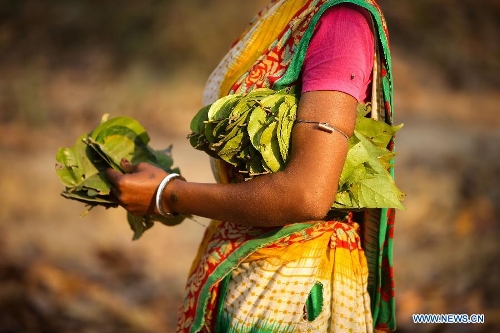
A villager collects leaves from the sal tree at a village of Birbhum district in West Bengal, India, March 4, 2015. In north and east India, leaves from Sal (botanical name Shorea Robusta) tree are made into plates, which are popular during traditional meals, festivals and in temples. As sal trees are widely grown in the Birbhum district of West Bengal in India, local villagers earn their bread by selling their handmade leaf plates. (Xinhua/Zheng Huansong)
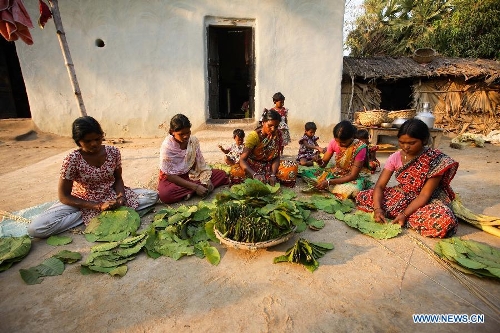
Villagers make leaf plates at a village of Birbhum district in West Bengal, India, March 4, 2015. In north and east India, leaves from Sal (botanical name Shorea Robusta) tree are made into plates, which are popular during traditional meals, festivals and in temples. As sal trees are widely grown in the Birbhum district of West Bengal in India, local villagers earn their bread by selling their handmade leaf plates. (Xinhua/Zheng Huansong)
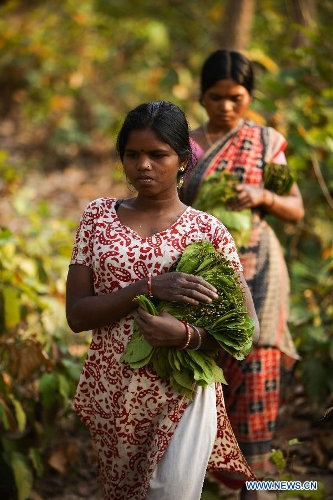
Villagers collect leaves from the sal tree at a village of Birbhum district in West Bengal, India, March 4, 2015. In north and east India, leaves from Sal (botanical name Shorea Robusta) tree are made into plates, which are popular during traditional meals, festivals and in temples. As sal trees are widely grown in the Birbhum district of West Bengal in India, local villagers earn their bread by selling their handmade leaf plates. (Xinhua/Zheng Huansong)
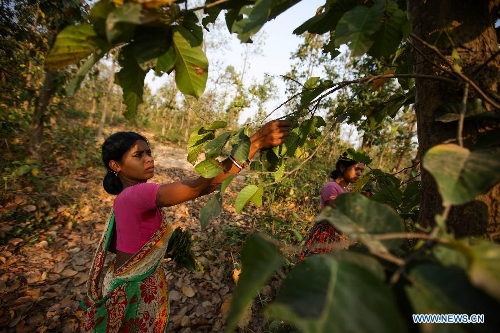
Villagers collect leaves from the sal tree at a village of Birbhum district in West Bengal, India, March 4, 2015. In north and east India, leaves from Sal (botanical name Shorea Robusta) tree are made into plates, which are popular during traditional meals, festivals and in temples. As sal trees are widely grown in the Birbhum district of West Bengal in India, local villagers earn their bread by selling their handmade leaf plates. (Xinhua/Zheng Huansong)
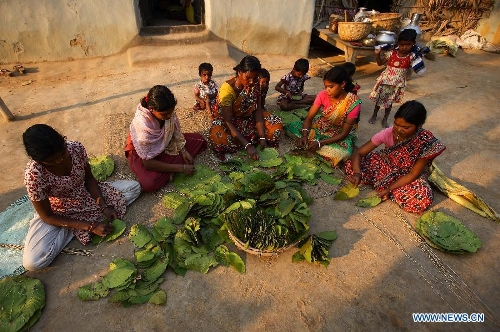
Villagers make leaf plates at a village of Birbhum district in West Bengal, India, March 4, 2015. In north and east India, leaves from Sal (botanical name Shorea Robusta) tree are made into plates, which are popular during traditional meals, festivals and in temples. As sal trees are widely grown in the Birbhum district of West Bengal in India, local villagers earn their bread by selling their handmade leaf plates. (Xinhua/Zheng Huansong)
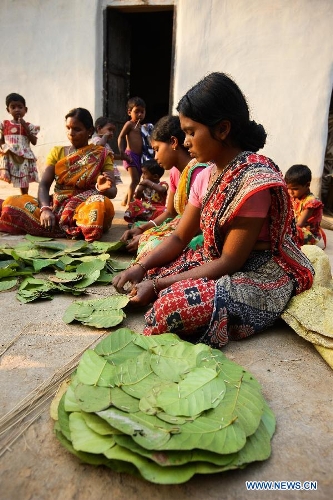
Villagers make leaf plates at a village of Birbhum district in West Bengal, India, March 4, 2015. In north and east India, leaves from Sal (botanical name Shorea Robusta) tree are made into plates, which are popular during traditional meals, festivals and in temples. As sal trees are widely grown in the Birbhum district of West Bengal in India, local villagers earn their bread by selling their handmade leaf plates. (Xinhua/Zheng Huansong)