HOME >> BUSINESS
Investors shouldn’t fear ‘new normal’
By Chris Dalby Source:Global Times Published: 2015-6-24 22:13:01
Questions raised over economic fundamentals
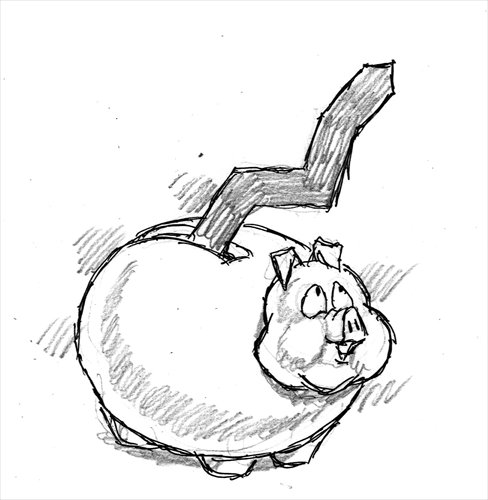
Illustration: Peter C. Espina/GT
A report by CNBC released last week suggested that China's prospects as a long-term investment destination may be dimming.While it acknowledged China's GDP growth and anti-corruption efforts, it also noted the high proportion of debt to GDP, the seemingly meaningless growth targets being set, and the inefficiency of many SOEs, meaning that foreign investments in China are at risk of severely undershooting their expectations.
While this is a worrying view, it is not the first to say that China's macroeconomic policies are keeping the population satisfied for now at the cost of real problems in the future. For years, investors have chosen to ignore the warnings of international banks about the volatility of the Chinese economy, hedging long-term risk over likely short-term gain. And, for the time being, results have borne them out.
However, as China faces pressure to fully bring its domestic economic policy in line with international norms, the calls are being heeded. Many are now wondering to what extent these accusations are founded, and recent events such as fluctuations in the Shanghai Stock Exchange are making this theory pass from journalists and economists to the investors themselves.
Unsurprisingly, the crux of the matter is an old question rising anew with fresh potential answers. The world has become used to China's rapid growth but what happens when the country's GDP stalls for the first time? Some analysts state that the 7 percent GDP growth seen of late represents a controlled slowdown while others see it as a stall in and of itself.
However, this obsession with GDP growth has misled both sides. In China, these targets are a way to easily quantify an economic juggernaut that is anything but easy. Abroad, they represent understandable soundbites that play well to investors.
However, it is just this kind of dumbing down, coupled with a sizeable dose of opaque policymaking, that has investors thinking twice.
Since the financial crisis of 2008, many have seen China as their savior but have remained skittish at the slightest sign of trouble in paradise. Double-digit growth targets were the flashing neon signs telling businessmen of all types that China was open for business. Little heed was paid to cautionary tales of other runaway economies that posted such growth for a while before collapsing, wiping billions off investments. This scenario looks even more daunting concerning China, given the lack of any similar economic model on this scale in the past. Now, as growth ticks down to 7 percent and steadies there, three types of reaction have occurred.
First, investors have become spooked, amid fears of the dreaded "hard landing." Many have cut and run, jettisoning shares on the Shanghai Stock Exchange. Second, they are doubling down, trusting in the force of the domestic market to keep Chinese investments profitable, even if the country's manufacturing advantages have begun to fade. Third, they choose to ignore advice at their peril, either because they are too engaged in the country to pull out or because they are holding out for yet another reversal.
Any of these may be correct but history does not favor continued miracles. The size of the Chinese middle class and the might of its private sector are becoming too powerful to be ignored. The recent stock exchange wobbles in Shanghai and Shenzhen are ripples of a centrally controlled fiscal policy that is not settling as easily as hoped in the waters of international finance.
Luckily, China has shown foresight in the way it is dealing with this slowing economy, painting it as the new normal rather than a temporary glitch. Free trade agreements signed by China with Australia and South Korea also point to the government prioritizing the shoring up of its privileged trade position. It is to be hoped this attitude continues.
The author is a Mexico-based analyst of Chinese politics and economics. bizopinion@globaltimes.com.cn
Posted in: Columnists