China’s wild children and their parents are ignorant, not innocent
Illustrations: Lu Ting/GT
Xionghaizi is a new Internet slang being widely used on social media to describe a young Chinese "wild child" who acts destructive and unreasonable without provocation.
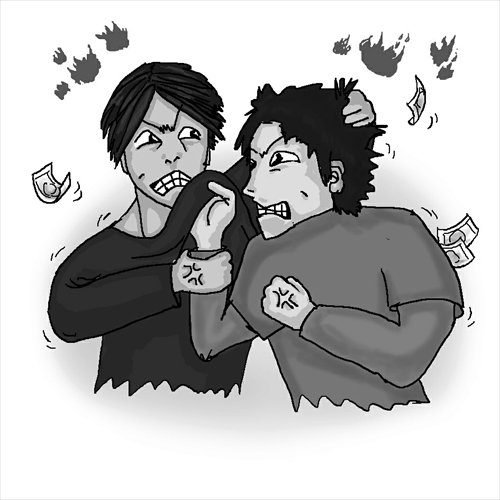
The most recent case of xionghaizi to become a trending topic occurred at a Shanghai movie theater, during which an adolescent boy accompanied by both of his parents continuously kicked the seat in front of him. After the movie finished, the man whose seat was kicked criticized the boy's parents for their "lack of parental control." Insults and fisticuffs were exchanged by the adults, resulting in injuries and, of course, law suits. According to Shanghai Xuhui District People's Court, both parties were found at fault.
But while a majority of netizens' wrath is being directed at the xionghaizi themselves, I personally blame the parents, who are oftentimes as "wild" as their children and are probably the reason why they behave so badly.
In many cases, such as the movie theater incident, the xionghaizi's parents failed to reprimand or educate their child on the do's and don'ts of society. These types of parents just shrug it off as "youthful innocence" or a childish indiscretion. But more often than not, what they call innocence is in fact plain old ignorance.
In 2014, a 10-year-old Guiyang boy in an eight-storey apartment leaned out the window with a knife and cut a construction worker's safety rope. "The electric drill he used was too noisy so I couldn't watch my cartoons," the boy later told police. Last year in Shenzhen, four adolescent kids scratched the paint of 54 cars parked in their community, causing over 150,000 yuan ($23,076) in damage. No parents ever came forward to take responsibility.
Wild children have become so prevalent in China that in 2012 an insurance company launched "Xionghaizi Insurance." For just 44 yuan per year, any property damage or injuries caused by naughty children would be compensated. It's a palliative idea, but just like the parents of xionghaizi, it utterly fails to address the core issue or find a solution to the problem, which is a dire lack of discipline among today's youth by Chinese parents.
In recent years, China's rising numbers of "left-behind children" - legions of offspring (estimated at 100 million) who remain in rural villages while their migrant worker parents roam for years upon years from province to province in search of jobs - have made international headlines. With only their elderly grandparents to tend to them, these children grow up without any strict guidance, obedience or filial piety.
Such children, psychology experts say, are more likely to "exhibit criminal behavior" and turn to illicit occupations once they become adults. Indeed, a new video that went viral this week shows two gangs of teenage girls from a rural area of Guangxi fighting each other with pipes and machetes. Local media reports said that these girls must fend for themselves because their parents have virtually abandoned them.
But left-behind children should not be confused with xionghaizi, who grow up in stable, two-parent households, receive good educations and basically get anything they want - EXCEPT proper discipline. In many ways, xionghaizi are worse, because their parents knowingly have raised spoiled little monsters.
I'm not sure why it's so hard for modern, urban parents to discipline their child. According to one of my teachers who has a 5-year-old daughter, as soon as she learned how to talk the girl was raised to say thank you and please, ask permission to do something and behave herself when in public. But a quick stroll through any park or shopping mall in Shanghai on a weekend verifies that strict parents like my teacher are in the minority here.
Ironically, Western countries like the US seem to have a stereotypical impression of all parents in China being "tiger mothers" who monitor their child's every move and put them on a strict childhood regimen of academics. The shameful reality, however, is that the average Chinese mother and father will happily indulge their child's every whim rather than raise them to be responsible and respectful, and fail to reprimand them when they are not.
The opinions expressed in this article are the author's own and do not necessarily reflect the views of the Global Times.