An interview with award-winning children’s lit author Cao Wenxuan
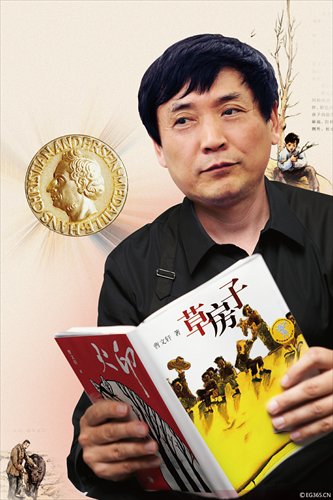
Hans Christian Andersen Award winner Cao Wenxuan Photo: CFP
The first Chinese author to win a Hans Christian Andersen Award, writer Cao Wenxuan has pulled both himself and Chinese children's literature into the spotlight since his win on Monday.
While the number of readers is quite large in China, when it comes to Chinese literature, few people are able to name more than a few contemporary classic works. The tendency in China leans towards a preference for foreign works as parents pay little attention to homegrown stories for children.
Meanwhile, overseas knowledge of Chinese literature seems to be focused on classical works like Journey to the West and Dream of the Red Chamber.
The reasons for this are clear - few contemporary Chinese literature works or writers have received recognition outside of China. However, with more authors such as Mo Yan, Liu Cixin and Cao winning literature awards overseas, a new shift towards contemporary Chinese literature is taking place.
Still in Italy at the moment, Cao, a professor at Peking University, took time out for an e-mail interview with the Global Times, sharing his views on his recent win and the status of Chinese literature on the global stage.
Q: You are the first Chinese to receive the top award for children's literature. In your opinion why were you chosen out of the five nominees?
A: All five writers on the shortlist are the most competitive writers in the world. Two have made this shortlist before. They are all very influential internationally. The award finally chose me. I've been told that it's uncommon for the jury to unanimously agree on a choice, apparently they did so because of the originality of my works. The Hans Christian Andersen Awards' most valued quality is originality. Additionally, my works fit well with the standard for the award, which is a high level of literary skill and artistry. As an international award with unprecedented influence, the Hans Christian Andersen Awards is a very pure literature award. It is objective and refuses to be political or ideological.
Q: Following Mo Yan, you have attracted the world's attention to Chinese children's literature. Do you think the Nobel Literature Prize and the Hans Christian Andersen Awards demonstrate that the general influence of Chinese writers is on the rise?
A: I research Chinese contemporary literature and so I think I'm qualified to answering this. More than 10 years ago, I came to the conclusion that the best of Chinese contemporary literature is on par with international literary standards. Not many people approved of this conclusion back then, because when comparing Chinese and world literature everyone in Chinese critic circles were saying: "Our literature is not good."
However, after Mo Yan won the [Nobel Literature] award, people stopped saying things like that.
I remember that after Mo Yan received the award, I said to media in an interview that he was the first person to be glad [about winning] while I was the second... Now voices saying Chinese literature was not good could stop.
Critics nowadays have the same opinion towards Chinese children's literature. I again had a different opinion, but did I have any foundation to support myself? No.
While an international award may not say anything, but at a time when there is not yet a scientific method in China [to determine the quality of a literature work], an authoritative international award may be the only way we evaluate works.
In this respect, both the Nobel Prize for Literature and the Hans Christian Andersen Awards are needed in China.
Q: How are your works faring outside of China? Do you think having a good translator can help a Chinese writer's work receive recognition at foreign awards?
A: I am probably one of the Chinese writers whose works have been translated into the most languages. The majority of these translators are very experienced in their home countries... For a work to be good after it goes through translation, it should first contain a common language outside its mother tongue. Second, it must have a good story to tell. If a work is only good due to the charm of the language used and the authors skill at writing, once it is translated into another language, both that charm and skill will be gone. But a good story will not change no matter what language in which it is told.
Q: You have about 50 works that have been published outside China so far. Have you received any feedback from the overseas market? Do you think foreign readers can resonate with Chinese children's books?
A: I am probably also one of the writers [in China] with the most copyrights exported overseas. I think my works contain a universal language... a human language that lies outside people's mother tongue. These works, as far as I know, were not just translated into other languages, but have been well received in foreign lands as well. They are performing well commercially and are also benefiting society. They have been reported on and given high marks by local mainstream media. I think there are a few reasons for that: First, they are literary and artistic... Second, they are unique Chinese stories which do not exist in foreign countries. After World War II, the West never experienced any tremendous changes. Life there has always been peaceful. But China has experienced too much suffering. We have more than enough high quality and endless sources on which we can base our creations. The strangeness of such Chinese stories is irresistibly charming to foreign readers. And behind these stories are basic and universal values of all humanity.
Q: Do you think there is any inequality or bias towards Chinese literature?
A: Yes. Without a doubt, there are problems with inequality and very serious ones. I have been saying that both China and the world will have to work hard if Chinese literature wants to expand beyond China. The world has a bias towards China and towards Chinese literature. Though the world does not recognize this, but it's the truth. I always have this question, maybe a mean one. If Harry Potter had not been written by a British woman named Rolling, but a female writer from a remote region of China, how big would the circulation have been? I think probably the publisher would probably not even get its investment back. Why is that? Additionally, when comparing Chinese literature with world literature there is another kind of inequality, which is that Chinese works are being compared with the best works from around the globe. That's not right. We should compare a single nation's works with another single nation. When we do this, we will find we are not weak.
Newspaper headline: Attention in a biased world