Exploring my roots in Europe
An overland adventure from Turkey to my grandmother’s original home in Macedonia
Some travels you take are, by their own nature, actually personal pilgrimages.
When I embarked on my latest trip into the Balkans, through eight countries of eastern Europe, it indeed was a historical pilgrimage to explore my own roots. My grandma's family emigrated from Macedonia to Turkey toward the end of 19th century, as they fled the tensions that eventually led up to World War I.
She and my mom proposed an itinerary that began in Greece and went through Macedonia, up to the Croatian coast, moving on to Serbia and back. I realized I had a solid chance to realize a long-postponed dream.
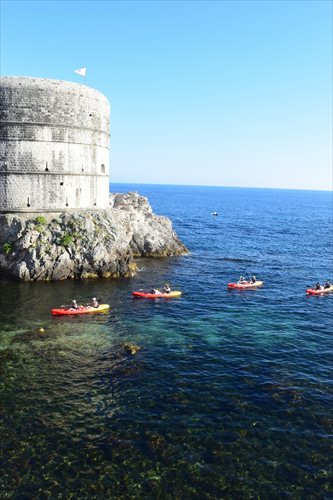
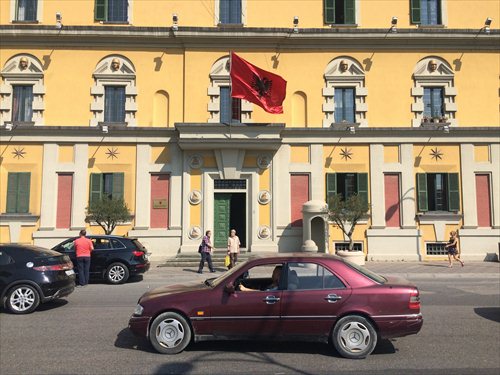
Views of Croatia (top) and Albania (above)
Bus trips are never my favorite mode of travel; I've always been a train-type person, but in the Balkans driving on four wheels is the only feasible option. Hence, we joined a group of around 40 others who had similar aspirations and departed for a weeklong journey of almost 4,000 km.
Our first stop was "the neighbor," as we call it in Turkey: Greece. What first got me about Greece was how the Turkish language was pretty much the lingua franca within the whole area I traveled. Initially I thought the common use of Turkish would be confined to the zone around the border.
Nevertheless, our route went through Kavala and Thessaloniki, the second-largest city in Greece, and we could get around very well using Turkish. The locals' hospitality was also a great treat; they were enthusiastic and experienced within any situation.
Tavern nights are a must-do in Greece. The cities are completely closed-off and exhausted from chronic economic woes - only until nightfall. After then, taverns, bars and chic cafes open up, the music becomes loud, and people do not stop dancing.
After a night of bacchanalian festivities at Thessaloniki, we moved on to Skopje, the capital of Macedonia. Skopje was actually one of the focal points of our trip, as it was the city my grandma's family left. The immediate impression you get from the ex-Yugoslavian state is that you have suddenly entered the Eastern Bloc.
The buildings become gray and the motorways' quality falls, and the landscape is generally poorer. The city center itself is quite worn-out and littered with unnecessary statues that were built in the last couple of years to show off the ancient heroes of the region.
The old part of the city is not well-kept and disappointed me a bit, as I wanted to relive the aura of 19th century. Ohrid Lake to the west creates the border of Macedonia with Albania and was our last stop in the country.
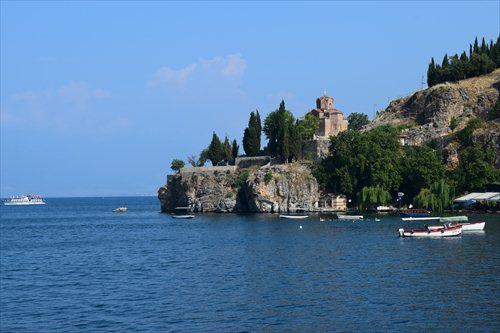
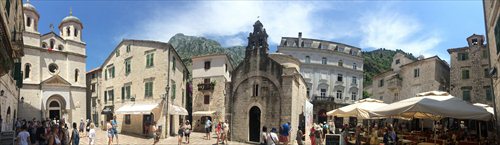
Views of Macedonia (top) and Montenegro (above) Photos: Courtesy of Onat Kibaroglu
Its endless scenery resembles an open sea, and its Ottoman-style villages are more authentic than in the rest of the nation, making it worth visiting.
Steering around the lake, we moved on to the rough terrain of Albania. Until it opened up in the early 1990s, it could have been called the North Korea of Europe. Trenches built during the Cold War follow you ceaselessly along the roads into Tirana, the capital.
Tirana's cityscape is of a central Italian middle-income town mixed with communist-style architecture from the 1970s and a whole lot of secondhand Mercedes sedans running through it.
It's still opening up and trying to find its own place in the world, and it probably will be very different the next time I see it.
We did not stay too long in Albania and moved on to one of Europe's newest countries: Montenegro. As we went through its raw, shiny Adriatic coast, we could feel the seaside life opening up to you: olive trees, people sunbathing and the salty smell of the waters coming through the windows.
The general scenery reminded me of the Cote d'Azur of France, but with much fewer millionaires around you. Budva, near the Croatian border, is a fantastic castle town with a crystal-clear sea to enjoy just next to it.
We then crossed through the Dalmatian Archipelago with a ferry into Dubrovnik, the pearl of Croatia. The class of St. Tropez, the streets of Rome, the riviera of Monte Carlo, the history of Florence - Dubrovnik has it all.
I was speechless at how perfect this little town is. It draws raves in the international media, but I still believe it is underrated.
There is nothing wrong about it, and it has so much to offer: a history of marine exploration, cafes with the best drinks, and limitless options of beaches all around.
Dubrovnik definitely will be one of my regular destinations from now on; I cannot wait to come back.