
HOME >> ARTS
Mind and mood
Source:Global Times Published: 2019/10/31 18:38:40
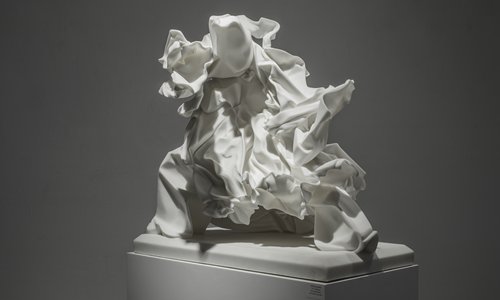
Nalakuvara by Hsu Tung-lung Photo: Courtesy of SPSI Art Museum
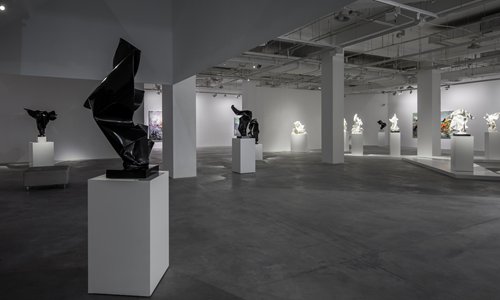
The Kun exhibition Photo: Courtesy of SPSI Art Museum
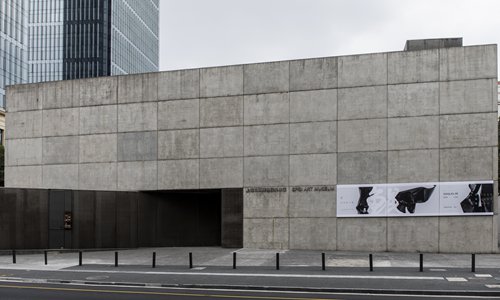
The Shanghai Oil Painting Sculpture Institute Art Museum Photo: Courtesy of SPSI Art Museum
No matter if his sculptures or paintings, the artworks by artist Hsu Tung-lung from the island of Taiwan give off a strong sense of familiarity. This vein of the familiar resonates from the influence of traditional Chinese ink wash paintings that hides behind his works, especially those on display at the ongoing exhibition at the Shanghai Oil Painting Sculpture Institute (SPSI) Art Museum.
The Kun exhibition features two of the artist's series Fleeing Clouds & Flowing Water and Great Form Has No Shape as well as five of his most recent sculptures including Kun and Peng. The exhibition name was inspired by Chinese philosopher Zhuangzi's A Happy Excursion.
"In the northern ocean there is a fish called Kun. It is so huge, I don't know how many thousand li [Chinese mile] it is. This Kun changes into a bird, called Peng. Its back measures I do not know how many thousand li in breadth. When it flies, its wings obscure the sky like clouds," goes the original tale.
"From traditional Chinese ink paintings then on to sculptures, and now paintings again, I have always been very fond of traditional Chinese arts especially ink wash art,"the artist told the Global Times.
Although ink wash is not used in his paintings and sculptures on display, the art form's influence is everywhere in the curves of the sculptures and the brush strokes in paint. Hsu calls his art style "automatic writing," since it doesn't follow a set course, the second brush stroke begins only after the first one is completed.
"All the moves and creations come from my mind and mood. You can easily find that there is no shade or influences of other master artists like many other Chinese paintings. All my works are unique," he said.
He has adopted the style of traditional Chinese calligraphy to manifest the rhythm of the ever-changing linear contour of his sculptures. The twists of curves give a sense of strength to the sculptures, which is also a feature of cursive writing in traditional Chinese calligraphy.
Having previously been a jade carver, a hardware store owner and even running an antique shop, Hsu said these jobs helped provide a foundation to his art style. He noted that the paintings at the exhibition were made with tools and even kitchenware such as knives and spoons.
About five years ago, he decided to leave the business world to follow his heart and become a full-time professional artist.
"First of all, you need to have the ability to feed yourself and your family before becoming a full-time artist," he explained.
"Then you can think about it a second time, not right after graduation from art college, but years later, and ask yourself, what are you truly interested in?"
Despite his love of tradition, Hsu is open to new things from cartoons to social media platforms.
"Everything is changing. I hope to keep up with trends. You may notice that my paintings always use bright colors, " he noted.
The exhibition runs to November 9.
Posted in: ART,CULTURE & LEISURE