
Aerial view of Baise City in south China's Guangxi
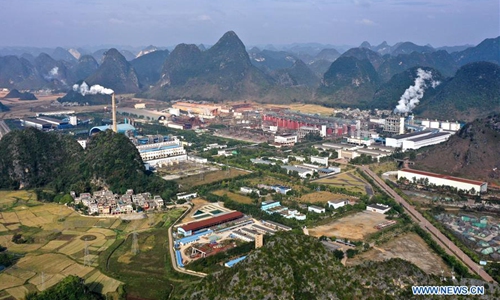
Aerial photo taken on Dec. 5, 2019 shows an aluminum company in Debao County of Baise City, south China's Guangxi Zhuang Autonomous Region. Baise City is located near the intersection of southwest China's Yunnan Province, Guizhou Province and south China's Guangxi Zhuang Autonomous Region. In 1929, the Baise Uprising wrote a glorious page in the history of Chinese revolution. Covering an area of around 36,300 square kilometers and with a population of more than 4.2 million, the city has become a major base for fruit and vegetable production. It is also one of China's most important producers of aluminum. (Xinhua/Qin Guanghua)

Aerial photo taken on Dec. 5, 2019 shows an aluminum company in Debao County of Baise City, south China's Guangxi Zhuang Autonomous Region. Baise City is located near the intersection of southwest China's Yunnan Province, Guizhou Province and south China's Guangxi Zhuang Autonomous Region. In 1929, the Baise Uprising wrote a glorious page in the history of Chinese revolution. Covering an area of around 36,300 square kilometers and with a population of more than 4.2 million, the city has become a major base for fruit and vegetable production. It is also one of China's most important producers of aluminum. (Xinhua/Qin Guanghua)

Aerial photo taken on Dec. 5, 2019 shows an aluminum company in Debao County of Baise City, south China's Guangxi Zhuang Autonomous Region. Baise City is located near the intersection of southwest China's Yunnan Province, Guizhou Province and south China's Guangxi Zhuang Autonomous Region. In 1929, the Baise Uprising wrote a glorious page in the history of Chinese revolution. Covering an area of around 36,300 square kilometers and with a population of more than 4.2 million, the city has become a major base for fruit and vegetable production. It is also one of China's most important producers of aluminum. (Xinhua/Qin Guanghua)

Aerial photo taken on Aug. 29, 2019, shows the sea of clouds in Tiandong County in Baise City, south China's Guangxi Zhuang Autonomous Region. Baise City is located near the intersection of southwest China's Yunnan Province, Guizhou Province and south China's Guangxi Zhuang Autonomous Region. In 1929, the Baise Uprising wrote a glorious page in the history of Chinese revolution. Covering an area of around 36,300 square kilometers and with a population of more than 4.2 million, the city has become a major base for fruit and vegetable production. It is also one of China's most important producers of aluminum. (Xinhua/Cao Yiming)

Aerial photo taken on Feb. 9, 2019 shows the view of Equan scenic spot in Jingxi of Baise City, south China's Guangxi Zhuang Autonomous Region. Baise City is located near the intersection of southwest China's Yunnan Province, Guizhou Province and south China's Guangxi Zhuang Autonomous Region. In 1929, the Baise Uprising wrote a glorious page in the history of Chinese revolution. Covering an area of around 36,300 square kilometers and with a population of more than 4.2 million, the city has become a major base for fruit and vegetable production. It is also one of China's most important producers of aluminum. (Xinhua/Zhou Hua)
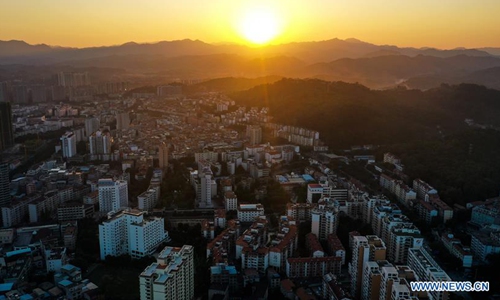
Aerial photo taken on Dec. 6, 2019 shows the view of Baise City in south China's Guangxi Zhuang Autonomous Region. Baise City is located near the intersection of southwest China's Yunnan Province, Guizhou Province and south China's Guangxi Zhuang Autonomous Region. In 1929, the Baise Uprising wrote a glorious page in the history of Chinese revolution. Covering an area of around 36,300 square kilometers and with a population of more than 4.2 million, the city has become a major base for fruit and vegetable production. It is also one of China's most important producers of aluminum. (Xinhua/Zhang Ailin)
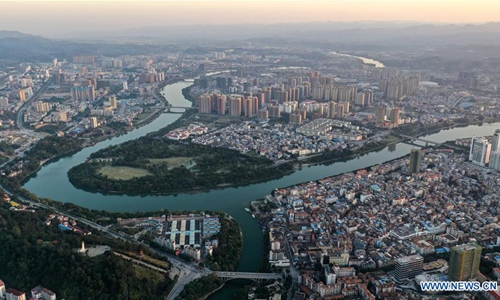
Aerial photo taken on Dec. 6, 2019 shows the view of Baise City in south China's Guangxi Zhuang Autonomous Region. Baise City is located near the intersection of southwest China's Yunnan Province, Guizhou Province and south China's Guangxi Zhuang Autonomous Region. In 1929, the Baise Uprising wrote a glorious page in the history of Chinese revolution. Covering an area of around 36,300 square kilometers and with a population of more than 4.2 million, the city has become a major base for fruit and vegetable production. It is also one of China's most important producers of aluminum. (Xinhua/Zhang Ailin)

Aerial photo taken on Dec. 6, 2019 shows the view of Baise City in south China's Guangxi Zhuang Autonomous Region. Baise City is located near the intersection of southwest China's Yunnan Province, Guizhou Province and south China's Guangxi Zhuang Autonomous Region. In 1929, the Baise Uprising wrote a glorious page in the history of Chinese revolution. Covering an area of around 36,300 square kilometers and with a population of more than 4.2 million, the city has become a major base for fruit and vegetable production. It is also one of China's most important producers of aluminum. (Xinhua/Zhang Ailin)

Aerial photo taken on Aug. 30, 2019 shows the scenery of Haokun Lake in Lingyun County, Baise City of south China's Guangxi Zhuang Autonomous Region. Baise City is located near the intersection of southwest China's Yunnan Province, Guizhou Province and south China's Guangxi Zhuang Autonomous Region. In 1929, the Baise Uprising wrote a glorious page in the history of Chinese revolution. Covering an area of around 36,300 square kilometers and with a population of more than 4.2 million, the city has become a major base for fruit and vegetable production. It is also one of China's most important producers of aluminum. (Xinhua/Cao Yiming)
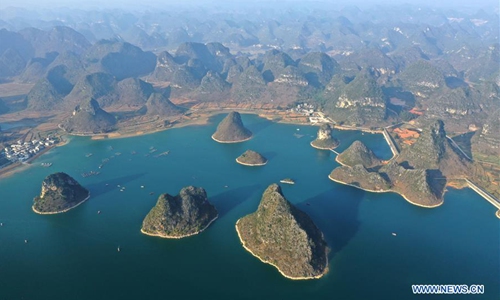
Aerial photo taken on Feb. 9, 2019 shows the view of the Quyang Lake in Jingxi of Baise City, south China's Guangxi Zhuang Autonomous Region. Baise City is located near the intersection of southwest China's Yunnan Province, Guizhou Province and south China's Guangxi Zhuang Autonomous Region. In 1929, the Baise Uprising wrote a glorious page in the history of Chinese revolution. Covering an area of around 36,300 square kilometers and with a population of more than 4.2 million, the city has become a major base for fruit and vegetable production. It is also one of China's most important producers of aluminum. (Xinhua/Zhou Hua)