
SGMW accelerates expansion in overseas markets despite COVID-19
Source: Global Times Published: 2020/7/16 18:53:40
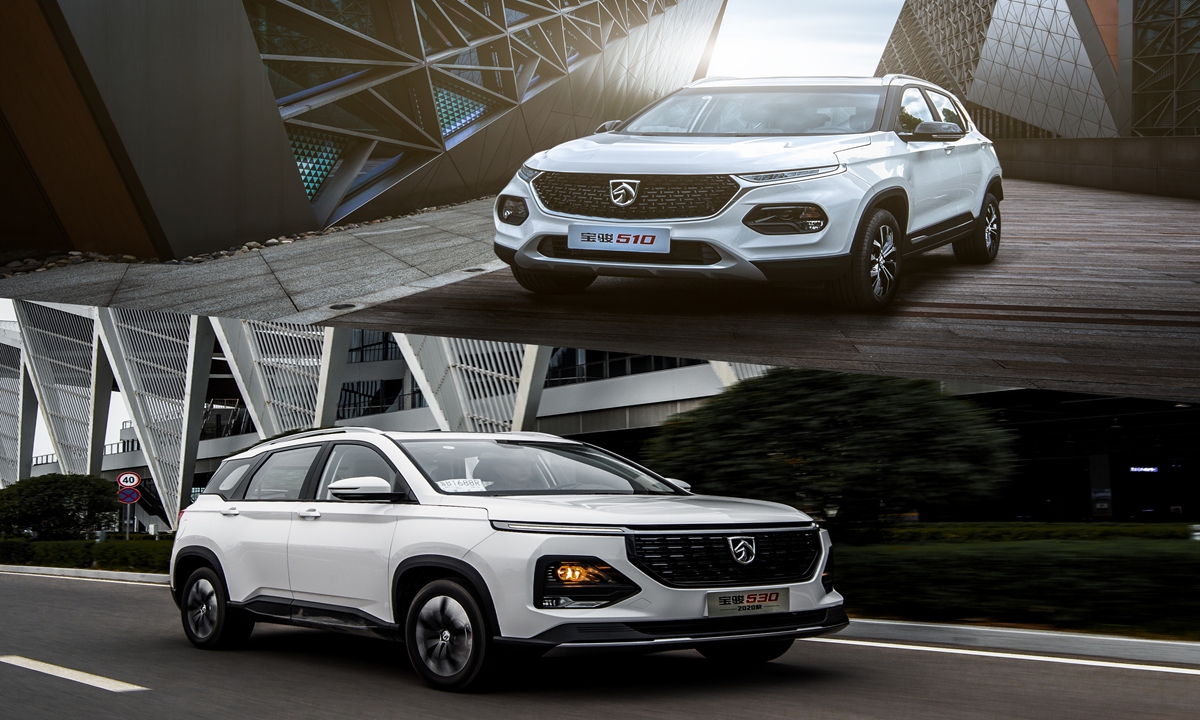
The Baojun 510 (up) and Baojun 530 models Photo: Courtesy of SGMW
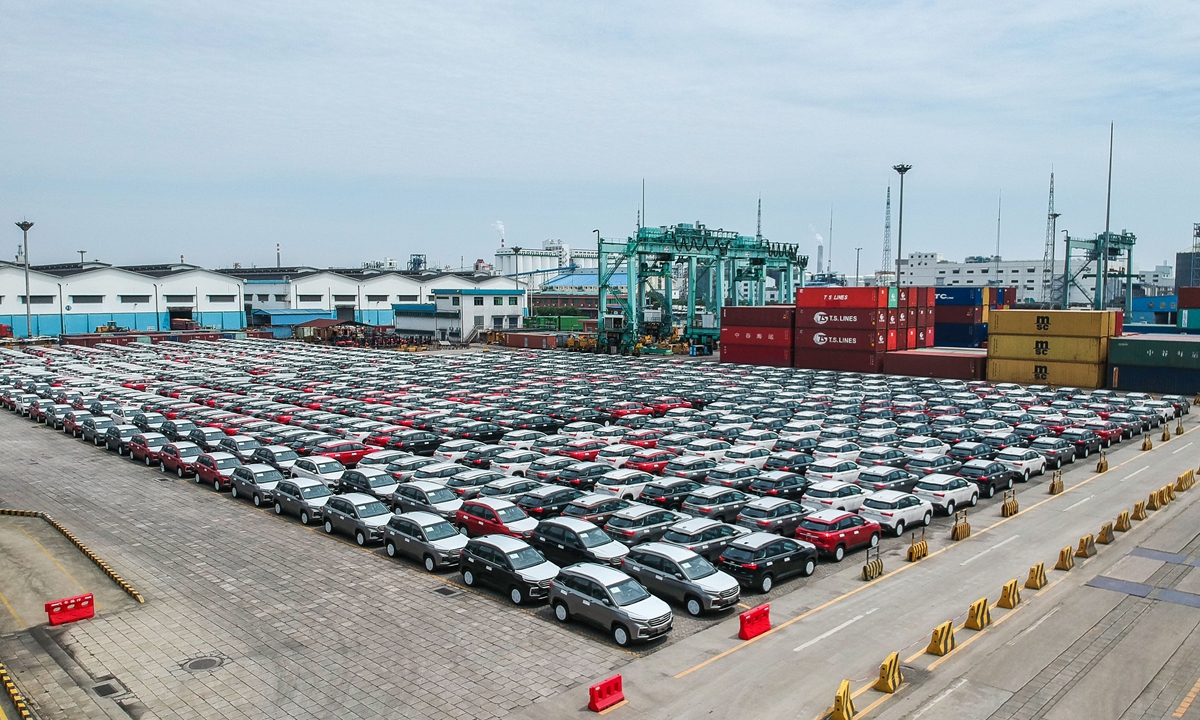
The Baojun 530 vehicles are ready to be exported overseas. Photo: Courtesy of SGMW
Chinese joint venture carmaker SAIC-GM-Wuling Automobile (SGMW) has been actively exploring global markets over recent years based on its technology accumulation and localization strategy, and its pace of global expansion has not been disrupted by the ongoing COVID-19 pandemic.
On June 15, the Baojun 510, SGMW's second global strategic model, officially rolled off the assembly line at the company's Hexi production base in Liuzhou, South China's Guangxi Zhuang Autonomous Region.
The first batch of Baojun 510 cars will be exported to the South American market under the Chevrolet brand, and will be exported to markets in the Middle East, Africa and Mexico later.
SGMW first tapped the South American market with its Baojun 530 model in 2018, known there as the Chevrolet Captiva. The 530 sedan was released in selected South American markets in April 2019.
SGMW, which owns domestic marques Wuling and Bao Jun, was set up in 2002 with SAIC Motor as its largest shareholder.
The company's compact sports utility vehicle (SUV) model has also made its foray into newly emerging markets, including Indonesia and India, where it is gaining growing popularity that could even parallel those of more established Japanese auto brands. For every two medium-sized SUVs sold in India, one is from SGMW, and in Indonesia, SGMW's Wuling Almaz SUV is the biggest competitor to the Honda C-RV.
SGMW started production in Indonesia in January 2019 with the Wuling Almaz, and Indonesia was the first market outside China to receive the Baojun 530 model.
The 60-hectare facility in Indonesia is SGMW's largest plant outside of China, comprising the main plant - capable of producing 120,000 cars per year - and the supplier zone. The plant employs more than 3,000 local workers and commissions 16 local firms to supply components for auto production, SGMW said.
Using four brands for its global sales, the Baojun 530 model has realized exports totaling 25,287 units and sets in the first half of this year, up 86.2 percent year-on-year. That included 8,451 complete cars, surging 141.9 percent on a yearly basis. Baojun is the Chinese-branded SUV that has witnessed the most exports since the start of the year. There were 2,045 orders from the Middle East at the beginning of July, showcasing its recognition in overseas markets.
In terms of brand recognition, it has reached the level of Japanese and Korean auto brands which have spent two or three decades cultivating the newly emerging markets.
SGMW aims to center on Indonesia and expand its vehicle business to other ASEAN nations, the company said. The Chinese firm managed to seize the No. 6 position in Indonesia's top-10 car brands shortly after opening its plant there in 2017.
Selling 17,000 units in 2018 alone, SGMW's business is booming in Indonesia, with stores jumping from 42 in 2017 to now almost 100 across the country.
The China-proposed Belt and Road Initiative (BRI) has provided an opportunity for domestic auto players to go global over recent years.
The BRI has effectively stimulated economic growth in relevant countries, as well as their demand for imported automobiles, providing strong support for the expansion of China's vehicle exports, SGMW said.
Unlike previous models used by Chinese auto brands exploring international markets, what SGMW holds key is its localization strategy from supply chain and manufacturing to sales, forging a complete network that has helped the Chinese auto firm quickly gain footholds in overseas markets.
It established the "China-India SGMW Automotive Academy" to train Chinese and Indian talent. By participating in the formulation of ASEAN automotive standards, SGMW has been ramping up efforts to meet demands of local users via research and development, design and manufacturing.
By remaining flexible to market needs while attaching importance to its own value and culture, SGMW stands out among domestic auto brands and is gaining popularity in overseas markets, analysts said.
It took just three days for SGMW to convert part of its production line to manufacture face masks and send out its first shipment in February, when the COVID-19 pandemic was engulfing China. And it took only 76 hours - instead of the 10 days it would usually take - for the factory to roll a self-developed mask-making machine off its production line in China. SGMW was China's first automaker to develop such a machine.
Posted in: COMPANIES