Currying flavor
From creamy yellow curry crab to steaming hot curry lamb, mouth-watering and aromatic curry dishes not only delight our taste buds in winter but also warm us up from deep inside.
Basic ingredients such as turmeric, chili pepper and bay leaves are what we can expect from most curry dishes, whether they are Indian, Thai, Singaporean or Malaysian.
Originally hailing from South Asia, particularly India, curry has spread far and wide to become an integral part of eating experiences the world over, and thanks to the local twists it's received from each culture, it is easy for anyone to quickly find their favorite curry.
The most frequently used spices in Indian curry are coriander, turmeric, cumin, fenugreek and red pepper, with additional ingredients such as ginger and cinnamon creating a strong, thick, hot and spicy texture.
Indian cooking usually makes use of curry power, which is a blend of basic spices and can be bought pre-mixed under such popular brands as Mida's, which is available in supermarkets such as Beijing's Jenny Lou's and Shanghai's City Shop.
"As opposed to Indian cooking, we usually use standard curry paste, which consists of lemongrass, galangal [Thai ginger] and chili," said Pu Sae-Wang, Thai chef-turned-restaurant owner of Beijing's Thai Kitchen. "When cooking, we add fresh ingredients such as egg and coconut milk, which makes the curry more thick and creamy."
Coconut milk is one of the key ingredients which separates different regions' curry concoctions. Where Thai curry is rich with coconut milk, Singaporean and Malaysian curry utilize an intermediate amount and Indian curry uses almost none, according to Lynn Tan, a Beijing-based Singaporean and director of catering and conference services at the Beijing Financial Street Ritz-Carlton.
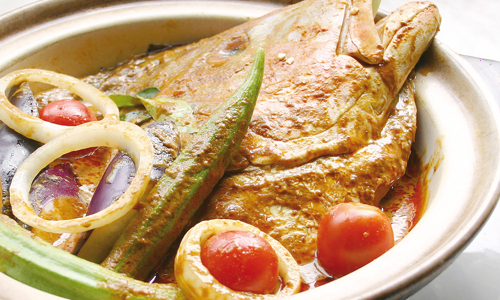
"Singaporean and Malaysian curry can be quite sweet and sour, as demonstrated by such dishes as Assam fish-head curry," she said. "Thai curry usually consists of more green and red curries, which use heavy coconut gravy and sometimes lemongrass. Indian is heavy on spices like cumin, star anise and cloves."
"Indian curry is spicy, hot and many foreigners think it is too heavy," said veteran Indian chef Bhandari Shersingh, of the Beijing Central Business District Ritz-Carlton.
With two years of experience as a chef in China and 18 years back in India, when it comes to curry, Shersingh has taken to "lightening things up" a bit in his restaurants, which are mostly welcomed by non-Indian customers.
The most traditional curry dishes in India are curry chicken, curry lamb, curry vegetable and curry egg, which are usually eaten with Indian bread, or roti, as opposed to rice. In China, curry chicken is the most popular dish, said Shersingh.
After testing for three months, Sae-Wang had given up on the idea of adapting his food to people who are new to Thai cuisine and decided to stick to his traditional menu, which includes green curry chicken, red curry beef and yellow curry brisket.
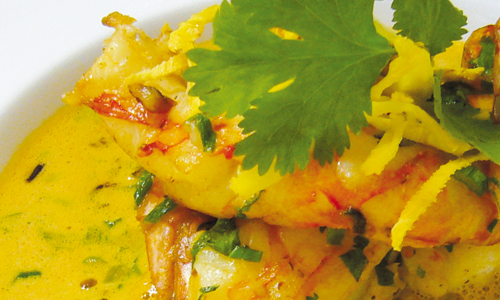
Curry crab and curry shrimp are also signature Thai curry dishes in the stir-fried category, as opposed to stewed meat dishes, which take longer to cook.
Red, green and yellow are the colors of the three most popular curry pastes. Green pepper and lemon leaves contribute to the green color, while the addition of turmeric results in the famous yellow hue and red dry chili creates the red tint of its eponymous curry variety.
The most traditional Singaporean curry dish that Tan grew up with was fish-head curry, a Chinese and Indian-rooted dish that is now one of the national dishes of Malaysia and Singapore. Tamarind juice and coconut milk are frequently added to the gravy, giving it a sweet-sour taste.
Curry yong tau foo (a curry sauce predominantly made from tofu and vegetable ingredients) and laksa (curry noodle) also rank among the curry dishes only found in Singapore and Malaysia, she said.
Despite the extensive spices and herbs in a curry dish, one should not be frustrated to try their hand at making a bowl of warm curry after a cold bicycle ride through the Beijing winter.
Supermarkets and small shops that carry imported spices, such as Indian Kitchen in Sanlitun, offer premixed spices like masala power that can minimize your cooking time to less than half an hour. Otherwise, just pop into some the aforementioned restaurants to discover your favorite curry creations.
Purveyors of spice
Indian Kitchen
Its extensive curry selection at reasonable prices attracts lots of regular customers.
Location: Sanlitun, Beijing
Phone: 6462 7255
Ganges
With five different locations, Ganges is the most-visited and well-known Indian restaurant in Beijing. At 48 yuan ($7.54), its weekday lunch buffet, which includes fresh roti, various meat and vegetable curries, and Indian desserts, is a veritable steal.
Locations: Sanlitun, The Place, Wudaokou, Dongzhimen and Lido, Beijing
Bukhara
Acclaimed as the finest Indian restaurant in Shanghai, Bukhara's curry can be a bit pricey but is a royal treat indeed.
Location: Hongmei Rd, Shanghai
Tel: 6446 8800
Banana Leaf
The well-known chain, usually described as being an interesting mixture of exotic and cheesy, is extremely popular among Chinese customers. Try the curry if you are new to Thai food, and don't miss the song-and-dance shows after 7 pm.
Locations: Beijing, Shanghai, Guangzhou, Xi'an
Thai Kitchen
Features a large array of green, red and yellow curry dishes that were not adapted for people who are new to Thai food. Lunch time is busier than dinner time.
Location: The Place, Beijing
Tel: 6587 1525
Coconut Paradise
A trendy spot featuring spacious enclosed garden houses and consistent quality. Be forewarned, however, that its curries are not cheap and you'll need a reservation for dinner.
Location: 38 Fumin Lu, Shanghai
Phone: 6248 1998
Lau Pa Sak
The laksa (curry noodles) and beef rendang are among best in town, feeding many Singaporeans in search of a taste of home.
Location: opposite Canadian Embassy, Beijing
Phone: 6417 0952