Bedroom diaries
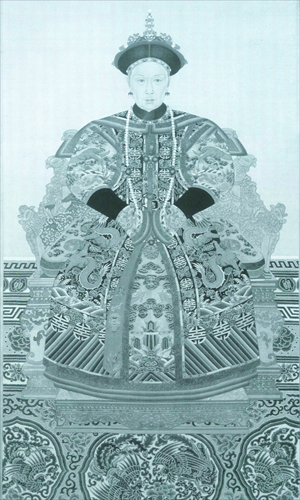
Empress Cixi Dowager
In the late 19th century, 26-year-old Edmund Backhouse left his hometown of Yorkshire, England, for China to follow his long-held dream of a life in the Orient. He didn't realize that every step of his journey brought him closer to a life among the elite Chinese royals, known worldwide to be both corrupt and alluring.
Years later, he would become a well-known sinologist, following the publication of his observations on Chinese imperial circles. His writings on the private lives of princes and other high-profile figures, including the legendary Empress Dowager Cixi, offered a window through which curious Europeans could view Beijing.
But it wasn't until last year that Backhouse's most brilliantly conceived, and arguably most talked about work, Decadence Mandchoue: The China Memoirs of Sir Edmund Trelawny Backhouse, was unveiled to the public. The manuscript was discovered on a dusty shelf at the Bodleian Library in Oxford and is meeting the public for the first time.
Public reception
Soon after its release in mid-2011, the book has proven to be a hit among both ordinary readers and experts on the later years of the Qing Dynasty (1644-1911). The book has been published in Europe and the United States, but the Chinese translation is only available in Hong Kong for the moment. Good news for mainlanders: Chinese language editions will be hitting the bookshelves this coming year.
While the Chinese version's title has been translated as Taihou Yu Wo (literally "Empress Dowager Cixi and I"), the sexually explicit Decadence Mandchoue describes the rampantly corrupt life of the last days of Chinese feudal society.
Both shocking and eye-opening, it recounts Backhouse's secret sexual relationship with Cixi, the most powerful woman of that time and ruler of the Middle Kingdom for nearly half a century.
Written in 1943, only months before Backhouse's death, the memoir provides a unique glimpse into the hidden Chinese imperial world with its grandeur, as well as uninhibited sexuality.

Juicy details
The scandalous book has its critics. British historian Hugh Trevor-Roper has dismissed the book as "nothing more than a pornographic novelette," which many experts speculate to be part of the reason it lay forgotten for decades.
In Decadence Mandchoue Backhouse wrote that he first met Cixi when he was helping send back a store of looted treasure after the empress returned from Xi'an. She had fled Yuanmingyuan, the old Summer Palace, which was destroyed by the Eight-Nation Alliance in 1900.
According to the book, the empress was pleased with Backhouse's good deed, which was the very opposite of what other foreigners had done at that time. After becoming acquainted with her, he began to be summoned to her bedchamber. According to his manuscript, the affair lasted until Cixi's death in 1908 at the age of 73.
These "insider accounts" penned by Backhouse have raised much suspicion. In his 1976 bestselling biography of the late companion to the empress, The Hermit of Peking: The Hidden Life of Sir Edmund Backhouse, Trevor-Roper described Backhouse's memoirs as a fraud.
Whether the so-called memoir was Backhouse's real experience or just a fantasy is still unclear today. But it seems that whatever speculation there may be, audiences both in China and abroad remain highly enthusiastic about the tome.
Steven Daniel, an expat from the UK who lives in Beijing, is a fan of late Qing Dynasty history, and he told the Global Times he was excited when he first heard about the book.
"Backhouse was the original, and possibly the most quirky China expat ever."
Backhouse also claimed to have had sexual relationships with Oscar Wilde and a number of high Chinese court members and princes. While many readers may doubt the veracity of some of these romps, it is certain that he was well connected with the Chinese royal circle, and his writings may expose the indulgent luxury and excessive lewdness of their inner lives. If true, the book provides useful material for further research on that intriguing historical period.
Set between 1898 and 1908, the book starts in a homosexual brothel which was ironically named House of Chaste Pleasures, in which Backhouse was a customer alongside princes and other high-ranking officials buying the services of young men.
Aside from detailed descriptions of sex with Cixi, equally explicit narration in Backhouse's so-called memoir is devoted to the homosexual practices that were common within the imperial court, as he explored high-end gay haunts in Beijing.
Value to society
Truth or not, it provides a unique and to some extent even shocking portrayal of the last days of China's royal palaces, revealing an intimate view of corruption, conspiracy and promiscuity.
When it comes to the edition set to hit the Chinese mainland soon, more than 30,000 Chinese words that are sexually explicit were cut out, removing most of the book's juicier content. Still, readers on the Chinese mainland are eager for the unique take on imperial life.
Historians see it as a source from which to learn the customs and details involving that period of history. Literature critics in China hail its publication as a further marker of loosening reins on the publishing industry.
Book information:
Taihou Yu Wo (Decadence Mandchoue: The China Memoirs of Sir Edmund Trelawny Backhouse) published by Yunnan People's Publishing House. 278 pages. Priced at 36 yuan ($5.70).