An online cesspit?
Weibo was used to report the two sessions on March 4, 2011. Photo: CFP
Sina.com's Weibo microblogging service has grown massively in the last two years, reaching over 250 million users. But some liberal users are quitting the service, disappointed by what they see as bursts of irrational debate and content control.
Zhang Ming, a political science professor at Renmin University of China known for his controversial views, left Weibo early last month.
Within days, Yu Jianrong, a prominent sociologist at the Chinese Academy of Social Sciences who initiated a famous campaign on Weibo to rescue kidnapped children, announced that he was quitting Sina in support of Zhang.
He Weifang, a prominent law professor at Peking University, also announced to temporarily suspend his Sina Weibo in mid-January.
Confusing standards
Much of Weibo's influence has come from being seen as a vehicle for more freedom of expression, and as a platform for online campaigns such as Yu's efforts to save abducted kids and the provision of free lunches for schoolchildren. Weibo has seen an explosion of liberal opinions and many taboos being broken down.
However, Zhang said that his posts were deleted, his account was banned from posting, and his followers were removed.
"I can understand that they have to censor some posts. That's fine," said Zhang. "But they shouldn't punish users, not by the order of authorities."
Back in July, Song Shinan, a freelancer and commentator, also wrote on his blog that he's leaving Sina, though his account is still active now.
Song wrote in his blog that he had been censored by Sina for reposting a piece of information from Xinhua. He said he was told not to criticize Sina or post sensitive information.
"What I don't understand is why the four main Weibo services (Sina, Sohu, Netease and Tencent) have such different standards of what can and cannot be posted," commented Zhan Jiang, a journalism professor at Beijing Foreign Studies University.
"It must be a difference in management and self-regulation," he said. "Some probably implement stricter rules out of business concerns."
Western social networks like Facebook remove posts that violate the law or the rights of others. Twitter has also recently announced that it will allow country-specific censorship.
Many liberals remain
Zhang said his complaints to Sina about slanderous rumors on Weibo that he had got a student pregnant were repeatedly ignored, despite going through Sina's own stated procedures for refuting rumors.
Zhang has not been contacted by anyone from Sina since he left. He believes he has got into Weibo's doghouse for his hypercritical comments.
"The goal of Sina Weibo is to create a playground for the rich and celebrities, with some wumao (government stooges) chattering on the side," Zhang wrote on his own account. "Such a playground has no life at all."
However, many prominent users who often take a critical view of the authorities, like Zhan Jiang and writer Murong Xuecun, remain on Sina Weibo. It is still thought to be dominated by liberal voices and some even criticize a lack of conservative opinions as having affected its reputation as the most vibrant forum of public opinions.
Both Zhang and Yu have since moved to Sohu. Some users have written on Sohu Weibo that they've come because of Zhang and Yu.
Zhang has close to 280,000 followers on Sina and almost 500,000 on Sohu. Yu has over 1.3 million followers on Sina and close to 400,000 on Sohu.
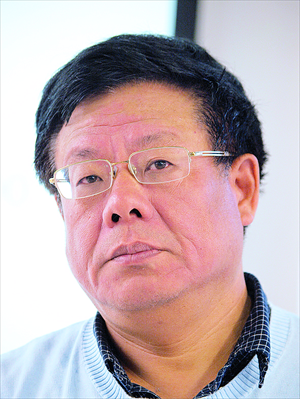
"It was quiet at the beginning. Compared with Sina, it was like a wasteland at first," Zhang said of traffic on Sohu Weibo. "but it's picking up now."
Try to balance
Sina reported 250 million registered users by the third quarter of last year with daily active users accounting for about 10 percent. Tencent, its biggest competitor, claims 310 million registered users and over 50 million daily active users.
According to a report released on January 16 by China Internet Network Information Center, however, China had 250 million Weibo users by the end of last year, almost three times the number in 2010. However the exponential increase in Weibo users occurred in the first half of last year and the increase has slowed down.
Many pieces of news last year, from forcible demolitions to corruption cases, were first broken via Weibo, and there were heated discussions about issues such as the bullet-train accident last July or the recent mass incident in Wukan, Guangdong Province.
But Weibo has also become a hotbed for rumors and comments frequently turn nasty. Some users expressed concerns that Weibo discussion is becoming more irrational.
Wang Xiaoshan, a columnist, wrote on January 30 that "Weibo today is like a huge cesspit, with many sticks stirring the pool."
Sina Weibo started off as a positive, rational platform, but now it has become a ground for meaningless flame wars, said Yu. It deliberately ignored some discussion, while promoting other irrational fights, he said.
Yu said he's disappointed with the bursts of irrationality on Weibo. "Such quarrels may excite people in the beginning, but they wear you down eventually," he said.
Weibo is still regarded as a place where people can express their opinions relatively freely. But the service providers are put in an awkward position as it's exactly the kind of free environment that sparked fear that Weibo might one day be shut down.
Last September, there were rumors that Weibo might be closed down by authorities and as a result the price of Sina dropped by 15 percent on the New York Stock Exchange.
Since late last year, Weibo users have been required to register with their real names and all microblog service providers expressed support for the new regulation.
The microblogging sphere was initially dominated by liberal voices. Since then the more conservative ones have gradually joined the party. It's possible that the provider might want to balance the liberal voices and the conservative ones out of concern for its survival, said Zhang.
"It's probably a conscious move on their part to avoid troubles," he said, adding that he believed Sina is leaning towards the conservatives and muffling the liberals.
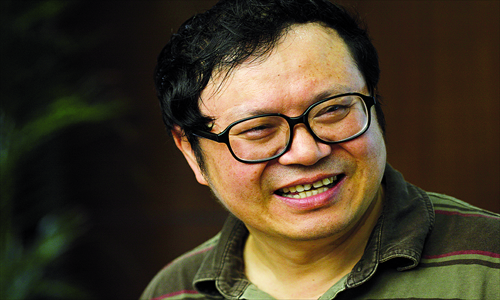
Other service providers might one day follow suit. "If liberal-minded people are all silenced, I don't see how that's a good thing for society," said Zhang.
Sina and Tencent have also been encouraging government agencies to open Weibo accounts as a new way of interacting with the public, which Zhan believes is a positive thing.
Dissenting opinions
Wu Danhong, an associate professor at China University of Political Science and Law, who has over 110,000 followers, is one of the more conservative voices on Weibo. He and Zhang also used to argue a lot on the platform.
"I think some people are taking themselves too seriously, as if the service provider should obey their every command," said Wu. "You just obey the rules of the game, express your opinion and avoid being too emotional."
Wu believes that Weibo is still a relatively free platform. "It's unfair to say that Sina is leaning towards conservatives," he said. "If anything, it's more supportive or protective of the liberals." Sina often highlights the posts of liberal intellectuals, who also have far more followers than the conservatives, he said.
As Weibo grows, more and more people are coming and flame wars are unavoidable, he said. "But all in all, people can still have a conversation about social issues."
Staff from the publicity department of Sina told the Global Times that they are not going to comment on the issue. Sina insists it's an open platform and that it will not interfere with users' behavior on Weibo as long as they don't violate related regulations.
Sina remains the biggest player in the Weibo market. But influence is not everything, said Yu. "What do they use this influence to do, that's more important," he said, adding that although he has fewer followers on Sohu, he still managed to achieve his purpose.
Within hours after he launched a new campaign on Sohu to help teachers in rural areas, he received over 250,000 yuan in donations. "In the end, it's the like-minded people who would do things with you, and it doesn't matter which Weibo service I use," he said.
Yu said that he hopes other Weibo service providers could foster more rational thinking, which is conducive to the public good.
Deng Fei, who championed campaigns on Weibo to provide free lunches to poor children, said that regulation on Sina seems tighter probably because, compared with other platforms, it's still the more influential.
"It's a pity that some of my friends left, but I believe Sina is also in a difficult position," said Deng. "But in all, Weibo is still a good tool and we should try to use it to do more things."
Zhan believes Weibo is still a good platform for expanding the realm of free speech. "Although Chinese Web users gained this new way of expression, they need also to learn how to respect others," he said.