Labor Day music festivities
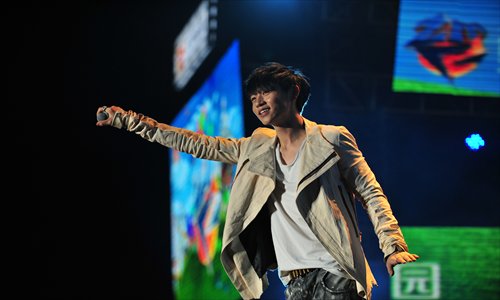
From April 29 to May 1, the three most influential domestic music festivals, Zebra Music Festival, Midi Music Festival and the Strawberry Music Festival will take place, rain or shine. Zebra will be held in Chengdu, Sichuan Province and the latter two in Beijing.
Catering to a large audience is a shared characteristic of the three events, as each festival faces intense competition. Aside from the three outdoor concerts taking place next week, there are currently dozens of music festivals each year in the country. Familiar names include Lijiang Snow Mountains Music Festival, Inmusic Festival, and Modern Sky Music Festival.
Since Midi Music Festival, the first domestic music festival held at Beijing's Midi Music School in 2000, these outdoor events have been continuously tweaking programs and locations, in an attempt to attract attendees over the national holiday.
Zebra Music Festival
"This is the fourth Zebra Music Festival, and we will stage the warm-up show in Suzhou Amusement Park for the first time ever," said Li Dai, CEO of Zebra Media.
Li said that in order to expand the influence of Zebra Music Festival, they try to alternate the locations and cities of the event.
"We will rotate the locations of the festival, establishing ourselves at various places over the next few years," Li said.
Chengdu has been the base and birthplace of Zebra Music Festival since 2009, but Suzhou in Jiangsu Province is a possible future spot for Zebra.
"We staged a warm-up in Suzhou Amusement Park last weekend, before the official music festival will kick off in Chengdu," Li told the Global Times
According to Li, this is the first time a domestic music festival is being held at an amusement park. Zebra has also been held in Hangzhou, Zhejiang Province and Shanghai during the past years.
"We are trying introducing different musicians and bands to avoid repetition from the previous years. Aside from domestic singers and bands, we are inviting more foreign musicians this year," said Li.
Italian punk band, Smegma Riot, boasting a strong Mediterranean cultural background, will take the stage for the first time, performing Italian punk rock for audiences.
Li said that there will be many interactive features at this year's Zebra Music Festival.
"In a tented area, audiences with musical talents are encouraged to perform in front of professionals, who will dole out expert guidance. A Zebra cellphone application will inform people of the details of the music festival. A gourmet food fair has been designed to maximize the festival experience," said Li.
Li hopes that these new additions will influence ideas of audience participation in performances, changing notions that patrons can only sit and listen to musicians.
"This turns part of the festival into a music class," Li said.
For music lovers unable to attend the event, they can tune into the show on the Zebra radio station, newly set up for the festival.
Intense competition
Managing an outdoor music festival is a demanding process. Li said that when Zebra Music Festival was founded in 2009, they didn't receive sponsorship from enterprises and relied mostly on investment from the local government.
The revenue from the first concert, set in Chengdu, was unimpressive. But Li said Zebra still managed to make ends meet. Since then, ticket demand and market consumption has increased, with thousands of patrons attending.
China's outdoor music festivals are part of a new, booming industry. Li said that after the success of Zebra in 2009, the possible economic profits were noted by companies. Businesses that could thrive at festivals, like catering companies, all benefited from the large streams of people the festival attracted.
"Beer venders and snack booth owners doubled the price of their products at the festivals and still met margins," Li said. "The future looks bright, from the music industry perspective."
Growing support
"In the next five to 10 years, we will have several music festivals in China, considering the burgeoning industry, huge market and government support," said Li.
"Music festivals are different from individual concerts," said Tanya Chua, a Singapore pop singer. "In a concert, the audience consists of mostly your fans. But in a music festival, many attendees may not recognize you, giving the performer a good opportunity to make an impression. The feeling at a festival is much different from a private concert," she said.
"Music festivals in China [are fun] even without big names," a representative of Smegma Riot wrote in an e-mail to the Global Times. "In Europe, when you play punk rock, the crowd is filled with young punks. But in China, there's a [variety of people], which means that everybody can like the music you play."
"Given the local governments support for various music festivals, the industry will continue to grow," said Zhang Fan, president of the Midi Music School in Beijing. Zhang said that if television stations start paying attention to these festivals and broadcast the shows, these events will gain more recognition in China.
"I think more musicians would perform at these festivals, if they were well-organized," said Singaporean singer Chua.
In spite of the promising future, some insiders say the market is tough.
"Not all the music festivals are good quality," said Ding Taisheng, publicity director of Modernsky Entertainment Co.
Ding warns that unprofessional music festivals will fail to make the cut. "Audiences will have their choice of musicians, location, environment and music genre," he said.