The last cave dwellers
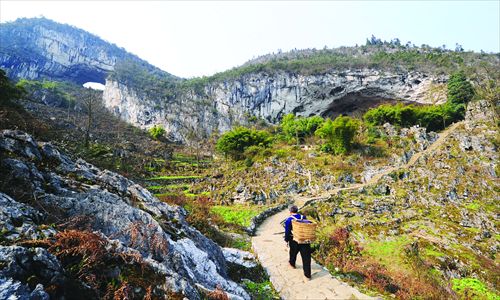
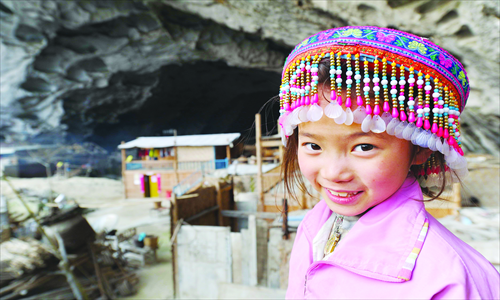
A small village in Ziyun county, Guizhou Province, may be home to one of world's last remaining cave dwellers.
For more than six decades people have lived in an enormous, natural cave that stretches 215 meters into a mountain at an altitude of 1,800 meters. The mouth of the cave is 115-meter wide and about 50-meter high.
The cave dwellers are over 80 Miao people whose remote, ready-made shelter is a two-hour drive away from the nearest county.
The families have constructed homes inside the cave, which are mainly made of woven sheets of bamboo for walls that are supported by wooden poles. Most abodes don't have a roof, while some have sheets of plastic to cover the interior and protect the residents from water dripping from the top of the cave.
The cave dwellers grow corn on mountain slopes and raise livestock in nearby meadows.
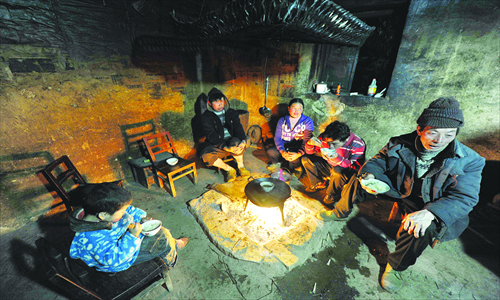
The villagers had built a primary school inside the cave, but it was closed in 2008 after the children were offered places in the township's boarding school. The students return to their homes in the cave on weekends.
Most of the young adults have given up their life in the cave to work in big cities.
In the 1990s, the cave dwellers built a small guest hotel and several restaurants to accommodate outside visitors who were curious of the people's way of life. Nowadays few visitors come to the cave and the tourist facilities have closed.
Prior to 1951, when the expansive cave was first settled, past generations of local people lived in much deeper caves which gave them protection against war and bandits. Guizhou's "cave people" have been documented in literature dating back to the Ming Dynasty (1368-1644).
Since the 1980s, the local government has tried three times to get the cave people to move to less remote areas where better services can more easily be provided.
The villagers continue to resist abandoning their lifestyle.
The local government has now changed tactics and plans to again try to develop the caves as tourist attractions, which they hope will alleviate poverty in the area.