A breezy walk to remember
Zhongshan Road Photo: CFP
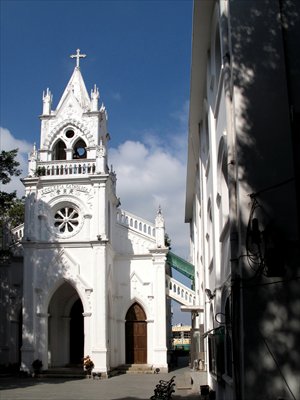
Xiamen is one of the most hospitable and beautiful cities in China to live in. It's not cliché to use words like cozy, romantic, and comfortable to describe this city, because Xiamen is that and so much more.
It is not the best tourist destination in the country if your definition of an ideal vacation spot includes mainly shopping and tourist attractions, but if you're looking for a place to relax and rewind, Xiamen, Fujian Province, is the place to go.
From the artistic Gulangyu (which translates roughly to "the isle of blown waves"), Huandao Road with ocean views, to the peaceful South Putuo Temple, Xiamen - like the traditional Gongfu Cha (tea brewed using very specific tools and equipement) the city offers, is best served in a peaceful state of mind - which is not always easy to attain in China.
Gulangyu
I started my stay in Xiamen with the inevitable stop, Gulangyu, southwest of the island city, just a five-minute ferry ride from the downtown area. Xiamen is dubbed by local tourists as the "Garden City," and Gulangyu is considered the shining gem in the garden. On the map, this small garden city resembles a jade. Not stopping by Gulangyu during your visit to Xiamen is like not going to Xiamen at all.
To me, I considered Gulangyu a comfortable large sofa, where I can sit, crawl or even nap on, however I feel most comfortable. There is almost no need to make travel plans beforehand, as the small island is merely 1.87 square kilometers. The best way to spend time here is just to wander around leisurely.
The only exception is the accommodation: If you want to stay in popular family inns like Nana, book far in advance for your trip, especially during peak season, which hits around spring and autumn. But even if you fail to book the hottest hotels or inns, there are plenty of other options, as there are more than 100 inns on the island, each with individual characteristics.
The best way to get around Gulangyu is by walking, simply because no vehicles or bicycles are allowed on the island. The only public transportation is the battery bus, which costs 50 yuan per ride and only stops at major scenic spots. Thus, this tourist rip-off is not highly recommended.
But fear not, your walking journey is a breeze, accompanied by shadowing greens, blooming flowers, pounding waves, chiming birds, winding alleys, and dozing cats. And best of all, there are historic and aesthetically stimulating buildings everywhere.
Due to its history as a colony, Gulangyu presents various architecture styles from different countries, from Greek to Roman, Baroque to Gothic. It is not hard to stumble across these old houses, authentic European-style buildings, and traditional red-brick houses, the latter typical in Fujian Province.
The younger villas and residents combine Western and Chinese architecture harmoniously, decorating Doric pillars with traditional Chinese patterns. Chinese stencils of plum blossoms, orchids, bamboo and chrysanthemums frame Western-style windows. This subtle beauty can only be admired on a slow walk.
Sound of music
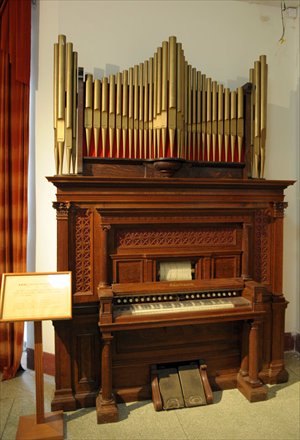
During your walk on Gulangyu, do not be alarmed if you hear the melodious sounds of pianos. It's widely believed that the piano to resident ratio here is the highest in the country. Among almost 20,000 residents, there are more than 600 pianos, hence the nickname: the "Island of Pianos." If you are interested in music, visit the Gulangyu Piano Museum in Shuzhuang Garden, complete with two exhibition halls and a rich collection of more than 100 classical pianos.
My favorite walking spot on the island is the Dadeji Bathing Place, which is close to the sea. You can simply take your shoes off and step on soft beach granules, while listening to the waves, contemplating random thoughts. I was able to wander around like this on the beach, for the whole afternoon.
A night walk is also recommended, especially with the spectacular view this little gem offers. Colorful lights are thoughtfully scattered across the island, enabling people to see Gulangyu from a different perspective.
For those stubborn enough to neglect my advice to walk around: there is a bus. A six-kilometer road surrounding the island has been built, starting from the ferry port and passing through Dadeji, the Yingxiongshan Tunnel, a botanical garden, an art school and an ocean park; tired walkers can take the bus on this route. There are numerous milk tea shops and coffee shops on Gulangyu. Walking into a random one will ensure a cozy afternoon with delicious drinks and desserts. There are also plenty of local snack options provided.
Strongly recommend is the "Ye Rice Cake" which has a 100-year history. It is made of glutinous rice cake, smashed peanut, black and white sesame and sugar powder, and costs only 1 yuan each. Don't miss the only booth, at the crossroad of Longtou Road.
Lundu Port
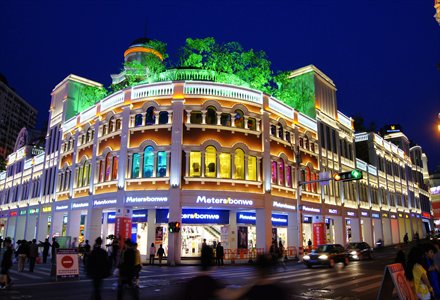
Take a five-minute ferry ride from Gulangyu to Lundu Port, the old downtown area of Xiamen. This area has the first government-built road Kaiyuan Road from 1924. Most of the old buildings here are Qilou style, an architecture style combining European style with Southeast Asian characteristics.
The Qilou style entered Xiamen after the First Opium War (1840-1842), when China was forced to open its gate to the West. These two-story buildings usually use the first floor as a store, with local residents live on the second floor. Though close to the downtown area, people living on this road are hardly disturbed by urban life, thanks to the unique construction.
Traditional seafood markets, Southern Fujian dialect, old ladies drinking Gongfu Cha in their small shops selling traditional souvenirs and snacks: It feels like time has never passed in this part of the city, preserving nostalgic memories of the bygone days.
A short walk from Lundu Port takes you to the downtown area Zhongshan Road, where buildings are almost all in the Qilou style. The famous Huangzehe Peanut Soup is located on the road, where the signature peanut soup is a must-try. The soup is made from carefully selected peanuts, with the coatings boiled off. The peanuts are boiled in marmite using a gentle flame; sugar is added after it's fully cooked.
The concoction is then poured into large pot over a low flame, warm and fresh until it's sold. Besides the soup, mouse-shaped rice cake and New Year cake, a sweet delicacy made of glutinous rice flour, red dates and nuts, are also snacks worth sampling.
Stop and smell the Satay
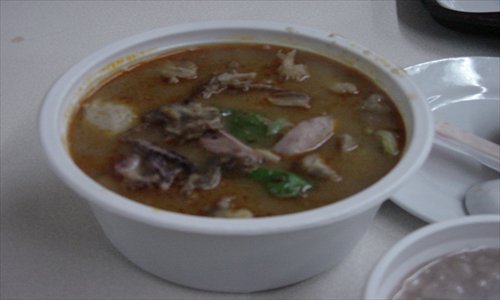
Downtown Xiamen is suitable for walking around in, but you can also hail a cab or drive around to explore the newly-built Huandao Road. Before you hop on the road, eat some grub at Wutang Satay Noodle, rumored to have the best Satay noodle in town.
Located near the entrance of the road, Wutang Satay Noodle has been in the business for over 20 years. All the toppings are made from fresh ingredients.
The shop closes down after lunchtime, no matter how many customers are still waiting, so definitely make other plans for dinner.
Satay, a Southeast Asian seasoning, is made of shrimp sauce, garlic, curry powder, spice and other ingredients. Satay noodles are noodles with Satay dressing, and you can add other ingredients based on your personal preference, including pig liver, pig blood, squid and tofu.
Driving through bridges over the ocean, you pass by Xiamen University - which itself is a tourist spot itself with its beautiful, hilly views - and Hulishan War Battery, built during the Qing Dynasty (1644-1911). It sports the most ancient cannon in China.
Finally, on Huandao Road, you arrive at the open beach and ocean. On the beach, you can either walk breezily, or rent a bicycle. You can fly kites, go fishing, or pick strawberries in the field not far from the ocean.
Or, you can simply sit by the ocean doing nothing at all - which in my opinion, encapsulates the spirit of Xiamen.